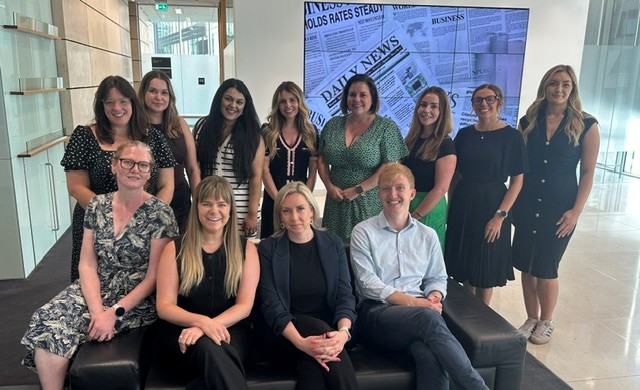

Most professional services marketing and business development professionals find themselves managing large and complex projects. At a recent PM Forum webinar, Marina Charles, digital marketing lead at BDO, moderated a sterling panel to tackle the topic of project management in professional services marketing. Her panel included: Jon Lelliottt (Transformation Programme Manager at Gowling WLG), Colin Mattis (Senior Project Manager at Herbert Smith Freehills Kramer) and Elana Wicks (Interim Programme Manager at Techstars). Their stories and ideas provided much reassurance and many practical tips. The “accidental project manager” in marketing and business development.
PM Forum members can watch the video at How do you project manage when you’re not PRINCE2 qualified?
How did you start in project management?
Each panellist shared how they had become an accidental project manager;
- Moved to a new country to find a role which involved managing major conferences and delivering several sponsorship events
- Having spent the first half of my career as an army officer, I learned that a lot of people do project management without realising it – you don’t need a piece of paper
- I started my career as a lawyer where I had to manage multiple teams and advisers. Documentation always helps. Project management isn’t just a title – it’s a skill
Their advice included;
- Never fear asking for help – there are so many resources online and colleagues offer a wealth of experience and ideas. Collaboration is the best way forward
- Be clear on your aims. Be organised. Use resources well.
- Don’t worry if you don’t have official authority
- Continuously ask yourself “How can we do better in future?”
- Even when you face a lot of pressure, remember you are not alone and try to remain calm
- Everyone is capable of managing projects
What drives success as a project manager?
Panellists considered the biggest difference in success and failure for project managers.
- Understand the outcomes and objectives that the sponsor wants – always keep them front of mind
- Know what success looks like – for all the stakeholders
- Think about the why – what’s the intent? And consider whether you can achieve the same in a different way
- Deliver the desired scope within the timeframe and resources available
- Push decision-making down levels if possible
- Have a solid communications strategy that keeps everyone in the loop
- Bring the group together in the same room for a project kick-off meeting – and clarify their roles and responsibility. If necessary, tackle strong personalities outside the main meeting
- Keep groups relatively small and avoid large committees. People may be reticent to speak within large groups
- People skills are important – Engage with the project delivery team and the wider stakeholder group
- Develop skills and techniques to get stakeholders engaged and accountable
- Check whether deadlines are a real necessity or there for the convenience of yourself or lone team members.
- Recognise that projects always change – you need agility and flexibility to accommodate competing priorities
- Get comfortable with the unfamiliar happening
Decision-making and governance structure
Decision-making and governance emerged as a theme amongst the panellists.
They reflected that different stakeholders often have different answers to the same question. Yet only one person can be in charge. And that is particularly hard when there are leaders in different countries. You also have to rely on people who don’t report to you and may be more senior.
So arrange for one decision-maker (not a committee) to be the arbiter. Establish a basic governance structure at the outset. To achieve clarity, ensure that the decision-making structure is documented. Understand your escalation points for tricky decisions and know who you should go to.
Deploy diplomacy skills. Use one-to-one meetings if there are misaligned priorities or challenges. When stakeholder support starts to fade step back to consider the big picture. Reflect on the strategic importance.
What do you do when projects go off track?
There was plenty of good advice on what to do when things don’t go according to plan. And the panellists were generous in sharing their success and problem stories.
One panellist mentioned a major exhibition driven by two co-founders. One was available to the project manager and attended weekly catch ups where decisions were made. The other co-founder was less available and it was assumed that they were aligned. A month before the event, the uninvolved co-founder started focusing on the event. And we discovered there was no agreement on what successful delivery would look like. The lesson was not to assume that those who are quiet in the background are aligned.
Another panellist talked about managing multiple external providers – platform suppliers and implementation agencies. These were distributed across the globe in different time zones. It was hard to manage difficulties with finger pointing at the various sources of issues.
How do you manage resource challenges?
Often projects are beset with problems caused by competing priorities and a lack of trust.
Advice from the panellists included:
- If possible, conduct meetings face-to-face to build rapport quickly
- Establish trust at the outset – maintain strong and open communication so that everyone understands everyone’s aims and role and feels they can contribute
- Create reciprocal relationships where there are regular touch points. Be friendly and check in with genuine care
- Be alert to internal and external changes that may alter plans and promote early discussion
- Structure meetings so that there is always time for reflections and retrospections so that lessons are learned
Top practical advice tips or habits for project managers?
- Have a pre-meeting kick off. If you don’t know everyone, go to workstream leads and have a one-to-one discussion. Tweak their understanding. Document the discussion. Establish a clear team delivery structure. Bring a cohesive team together
- One of the most impactful tools is after meetings write things down as they’re agreed and send follow up emails confirming actions and deadlines
- Always record decisions – and reasons for those decisions – so you can refer back to them later when things start to change
- Use planning functions within tools such as Microsoft Teams (use general and private channels to avoid spamming people) and Microsoft Projects. Use AI and CoPilot to record and transcribe meetings and help with planning and structuring
- Other tools mentioned included Asana, Monday and Wrike – a key requirement is that everyone can see and contribute to plans and documents
- Use different teams to think about short and medium term implications
- Prepare thoroughly before meetings – ensure there are timed agendas
- Respect the time and pressures on people attending meetings – keep their needs front of mind
- Organise “lessons learned” meetings – led by someone who wasn’t involved in the project
- Create and maintain the big project tracker
- Conduct regular check-ins
The fundamental things to remember are communication and accountability
How can AI tools help with project management?
The panellists felt that Teams and CoPilot were good at helping to document project decisions.
Some had used AI in advance of a new project to obtain lists of challenges in similar projects across the firm. Others had entered objectives and scope into AI systems to obtain a first draft plan.
Some admired the speed with which ChatGPT tackled research and venue identification if you provided the right parameters. Using AI to mitigate tedious administration tasks.
Others used AI to produce specific types of trackers, budgets or templates. Some used Claude to assist with long form content or to finesse a document.
Some had invested a lot of time training AI tools to use their language and tone.
One panellist mentioned using RUMBA, an objective-setting framework used to ensure project specifications and goals are clear and realistic. It is often used as an alternative to the SMART model and stands for:
- Realistic
- Understandable
- Measurable
- Behavioural (or Believable)
- Achievable (or Accountable)
However, they urged caution with regards to AI and risk and privacy.
What advice would you give someone starting a major project tomorrow?
- Get the backing of the senior sponsor or business owner
- Enter a dark room with a towel on your head to break down the tasks
- Document everything – purpose, overview, deliverables, teams, risks and decisions
- Develop early ideas of the meeting cadence for each team
- Break everything into bite-sized pieces to avoid overwhelm
- Don’t confuse activity for progress
- Don’t panic!
Related posts on project management in marketing and business development
Confident campaigns, thought leadership and project management June 2026
Campaigns, thought leadership and project management – People July 2025
Consulting Skills – The power of workshops – Kim Tasso February 2025
18 ways to stretch MBD resources June 2024
Campaigns, thought leadership and project management June 2023
The Association of Change Management Professionals (ACMP) August 2022
campaign, thought leadership and project management June 2022
Consulting skills 1 – Book review: The Art of Consultancy August 2021
themes on campaign development and thought leadership July 2021
Seven pitching themes – specialisation, engagement, research, content May 2021
Innovation in Marketing August 2020
Thought leadership campaigns and project management Eight Essentials September 2018
Thought leadership, campaigns and project management January 2018
Delegation and project management – Kim Tasso January 2014
Project Management in Marketing – Kim Tasso May 2013