

Internal Family Systems (IFS) is a therapy tool sometimes used by therapists to help clients with low self-esteem, harsh inner critics, Imposter Syndrome, trauma, anxiety, depression and addictions. IFS is also used with those who experienced difficult childhood experiences. The book is subtitled “A revolutionary therapy for wholeness and healing”. The underlying concept is that it encourages clients to be curious about and “talk to” different inner parts of themselves. These parts may be Exiles, Managers or Firefighters. IFS is a little like applying systems thinking to our inner world. For psychoeducation purposes, I have summarised the key ideas in the book. IFS is gaining popularity as an alternative to the NHS-approved Cognitive Based Therapy (CBT). I was delighted to see Richard Schwartz at the Transform Trauma Oxford 2025 Conference. Book review – Introduction to Internal Family Systems (IFS) by Richard C. Schwartz.
Richard C. Swartz is the inventor of IFS. IFS helps clients understand the impact of their past on their present thoughts, feelings and behaviour. This IFS book is endorsed by leading trauma therapy experts such as Gabor Mate and Stephen Porges. IFS is similar in some ways to Transactional Analysis (TA) and the Parent Adult Child (PAC) model (video introduction to TA: the parent, adult, child (PAC) model helps with difficult interactions and book review explaining TA in a little more depth Book review – Counselling for toads).
Book contents
- The Internal Family Systems Model
- The Self
- Parts
- Exiles, Managers and Firefighters
- IFS as a therapeutic model
The Internal Family Systems (IFS) Model
IFS helps people overcome the critical voice(s) in their head. It helps people begin to relate to themselves differently – to have compassion for and to love themselves. And it offers specific steps towards having more control over impulsive or automatic responses (i.e. emotional regulation Emotional Regulation – A key element of Emotional Intelligence (EQ)).
IFS does this by encouraging you to “focus inside” – to turn your attention to your thoughts, emotions, fantasies, images and sensations – your inner experience. We are conditioned by the Western world to keep our eyes fixed on the external world. Some people may fear what they may find in their inner world. So sometimes people remain always active or distracted, never giving the painful memories an opportunity to bubble up,
The author describes a number of possible scenarios that suggest IFS may help. Like when you feel young and inept when your boss walks into the room or feel guilty for yelling at your kids. You might experience powerful feelings of worthlessness, find your eating out of control or only feel chemistry with charismatic partners who treat you badly. He says some clients might feel an emotion or impulse they can’t control. And he says it might feel like looking after a child that constantly tantrums.
He describes the ongoing, complex relationship we experience with many different inner voices, thought patterns and emotions which are similar to relationships we have with other people. He notes that our thinking is often inner dialogue with ourself.
Sometimes part of you might become extremely defensive when you argue with an intimate partner or close friend. It might feel like someone else takes you over and behaves obnoxiously. It feels as if you are at war with yourself. IFS suggests that instead of fighting these inner voices, we become curious and start listening to them. He notes that the ironic thing about emotions is that they often create exactly the situation that they fear.
IFS offers a way to learn what your emotions are upset about. And also to learn how you can help them calm down and find out what they need for you. It is a form of emotional regulation and self-soothing. The emotions and thoughts emanate from inner personalities which he calls “parts”. Some parts may be protective that defend other vulnerable parts.
IFS is so called because it is as if we have a “family of parts” living within us. An IFS therapist helps a client to focus on and get to know the parts that protect them. The client then asks these parts to relax and as this happens the client spontaneously reports feeling calm, curious and compassionate.
There’s an example of how to use IFS to deal with your inner critic. There’s a brief exercise to help you identify your inner family relationships. Curiosity in why these inner parts feel, think and behave the way they do is the next step. He notes that we often say “Part of me feels” which reflects that we have a multitude of voices within us.
You ask internally what each inner part fears. You may have to visualise images and situations from the past to do this. Then you can have empathy, understanding and affection for the inner part. You can then “hold” that inner part and remind them that you are there.
It is this understanding of our disturbing thoughts and emotions (that they are manifestations of inner personalities that have been forced into extreme roles by events in our lives) that leads us to relate to them differently. This raises questions about who you are at your core. Then you discover or release your Self or True Self. (the author adds “The Self is the soul that spiritual traditions talk about but that most psychotherapies don’t acknowledge”. Although transpersonal therapy puts spirituality at the centre). You know when you are in touch with your True Self as these might be remembered as experiences of brief moments of complete joy and deep peace.
The Self
The Self is the centrepiece of the IFS model. There’s an exploration of the idea from religious, evolutionary (selfish gene), developmental psychology and philosophical perspectives. The author explains how he moved from being a therapist in the 1970s where he had no concept of Self. He experimented with meditation and, as a sportsman, understood when you entered a state of flow. What Is a Flow State and What Are Its Benefits? – Headspace. In the 1980s he practised as a family therapist and started asking clients what kept them “stuck” in old ruts and heard many of them talk about different parts of themselves.
Sometimes there would be conflicting voices – e.g. one urging them to achieve and a pessimist that suggested any efforts were hopeless. He asked clients to “step back” from the different parts of themselves and become more curious and compassionate about them. And he was surprised that as clients stepped back, they would shift to their Self with a kind of ego strength he had never suspected.
He learned that the kind of Self he encountered in his clients was described by various spiritual traditions around the world – he mentions Hindu legends and Buddhism and Sufism (Islam). He noted that focusing on a part of you and asking it to “step back” is similar to forms of meditation in which people separate from and witness their thoughts (Buddhist teachings speak of this as being in a “state of emptiness”). He mentions the Christian centring prayer suggesting “God and our true Self are not separate”. Quakers call it the “inner light”. Whether religious or not, various traditions describe the Self state as “inherent wisdom and compassion, a sense of freedom. Lightness, release, stability, lucidity”. He notes Betty Edwards (Drawing on the Right Side of the Brain), Timothy Gallwey (The Inner Game of Tennis) and Mihaly Csikszentmihalyi (state of flow) as non-religious indicators of the value of turning down the brain’s noise.
He observed that when people access their Self, they begin to relate differently to people around them as well as the parts within them. As some parts no longer jumped in to protect them. People in touch with their Self are perceived as open, confident and accepting – as having presence. Although he adds that very few people are constantly and fully Self-led. The IFS Model presents a path towards becoming more real – towards increased Self-leadership.
The qualities of the Self include feeling at one with the universe and without boundaries. People often feel a pulsating energy or warmth, running through their body. The 8Cs of self-leadership are:
- Calmness – If you’ve experienced trauma, you may feel constant tension and be hypervigilant and agitated which may make you overreact to other people and prevents you from relaxing
- Clarity – The ability to perceive situations without distortion from extreme beliefs or emotions
- Curiosity – If we don’t prejudge things, we are perpetually curious. When we become nonjudgmentally interested in even our most despised inner demons, we find those internal dialogues to be enlightening and transformative. Buddhists call this mindfulness What is curiosity and why is it important in business relationships? (Video)
- Compassion – This is not empathy or pity. It means doing whatever possible to foster the release of the other’s Self rather than become the other’s healer
- Confidence – As people heal their vulnerable pars, their critics relax and their defences drop. We’re part of the ocean and not just an isolated wave. It brings with it what might be called a sense of grace Boosting Your Confidence at Work – A Toolbox for Success
- Courage – Not only being a voice for the disenfranchised – it often takes more courage to recognise the damage we do to others and try to make amends. And courage to go toward our pain and shame
- Creativity – You get your intuition back when you make space for it, when you stop the chattering of the rational mind Using creativity to turn problems into opportunities in client service
- Connectedness
(As an aside, the book The Human Edge – How curiosity and creativity are your superpowers highlights the importance of consciousness, collaboration, creativity and curiosity as the four human superpowers to protect you from artificial intelligence and automation)
There are some exercises (Seeing from the Self, The Path Exercise) for exploring the Self and to learn more about who you really are.
Parts
You cannot simply will your Self to be in a leadership role with your parts. You need to communicate with your parts. The author suggests imagining entering a room full of different people, of different ages. You talk to them separately.
He also advocates the Gestalt “empty chair” approach to talk to some of your parts. In one story, he explains that a critic was trying to protect wounded parts and to stave off the indulgent ones. The key is to be curious about the various parts – engage them in conversation to learn what they are trying to do. If we don’t attack our parts, they can drop their guard.
He goes on to talk about the normal multiplicity of the mind. Some clients experience their parts as if they were internal people. As full-range personalities that have been forced into protective roles they didn’t like but were afraid to leave.
He mentions Roberto Assagioli, who worked with sub-personalities (accessed via active imagination – and not just those with dissociative identity disorder) in what he called psychosynthesis. About Psychosynthesis – The Psychosynthesis Trust
Neuroscientists speak of “states of mind” or “modules” of discrete clusters of related mental processes that are linked into cohesive sub-mind-like states. Some use parts as metaphors for different emotional states or aspects of our unitary personalities.
There is a system of full-range inner personalities yet we are not socialised to think in terms of interconnected systems. IFS is like applying systems thinking to our inner parts. Some parts may escalate into polarizations. It’s a similar approach to asking clients to step out of their trauma scenes and watch from a more detached state. Many clients feel relief after witnessing their parts’ stories. As they had been confused for years by what seemed to their rational minds to be compulsions, fears, yearnings or worldviews.
With IFS, “good” parts can be liberated from “bad” roles. This is often the reaction of the parts to finally feeling understood. Ideally, your Self is present for every activity and interaction – and the appropriate parts are close by, offering suggestions. Blending their emotions or abilities with your Self.
As people begin to reorganize their inner self they take a new look at their lives – they become unburdened. They manage to slow things down. They become less obsessed with achievement, money, computers and appearance and move toward wanting to just be with people or with themselves. As they become more accepting of themselves, they can accept the parts of their partners that resemble their own exiles.
Exiles, Managers and Fire Fighters
There are two kinds of parts – some protecting their system and others that are more vulnerable and are being protected.
Protective parts have been forced into roles. In IFS, the protected parts are called Exiles because they are the vulnerable ones that we try to lock up in inner prisons or leave frozen in the past. On the protectors – the Managers protect Exiles and the Firefighters protect the system from them. The three types of parts (Exiles, Managers and Firefighters) exist because of all the pain and shame you accrued in your life and the ways you were taught to relate to that pain and shame.
Our Exiles
For Exiles, imagine times in your life when you felt humiliated, grief-stricken, terrified or abandoned. Others might tell us to put such things behind us and “let it go”. Children respond to “don’t be” messages. But when we do so, we “exile” not only memories, sensations and emotions but also the parts of us that were hurt most by those events. These parts are childlike – like traumatised children they are changed by the incidents.
We fear Exiles. Once you start the exiling process, it reinforces itself. In our society, we see those who identify as men being able to quickly cut off from hurt feelings. The author believes that our culture forces men more than women to exile their vulnerable parts. Women are socialised to exile other parts, like their assertiveness or power. So we fear exiles as they can pull us into black holes of emotion or memory, interfere with our functioning, keep us attached to hurtful people and risk us being rejected by people who disdain vulnerability. This type of therapy work takes great courage as you are going towards what you have spent your life avoiding.
Children are born with a strong need for approval. A desire to be valued and an intense terror when they sense they aren’t. That’s when they experience feelings of worthlessness and survival fear. What people call self-esteem is really a sense of security that one was valued as a child and likely to survive.
Attachment theory (see Attached by Dr Amir Levine and Rachel Heller) has produced much research demonstrating the power of our early interactions with caregivers over our lifelong belief system and sense of emotional security. In the USA children learn to compete from preschool. Children are hurt by the initial trauma and then attacked by the protective parts for being weak. The author remarks he has worked with so many clients who are scarred by the competitive popularity contest in American society.
The parts of us that feel like losers and that we think we are worthless constitute for many people their most dreaded set of Exiles. One reason is that those parts are desperate for redemption. This is why many people become attached in a dysfunctional way to an abusive parent or someone who sounds, looks or acts like that parent. Our Exiles believe that the key holder is the person who put the lock there in the first place. So we can become addicted to people who hurt us. If the Exiles fully take over we can become incapacitated – we can’t work and sometimes can’t even get out of bed. This is the worst nightmare of our protective parts.
Our Managers
The protective parts that are responsible for our day-to-day safety are called Managers. For many, these are the voices we hear most often. Managers are the parts of you that want to control everything so you are never in a position to be humiliated, abandoned, rejected, attacked or anything else unexpected or hurtful.
Managers monitor how you are coming across to parents, bosses and others you depend on. And they compare you unfavourably with others. Many of the stories Managers tell us about ourselves come from our family or culture.
Managers are the internalisers of our system. Our inner critics might be the voice, image or words of one your parents berating you. This part also evaluates you based on cultural standards. They are what some psychotherapies call your “false self” (In TA it would be the parent, in Freudian psychology it would be the Super Ego).
Managers strive to pre-empt anything that might touch our Exiles. We often resent our Managers because we experience them as the constant inner chatter that keeps us from concentrating.
Common manager roles include:
Critics, Taskmasters and Approval Seekers – These compare you unfavourably to those around you. Taskmasters and Approval Seekers are often in conflict – one wants you to move ahead ruthlessly and let others know how much they disappoint you, the other wants you to be nice to everyone so they’ll like you.. We might experience polarization pain.
Pessimist – The voice of doom and gloom when you think about taking a risk. This can turn into a critic. Sometimes this is called “Bad Mind”
Caregiver – Many women are taught to lead with their caregivers. We might see People Pleasing behaviour here.
Victim – Feel initially victimised and deserving of extreme forms of compensation. But it may also excuse the hurtful things you might do.
Self-limiting part – The most difficult protector to detect Book review – Creating self-esteem by Lynda Field
To relate effectively to Managers, it is important to appreciate the responsibilities they carry, the constant stress they’re under and the sacrifices they’ve made to protect us. Those parts have gotten us this far, why take a chance without them? All these influences lead us to lose trust in our natural, internal leadership.
Our Firefighters
Firefighters act to deliver us out of red alert or panic condition. They create urges to, for example, make us binge sometimes in an effort to distract from the “flames”. Some Firefighters use the body – sudden pains or illnesses. Some favour impulsive retreat – to bolt from the room or to go sleepy or numb. Imagine a Firefighter as a teenager who is responsible for an infant who is screaming.
Managers are pre-emptive – anticipating what might upset your Exiles and control the environment to keep you safe. Firefighters are reactive – they jump into action when Exiles are upset. Their urgency makes them impulsively unconcerned about consequences. They often make you feel out of control.
It’s difficult for most people to believe that destructive impulses come from good parts in bad roles. In therapy, you aim to heal the Exiles so that Managers and Firefighters stand down.
Once released from their extreme roles Firefighters often transform into our most lively, joyful and resilient parts.
IFS is about changing people’s internal politics. The book helps you replace your authoritarian inner government with a form of pluralism in which each part feels appreciated, is free to do what it wants and trust the noncoercive, heart-centred leadership of your Self.
IFS as a Therapeutic Model
This section of the book overviews how IFS is used in a therapeutic setting and what clients might experience with an IFS therapist.
The therapist will ask you about your concerns about going inside and discuss how these concerns might be handled. The priority is your safety – so your feedback is important to your therapist – you are in control.
You may bristle when your therapist asks about different “parts” of you. Yet parts language is a natural way to express the different things we are thinking or feeling. The act of listening to your parts helps them relax. Some clients use words such as thoughts and emotions for different aspects of themselves.
Your therapist will ask you what part you want to explore first. Many feel safer to start with some parts than others. You may have to listen to your protectors and learn their fears – being judged, being overwhelmed and not doing it right. Therapists encourage clients to ask their protectors if they give permission to be in touch with a vulnerable part.
Some clients “see” their parts and others just hear a vague voice or have a fuzzy sense of a part’s presence. Once a part is located (usually as a sensation somewhere in your body), your therapist will ask you how you feel toward it. During the IFS process, a client focuses on a thought or feeling, asks it a question and waits patiently for an answer.
Imagine you are the leader of a group of people who have many conflicts with one another. Ideally, you want to talk to each person individually without interference from the others. You can then form a trusting alliance with each side, which will facilitate future negotiations.
One of the big discoveries of IFS is that as you get to know these parts and learn why they are the way they are (i.e. witness their stories from the past about how they were forced into the roles they are in) they change. If you focus on them from a non-judging, curious or openhearted perspective they eventually transform into something valuable.
As parts separate and are resolved, there is a spontaneous arising of valuable leadership qualities. Another significant IFS discovery is that we all have those kinds of qualities within us. Your parts carry all the irrational and unhealthy beliefs and emotions you have absorbed throughout your life from your family, traumatic experience and your culture. IFS calls such beliefs and emotions your “burdens”.
Sometimes parts don’t step back when you ask them – so you may have to ask them why. You learn to listen to, reassure and ask permission from parts. We have to have respect for the guardians of our inner world. Sometimes part’s fears are stuck in the past.
Disturbing the parts may make you want to not return to the therapist. You may have disturbing dreams or rushes of emotions during the week between sessions. Sometimes the therapist goes too far or too fast and need to let them know if that is the case.
In therapy, we are being a compassionate witness to our parts. What do we mean by healing a part? All parts need to be understood – so they can unload the extreme beliefs and emotions that keep them locked in rigid roles. They need to believe that you fully understand what happened in the past when they acquired their burdens. You need to compassionately witness a piece of your own history.
After witnessing, therapist will sometimes ask you to enter the scene and take the part (often you as a child). This is often an emotional and unpleasant experience. When approaching a vulnerable part you may experience an increase in impulsive behaviour.
The process may need to be repeated several times as clients may encounter several groups of protector/vulnerable systems. Personality has often been compared to an onion with many layers surrounding an important core issue.
IFS is a collaborative process. Your Self and your therapists set out together on a healing journey. Often asking permission from protectors to go to vulnerable (exiled) parts and heal them first. Once less vulnerable, your protectors relax a bit and will submit to the healing process.
Working through the process – Once a part is healed, you may not feel yourself. And need some time before you go back to explore other parts. There is often a need to reorganise internally. Some clients keep a record or journal of their journey.
There is a helpful summary of IFS in appendix A
What is Internal Family Systems (IFS)?
Internal family systems therapy was developed to treat trauma- and stressor-related conditions like post-traumatic stress disorder (PTSD) and complex PTSD (C-PTSD). In addition, the therapeutic modality can be helpful for other disorders commonly formed from trauma, such as dissociative disorders and some personality disorders, like borderline personality disorder (BPD).
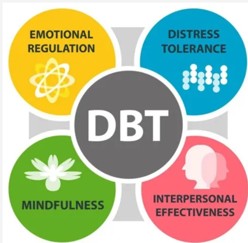
Cognitive behavioural therapy (CBT) asserts that negative thoughts play a big role in depression, anxiety, PTSD, suicidality, addictive processes, and various other behavioural problems. To improve mood, regulate anxiety, and function better, clients are guided to think positively and practice new behaviours.
Internal family systems (IFS) asserts that negative thoughts:
- come from protective parts (or subpersonalities) that inhibit traumatized parts with depression, anxiety, and many other behaviours that have long-term costs, or
- are expressions of identity (the traumatized parts have depressing, anxiety-provoking beliefs about their worth). From this perspective, improvements in mood and behaviour follow from traumatized parts feeling validated, legitimate, and loved.
Comparing Internal Family Systems and Cognitive Behavioral Therapy | Psychology Today United Kingdom December 2024
Other articles on relationships, anxiety, confidence, self-esteem and therapy
My therapy web site is: Tasso Talking Therapy (Please don’t hesitate to telephone or email for an informal and confidential chat about your mental health)
Articles
What do I do if I’m feeling stuck? – Kim Tasso October 2025
Improve mental health at work, in marketing and for women September 2025
Assertiveness toolbox – Kim Tasso May 2025
What happens in therapy? – Kim Tasso April 2025
Confidence to overcome a fear of failure – Kim Tasso September 2024
my relationships like rollercoaster rides? Volatile relationships (kimtasso.com) August 2024
How do you choose a therapist? – Kim Tasso July 2024
Emotional Regulation – A key element of Emotional Intelligence (EQ) (kimtasso.com) August 2021
Psychology and business communication (kimtasso.com) January 2015 An introduction to Transactional Analysis (TA) and the Parent Adult Child model
10 tips to increase your resilience – Kim Tasso March 2013
Therapy self-help book reviews
Attached by Dr Amir Levine and Rachel Heller August 2025
Book review – Feel the fear and do it anyway by Susan Jeffers June 2024. Classic self-help book on managing anxiety
Book review – Counselling for toads May 2025. The modern classic explaining Transactional Analysis (TA) using a story by Robert de Board using Toad and other characters from “Wind in the Willows”
Book Review: The Power of Now by Eckhart Tolle March 2025 A best-selling guide to ceasing your incessant thoughts, focusing on the present “here and now”, spiritual enlightenment and finding inner peace.
Overcoming low self-esteem – a self help guide using cognitive behavioural techniques January 2025
Book review: Taking charge of Adult ADHD by Russell A Barkley (kimtasso.com) October 2024
“Adult children of emotionally immature parents – how to heal (kimtasso.com) August 2024 An excellent book that has helped several clients suffering from anxiety, depression and “failed” relationships. How to recognise emotional, driven, passive and rejecting parenting styles and the coping mechanisms adopted (e.g. people pleasing, high independence etc).
Book reviews on stress and trauma – “When the body says No” (kimtasso.com) June 2024 Review of “When the body says no – The cost of hidden stress” by Gabor Mate and “The body keeps the score – mind, brain and body in the transformation of trauma” by Dr Bessel Van Der Kolk
Book review: The Thriving Lawyer by Traci Cipriano (resilience) (kimtasso.com) June 2024 A review of a book into the mental health and resilience of lawyers in law firm cultures. The author is a former practising attorney and clinical psychologist.
The Tools – Five life-changing techniques to unlock your potential (kimtasso.com) April 2024 A review of the book by psychiatrist Phil Stutz
Book review – Creating self-esteem by Lynda Field (kimtasso.com) March 2024 A classic book on realizing your true self worth
Book review: How to do the work (recognise your patterns (kimtasso.com) December 2023. Review of a book to support psychoeducation. Topics include: conscious self, theory of trauma, mind-body healing practices, inner child, boundaries, reparenting and emotional maturity.
Dr Julie Smith (Mental Health Guidance) (kimtasso.com) July 2023. Review of the book “Why has nobody told me this before?” that explores helpful ideas on low mood and depression, motivation, anxiety, emotional pain, grief, self-doubt, fear, stress and a meaningful life.
Overcoming clinical depression (2021) by Oliver Kamm (kimtasso.com) March 2023. A review of the book “Mending the Mind” which explores what it is like to suffer from depression and both the medical and psychological sources of help.
Lost connections – Why you’re depressed by Johann Hari (kimtasso.com) October 2019. A review of a popular book about the nine common reasons people suffer from depression.
Crazy busy – Book review – Dealing with stress (kimtasso.com) October 2009. This book examines modern life and offers practical advice to avoid stress and restore calm.
Book review: The psychology of successful women by Shona Rowan (kimtasso.com) June 2022. Topics include: confidence, assertiveness, boundaries, public speaking, impact, influence, visibility and bouncing back from setbacks.
Your personal transition – Endings, neutral zone and new beginnings (kimtasso.com) June 2020. Helps you navigate major changes in your life and prepares you for the emotional roller-coaster of change.
Short videos
Soft skills – Boost your self-confidence and confidence (Video) (kimtasso.com) October 2020
Business relationships – Using the drama triangle to resolve conflict (kimtasso.com) September 2020
How the parent, adult, child (PAC) model helps with difficult interactions (kimtasso.com) September 2020
Change process – Emotions when reacting to change (kimtasso.com) April 2020
Building Resilience – Regulation, Reframing, Relationships and Reflection (kimtasso.com) May 2020