
These are the highlights of a recent PM Forum – PM Forum training workshop on “Helping fee-earners prepare the perfect pitch” for marketing and business development professionals. We worked through three key aspects of pitching process: Planning and processes; selling and writing; and presenting and learning. Whilst larger firms have highly sophisticated processes and dedicated teams of pitch professionals, others are at the start of the journey. A lack of proactive business development and selling skills means that often tender documents are inward-looking and technical rather than focused on a strong value proposition. The use of AI has shifted client focus from the content of written documents to the presence of a firm’s people. This article supplements the learning resources from the session. Pitching and Tendering – Process, Propositions and Presence
Develop pitch and tendering processes
Larger firms often have highly sophisticated centralised pitch systems and processes with large teams of pitch specialists to support fee-earners. Other firms manage lower volumes of pitches and do not have processes or dedicated pitch experts to assist. Some firms have sophisticated information and pitch processes for key clients but little for other clients.
We spent some time looking at various aspects of the tendering process.
- Before a pitch or tender
- Marketing and business development processes designed to target, contact and nurture client relationships
- Significant research into the sector, client and contacts and their needs
- When a pitch or tender request arrives
- Assessing if and how they respond to different invitations
- Team assembly and co-ordination
- Research processes to compile internal and external information
- Prepare pitch documents
- Manage client interactions and presentations
- After a pitch or tender
- Follow up, measure, research and ongoing relationship development
As time is often the main challenge in producing more effective pitches, bids and tenders – AI and other tools focus on saving time in the pitch assessment, development and delivery process.
Delegates reflected that often pitch materials were: Too generic and inward looking, used out of date materials and lacked co-ordination between teams. Some noted that often more people were added to email review lists – making the process unwieldy.
We also considered where marketing and business development professionals were involved in the process. This led to considering how marketing and business development professionals can add value to the firm and fee-earners by elevating, integrating and expanding their role. Some examples that arose during discussions included:
- Establish or improve processes
- Initiate the business development process well ahead of receipt of RFPs and ITTs
- Research sectors, clients and people
- Conduct analysis (especially competitors)
- Implement strong project and team management processes
- Facilitate multiple experts communicate and collaborate
- Enhance the development of differentiating and persuasive value propositions
- Ensure materials are properly client-focused
- Promote consistency in brand and tone while flexing to adapt to client needs and values
- Manage editing rounds and version control
- Prepare fee-earners psychologically as well as with information
- Coach and advise pitch team members before meetings and presentations
- Debrief clients
- Move from compliance to innovation
- Assemble and maintain libraries of the latest information and versions
- Capture, harness and share knowledge, ideas and best practice
- Convert case studies into compelling stories
Some mentioned that they struggled to learn the outcome of bids and pitches. This was partly due to disjointed activities across practice groups, client teams, marketing and business development, professional support lawyers and pitch teams. Again, processes can support improvement.
We looked at how to make incremental improvements to the pitch process rather than aiming for a “Big Bang” overhaul. To support this, we needed to improve the relationship with the fee-earners who are managing pitches and tenders.
Enhance value propositions
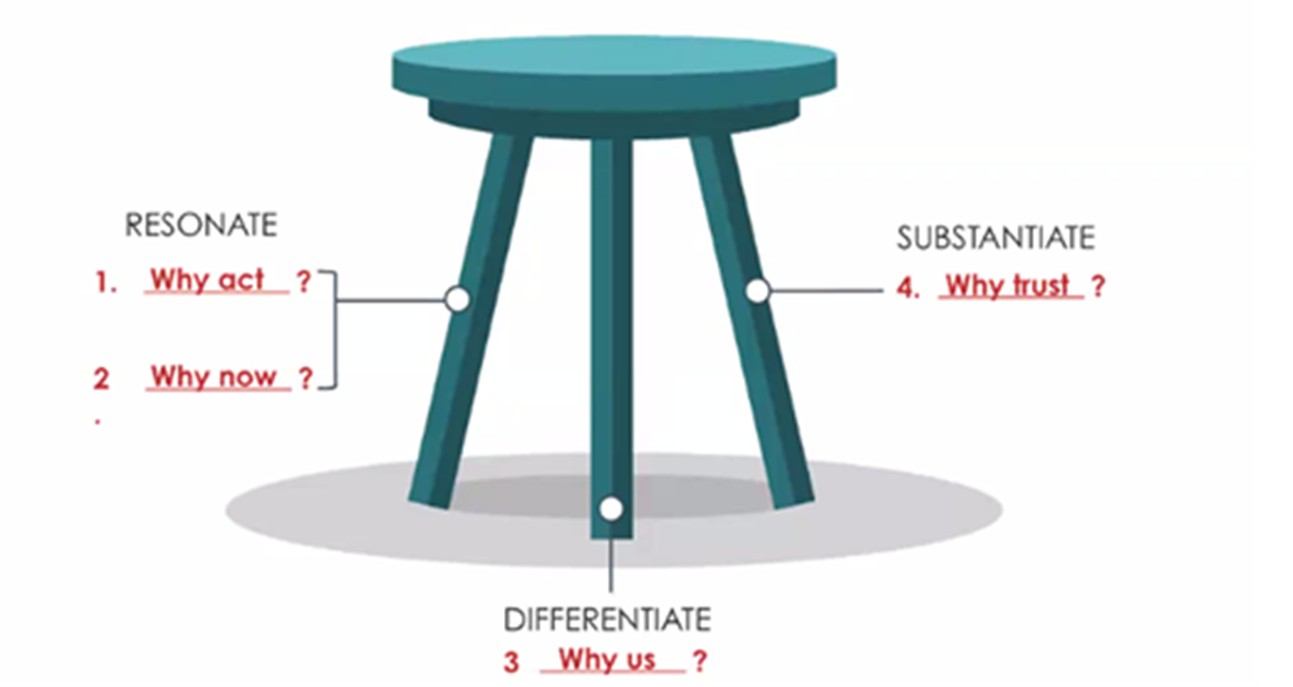
One area that emerged for greater focus was the development of client-focused value propositions. This requires both in-depth knowledge of the client and also deep sales knowledge to craft a value proposition that:
- resonates (why act and why now?)
- differentiates (why your firm?) and
- substantiates (why trust you?)
Value propositions ultimately focus on how to add value to clients by: generating more money; seizing opportunities, reducing pain and problems, saving money through productivity, efficiency or innovation gains; or minimising uncertainty or risk.
A strong and differentiating value proposition can be achieved with greater knowledge of client needs (obtained through research and client interactions) and tailoring solutions accordingly. Often, pitches and tenders focus solely on credentials – the third part of the value proposition.
Typically, value propositions need to be formed at the intersection:
- Client needs
- Your services and solutions (and people) and the benefits and value delivered
- Competitor position and offerings Pitching, differentiation and competitor analysis
Value propositions may need to be adapted for different stakeholders within the decision-making unit. Selling Basics – Detectives and DMUs (Video). For example:
- Economic buyer (e.g., CFO, CEO): Focus on Return on Investment (ROI), risk reduction and long-term financial impact
- End-User (e.g., Department Heads): Focus on usability, time-saving and operational efficiency.
- The Technical Buyer (e.g., IT, Security): Focus on integration, security standards and scalable infrastructure
Malcolm McDonald on value propositions – How to develop them
Most advanced sales methodologies acknowledge the experience of the fee-earners as a critical part of the value proposition (Insight selling – building on consultative selling models). People buy people.
Super-charge the presence and impact of fee-earners
While AI increases the efficiency of preparing pitches and tenders – from the client’s perspective it may be reducing the effectiveness of the pitching process. So clients are more likely to be influenced and persuaded by activities outside the formal RFP process – the early relationships established, trust, anticipation of their needs, insight provided and the co-creation of solutions by fee-earners.
This shifts the focus from the tender process and documents to the role of the fee-earners in client-facing teams. Clients increasingly want to see those who will deliver the work so this can place pressure on younger fee-earners with little experience of pitching.
We also spent time considering how to enhance business development activity by taking proactive relationship development action well in advance of RFPs and ITTs. For example (from Clients All But Abandon RFPs: Here’s What’s Next – The BTI Consulting Group February 2026):
- Deliver an Anticipation Brief
- Develop a pre-emptive, unsolicited pitch
- Offer to develop and facilitate a 90-Minute Strategy Session
- Deploy rainmakers where the growth Is
- Create a client-facing diagnostic tool
- Build a monthly “Top Risks” signal loop
- Aim at sectors and industries with the most acute needs
In some firms, pitching and tendering processes are linked to KAM programmes – with Client Relationship Partners (CRPs) and Client Experience Managers (CEMs) taking the lead in assembling and maintaining client intelligence. This means they are so fully immersed in the client’s world they can equip all fee-earners with information and insight that helps them make a bigger impact on client perceptions.
There was also a discussion about how training, coaching, experience and rehearsals can help fee-earners develop confidence so that they make an impact when meeting and presenting to clients. This contributes to developing and refining their personal brand. And this is part of the broader business development and sales development processes.
Towards leadership – Elevate your Presence, Influence and Impact
Boosting Your Confidence at Work – A Toolbox for Success
Delegate information
Assistant, executive and manager delegates had a variety of roles in marketing and business development
Key delegate reflections and actions
- How to assess whether a pitch is worthwhile
- Understand the client – highlighting the importance of research
- More confidence in asking questions to build knowledge and experience
- Implement strategy and process for pitching
- Address what we can do for clients
- Strengthen the value proposition by tailoring closely to the client
- Key points must be immediately understandable
- Improve the message to focus more on ‘you’ and less on ‘we’
- Follow up with clients after pitches have been submitted for feedback
- Track successful pitches
- A better understanding of bid processes
Key challenges in pitching and tendering
- Too many cooks
- Managing multiple versions of documents
- Fee-earners providing too much information and detail
- Maintaining a consistent brand and format
- Encouraging fee-earners to listen to guidance
- Managing ever-expanding review and editing processes and version control
- Understanding so many technical areas in different sectors and service lines
- Getting up to speed quickly on clients
- Coping with time pressures (sometimes just a couple of hours to produce credentials)
- In larger RFPs, many questions are repeated
- Different fee-earners expect different things from the team
- Some fee-earners just tell us what to do – and resist any suggestions
- Lack confidence to do anything more than just executing tasks
Delegate poll results
Delegates find it useful to compare and benchmark their responses with their peers.
How much of your time is spent on pitches and tenders?
- 29% Less than 25%
- 43% 25-50%
- 29% 50-75%
- 0% Over 75%
How much experience do you have on pitching/bidding/tendering?
|
1 |
||
| 2 | ||
| 3 | 14% | |
| 4 | 29% | |
| 5 | 14% | |
| 6 | 14% | |
| 7 | 14% | |
| 8 | 14% | |
| 9 | ||
| 10 |
Is your role primarily:
- 0% Part of the sales team (client facing)
- 13% Strategic support
- 50% Content development
- 13% Process support
- 13% Information/administrative support
- 13% Something else
Which pitch/tender metrics do you use? (multiple choice)
- 75% Volume of pitches received/submitted/won
- 50% Existing client vs new/target client
- 38% Value of pitches received/submitted/won
- 38% Profitability of pitches won
- 25% Analysis by department/service/sector/territory
- 13% Client rankings of pitch submission
- 13% Fee-earner and M&BD time on pitches
- 0% Conversion rate
Do you have a policy/system for agreeing which pitches to accept?
- 13% Yes
- 50% No
- 38% Sort of – but it’s rarely observed in practice
How much research do YOU do to support a pitch?
- 13% None
- 38% An hour or so (mostly internal systems)
- 50% Between two to four hours (including external research)
- 0% Between five and ten hours
- 0% More than 10 hours
How often do you conduct a structured competitor analysis when preparing a pitch? Pitching, differentiation and competitor analysis (kimtasso.com)
- 0% Always
- 50% Sometimes
- 38% Never
- 13% Other (SWOT analysis in our client plans, annual research packs and we then update for formal tenders (this is specific to key clients)
Which do you think is the MOST important factor when writing a pitch document?
- 75% Focus on the client’s interests
- 25% Accurate information
How much time do you spend planning pitch presentations? Perfect pitches – Five key points (Video) Kim Tasso
- 29% We don’t plan presentations – we just produce them
- 0% Up to an hour
- 29% One to three hours
- 43% We spend more time refining the presentation once its produced
How often do you help with rehearsals?
- 0% Always – every time
- 13% On the largest/most important pitches
- 13% Only when requested
- 38% Rarely
- 38% Never
Do you make post-pitch debrief calls to clients?
- 0% Yes – Always
- 0% Yes – sometimes
- 13% Rarely
- 75% Someone else does it
- 13% Never/We don’t do this as a firm
Related articles on pitches, tenders and bids
System review – Referonix AI pitch automation system – Kim Tasso April 2026
client feedback playbook – How professional services firms January 2026
Tendering and pitching – Key ideas and actions – Kim Tasso November 2025
Sales processes and skills – MBD support for the nurturing gap? October 2025
Arup and GHD pitch automation and AI October 2025
Perfect Pitch Process – Don’t just parachute in the fee-earners May 2025
Pitching – Focus on the client’s needs (Let the client do the talking) May 2025
Book Review: Strategic Tendering for Professional Services April 2025
Pitching and tendering – Manage objections – Kim Tasso August 2024
You’re not listening – What you’re missing June 2024
Pitches, tenders and proposals – Efficiency (systems) May 2024
Book review: Sales Mind – 48 tools to help you sell (kimtasso.com) January 2024
Pitching, differentiation and competitor analysis (kimtasso.com) June 2023
Pitch points from a pitching and tendering training workshop (kimtasso.com) April 2023
PM Conference Report 2022: Strategy implementation (kimtasso.com) November 2022
Pitching insights – Qualification, Branding and Following up (kimtasso.com) October 2022
Five Spice Girl lessons from a pitching workshop (May 2022) (kimtasso.com) May 2022
Pitching and tendering – Focus, differentiation and less is more (April 2022) (kimtasso.com) April 2022
An introduction to presentation skills – Easy as ABC (Video) (kimtasso.com) March 2022
Insights on pitching – Online, virtual, productivity, confidence (kimtasso.com) December 2021
pitch insights – M&BD adding value, pitch processes, knowledge base (kimtasso.com) October 2021
Practical sales tips: Reach out and Follow up (kimtasso.com) October 2021
Non-Verbal Communication (NVC) – the basics (Video) (kimtasso.com) August 2021
Seven pitching themes – specialisation, engagement, research, content (kimtasso.com) May 2021
Perfect pitches – Five key points (Video) Kim Tasso February 2021
Pitch Points – Five thoughts from a pitching and tendering workshop (kimtasso.com) January 2021
marketing case study – Transformational change in Savills’ bid processes (kimtasso.com) November 2020
Soft skills – Boost your self-confidence and confidence (Video) (kimtasso.com) October 2020
The growth of MarTech in professional services – an overview (kimtasso.com) March 2020
Pitching and Tenders – Nine top tips and client feedback (June 2019) (kimtasso.com) July 2019
Winning pitch presentations – tips for competitive tendering (kimtasso.com) May 2017
strategic tendering (kimtasso.com) May 2017
Selling – research in the pitch process (kimtasso.com) October 2016
perfect pitches and tenders in professional services (kimtasso.com) October 2015