

As a result of recent articles and blog posts on mental health in marketing (see Improve mental health at work, in marketing and for women) I was invited by Kiran Kapur | LinkedIn – CEO of Cambridge Marketing College to join her on a podcast. Why Marketers Are Struggling — And How to Cope | The Cambridge Marketing Podcast Stress and burnout – The stress bucket, healthy coping mechanisms and resilience
Introduction by Kiran Kapur
“Marketing is fast, demanding and often overwhelming. In this episode, we talk honestly about why the job feels so stressful, how burnout shows up, and why resilience varies so much from person to person. Psychotherapist and marketing consultant Kim Tasso explains warning signs, team pressures, remote-work challenges, and simple ways to lower stress before it hits a breaking point”
Podcast topics: Stress and burnout – The stress bucket and other healthy coping mechanisms (CMC podcast on “Why Marketers Are Struggling — And How to Cope”)
During 30 minute podcast (Why Marketers Are Struggling — And How to Cope | The Cambridge Marketing Podcast), we explore the following topics:
- Why marketing can be a stressful career
- Are marketing careers becoming more stressful?
- What are the warning signs of excessive stress?
- Does everyone experience stress the same way?
- What happens when we become overwhelmed with stress?
- Can we develop more resilience to stress?
- What do we do if people in the team have different responses to stress?
- Sometimes, people who appear to thrive on stress have an inappropriate response to stress
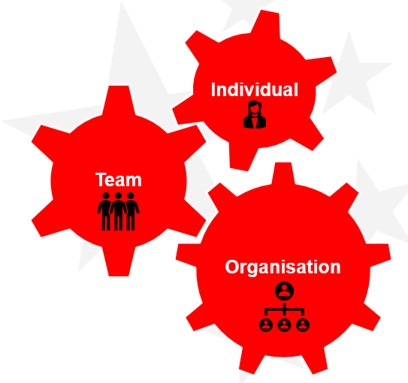
- Differences in individual, team and organisational culture attitudes to stress
- How leaders are responsible for modelling healthy approaches to stress management and vulnerability
- What are the signs that someone isn’t coping well with stress?
- How to increase your resilience to stress?
- Are young people less able to cope with stress?
- Have attitudes towards stress at work changed?
- How do you help someone at work who appears to be suffering from stress?
- What is a safe space (in the context of psychological safety)?
- What if the person feeling stressed prefers to isolate themselves?
I thought we might focus on two of the topics discussed during the podcast: The stress bucket technique and resilience.
The stress bucket metaphor
The stress bucket is a metaphor for how to think about our ability to cope with stress.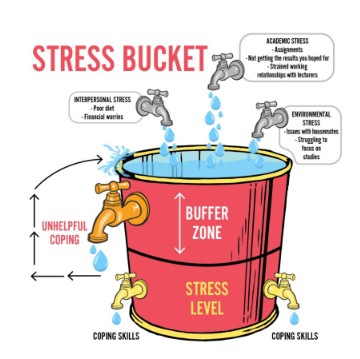
Imagine you are a bucket. Stress is like water filling the bucket up. Things that cause stress will be different for everyone but might include: having too much to do, fearing you will miss a deadline, failing to look after your kids, conflict, uncertainty, not being kind when talking to your partner, financial worries and work worries.
Some people have a large stress bucket – they have developed resilience and can cope with a lot of stress. Other people have a small stress bucket – it doesn’t take much to push them to feeling overwhelmed. Everyone has a different ability to cope with stress – some can cope with a lot, some can cope with only a little. Most people need a little stress for optimum performance. Some people – due to their past and personality – seem to thrive on a lot of stress. They might be perfectionists or toxic achievers. Sadly, they may tolerate a lot of stress for a significant time and then have a major breakdown.
If your stress bucket overflows you become overwhelmed. You may experience anxiety, burnout or depression. Stress has taken over.
So we adopt coping mechanisms. Some of these are unhealthy. And may cause more stress in the long term. So we can try to shift to more healthy coping mechanisms.
Unhealthy coping mechanisms
When your bucket becomes full, you may revert to unhealthy responses to stress. These are unhealthy coping mechanisms.
They might include: procrastination, social withdrawal, excessive screen time, emotional numbing, substance abuse (e.g. alcohol, drugs, smoking), overeating, gambling, self-harm, over working, negative self-talk, aggressive behaviour and rumination (dwelling on excessively negative thoughts).
Healthy coping mechanisms
We can try to develop healthy coping mechanism for when stress is building up. To prevent overwhelm and burn out.
Healthy coping mechanisms include:
- taking a short break
- going for a walk
- attending an exercise class
- deep breathing exercises
- meditation
- going for a cup of coffee with a friend
- listening to some music
- taking some time for ourselves (e.g, a warm bath, some reading time etc)
- being out in nature
The NHS offers five steps to mental well being 5 steps to mental wellbeing – NHS
- Connect with other people
- Be physically active
- Learn new skills
- Give to others
- Pay attention to the present moment (mindfulness)
Here is another article on stress buckets: Buckets Full of Stress | Psychology Today United Kingdom (July 2023)
Signs of stress
It can be hard to detect if someone is experiencing stress – many people have developed the ability to mask the signs and present an invulnerable persona.
But you can watch for the signs, and perhaps ask them how they are feeling and mention that you noticed that they appear to be behaving differently How to help and support someone who’s stressed | Mind
Emotional signs
- Irritable, angry or tearful
- Anxiety, worried, overwhelmed or expressing hopelessness
- Loss of motivation, confidence or enjoyment in life
- Withdrawal from social activities
- Mood swings or feeling emotionally numb
Physical signs
- Headaches, muscle tension
- Fatigue or difficulty sleeping
- Stomach problems (cramps, nausea, changes in bowel habits)
- Increased heart rate or light-headedness
- Skin issues (e.g. hives)
Behavioural signs
- Difficulty concentrating or making decisions
- Procrastination or falling behind on tasks
- Changes in appetite
- Substance use (food, alcohol, drugs)
Cognitive (thinking) signs
- Racing thoughts
- Inability to switch off or relax
- Feeling constantly on edge
- A sense of dread
See also Get help with stress – NHS
Develop a wellness action plan
Another tool to help you manage your mental health at work is Mind’s Wellness Action Plan. This is a template and guide for people in the workplace.
The Wellness Action Plan is inspired by Mary Ellen Copeland’s Wellness Recovery Action Plan® (WRAP®): an evidence-based system used worldwide by people to manage their mental health
Resilience
Resilience is our ability to bounce back from difficulties, adapt to stress and recover from adversity.
There are different types of resilience:
Emotional resilience – How we manage our emotional responses to challenges and deal with our feelings and strong emotions such as anger, fear, vulnerability or sadness. It is part of us accepting the reality of our situation while also have the emotional capacity to get through it. It is our ability to manage and regulate feelings like anger or fear. It is part of emotional intelligence.
Psychological resilience – The mental capacity to deal with or adapt to uncertainty, difficulties, and adversity. Sometimes this is referred to as “mental fortitude”. Psychologically resilient people develop coping strategies and skills that enable them to stay calm and focused during a crisis and move on without long term negative consequences such as distress and anxiety.
Physical resilience – The body’s ability to recover from illness, injury and stress. This is built through sleep, nutrition and exercise.
Social resilience – Being able to draw support from supportive relationships, community and a sense of belonging
Improve your resilience – tools to help you cope in difficult times is one of my articles published in published on The Law Society’s Law Management Section on October 6th 2020. Considers:
- What is resilience?
- Why is resilience important?
- How can you improve your resilience?
- Regulate your emotions
- Reframe
- Talk
- Reflect on realistic goals
- Recovery
Building Resilience – Regulation, Reframing, Relationships (May 2020) This is a 10 minute video on “What is resilience and how can you be more resilient?”. Four techniques are explored:
- Regulation (STOP method)
- Reframing (consider the more positive aspects of a negative thing)
- Relationships (we are wired to connect)
- Reflection and realistic goals
What happened to you? Conversations on trauma, resilience (November 2025) a book review of “What happened to you? Conversations on trauma, resilience and healing” by Bruce D Perry and Oprah Winfrey
Support the mental health of people at work
During the podcast, I mention a number of practical things that you can do to contribute to a healthier work environment
- Transforming your workplace with expert mental health training and consultancy · MHFA England You and others at your organisation can undertake Mental Health First Aid training.
- I mentioned above the Mind Wellness Action Plan T which you can complete for yourself and encourage team members to complete
- Speak to your Human Resources professionals or department to learn about the resources, training and support they provide. The professional body for HR professionals is CIPD. Here is its views on employee health and wellbeing Employee health and wellbeing | CIPD
- This Institute of Director webinar describes creating psychological safety to support high performing teams Psychological safety: Discover the secret behind high-performing teams | Institute of Directors
- Many employers provide Employee Assistance Programmes (EAPs) which are confidential helplines where employees can access counselling support Employee assistance programmes and mental health | Factsheets | IoD
- People can consult the NHS, their GP or a variety of mental health charities about their mental health
Related resources on therapy, trauma and resilience
My therapy web site is: Tasso Talking Therapy (Please don’t hesitate to telephone or email for an informal and confidential chat about your mental health)
Articles
What do I do if I’m feeling stuck? – Kim Tasso October 2025
Improve mental health at work, in marketing and for women September 2025
Assertiveness toolbox – Kim Tasso May 2025
What happens in therapy? – Kim Tasso April 2025
Confidence to overcome a fear of failure – Kim Tasso September 2024
my relationships like rollercoaster rides? Volatile relationships (kimtasso.com) August 2024
How do you choose a therapist? – Kim Tasso July 2024
Emotional Regulation – A key element of Emotional Intelligence (EQ) (kimtasso.com) August 2021
Psychology and business communication (kimtasso.com) January 2015 An introduction to Transactional Analysis (TA) and the Parent Adult Child model
10 tips to increase your resilience – Kim Tasso March 2013
Therapy and counselling self-help book reviews
What happened to you? Conversations on trauma, resilience November 2025. Book review: What happened to you? Conversations on trauma, resilience and healing by Bruce D Perry (psychiatrist) and Oprah Winfrey
Introduction to Internal Family Systems (IFS) October 2025. An overview of the therapeutic approach IFS that seeks to explore your internal parts – the exiles, managers and firefighters – and develop a greater sense of self and calm.
Attached by Dr Amir Levine and Rachel Heller August 2025. How attachment theory can help you understand your relationship style – secure, avoidant and anxious.
Book review – Feel the fear and do it anyway by Susan Jeffers June 2024. Classic self-help book on managing anxiety
Book review – Counselling for toads May 2025. The modern classic explaining Transactional Analysis (TA) using a story by Robert de Board using Toad and other characters from “Wind in the Willows”
Book Review: The Power of Now by Eckhart Tolle March 2025 A best-selling guide to ceasing your incessant thoughts, focusing on the present “here and now”, spiritual enlightenment and finding inner peace.
Overcoming low self-esteem – a self help guide using cognitive behavioural techniques by Melanie Fennell January 2025
Book review: Taking charge of Adult ADHD by Russell A Barkley (kimtasso.com) October 2024
“Adult children of emotionally immature parents – how to heal (kimtasso.com) August 2024 An excellent book that has helped several clients suffering from anxiety, depression and “failed” relationships. How to recognise emotional, driven, passive and rejecting parenting styles and the coping mechanisms adopted (e.g. people pleasing, high independence etc).
Book reviews on stress and trauma – “When the body says No” (kimtasso.com) June 2024 Review of “When the body says no – The cost of hidden stress” by Gabor Mate and “The body keeps the score – mind, brain and body in the transformation of trauma” by Dr Bessel Van Der Kolk
Book review: The Thriving Lawyer by Traci Cipriano (resilience) (kimtasso.com) June 2024 A review of a book into the mental health and resilience of lawyers in law firm cultures. The author is a former practising attorney and clinical psychologist.
The Tools – Five life-changing techniques to unlock your potential (kimtasso.com) April 2024 A review of the book by psychiatrist Phil Stutz
Book review – Creating self-esteem by Lynda Field (kimtasso.com) March 2024 A classic book on realizing your true self worth
Book review: How to do the work (recognise your patterns (kimtasso.com) December 2023. Review of a book to support psychoeducation. Topics include: conscious self, theory of trauma, mind-body healing practices, inner child, boundaries, reparenting and emotional maturity.
Dr Julie Smith (Mental Health Guidance) (kimtasso.com) July 2023. Review of the book “Why has nobody told me this before?” that explores helpful ideas on low mood and depression, motivation, anxiety, emotional pain, grief, self-doubt, fear, stress and a meaningful life.
Overcoming clinical depression (2021) by Oliver Kamm (kimtasso.com) March 2023. A review of the book “Mending the Mind” which explores what it is like to suffer from depression and both the medical and psychological sources of help.
Lost connections – Why you’re depressed by Johann Hari (kimtasso.com) October 2019. A review of a popular book about the nine common reasons people suffer from depression.
Crazy busy – Book review – Dealing with stress (kimtasso.com) October 2009. This book examines modern life and offers practical advice to avoid stress and restore calm.
Book review: The psychology of successful women by Shona Rowan (kimtasso.com) June 2022. Topics include: confidence, assertiveness, boundaries, public speaking, impact, influence, visibility and bouncing back from setbacks.
Your personal transition – Endings, neutral zone and new beginnings (kimtasso.com) June 2020. Helps you navigate major changes in your life and prepares you for the emotional roller-coaster of change.
Short videos on therapy and mental health topics
Soft skills – Boost your self-confidence and confidence (Video) (kimtasso.com) October 2020
Business relationships – Using the drama triangle to resolve conflict (kimtasso.com) September 2020
How the parent, adult, child (PAC) model helps with difficult interactions (kimtasso.com) September 2020
Change process – Emotions when reacting to change (kimtasso.com) April 2020
Building Resilience – Regulation, Reframing, Relationships and Reflection (kimtasso.com) May 2020