
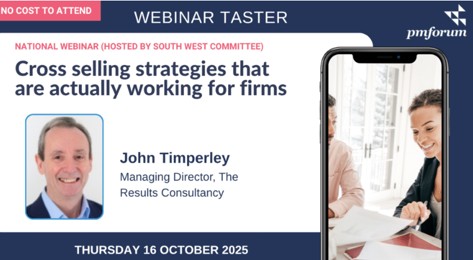
I posted an overview article Cross-selling and referrer management – Past, present and future (September 2025) as I have many active client projects in this area – as I have for many years. Not long after, John Timperley | LinkedIn – a professional services marketing veteran who I have known for decades – presented a webinar in October for PM Forum. Whereas I focused on strategy and systems in my post, John shared some practical steps at the webinar. Cross-selling – Practical steps to take.
Introduction to John Timperley’s webinar on cross-selling
The session was chaired by Anna Lake who is a client listening expert. Over 400 joined the Events & webinars – PM Forum which is one of the highest numbers of registrations, showing just how important this topic is.
John reframed cross-selling as ‘bringing the full value of the firm to clients’. He reflected that ‘We do a great job for our clients, we have great people, so why can’t we open up more opportunities for each other?’ is a common Managing Partner refrain. He reflected that the cross-selling strategies to adopt will depend on the size of firm, its service offering and the culture of firm. Cultivate a cross-selling culture
He focused on five areas:
- Introducing the wider firm to clients
- Attracting introductions from colleagues
- Spotting opportunities for colleagues to help
- Overcoming the key barriers
- Ingredients of a good personal cross-selling plan
Practical activities to support cross-selling
He suggested 10 effective practical activities:
1. Client service planning meetings
He mentioned key client meetings where the right people working on a key client worked together in a room to explore what else they could bring to a client. He reported that just getting the right people together on a firm’s top 10 clients had been transformative for one firm.
2. Presenting at other team’s meetings
He suggested partners and others for a key client presented for 10 minutes at other teams’ meetings. He mentioned a tax litigation partner presenting to relevant teams what they have done for similar directors to those they might have. Ten 15 minute presentations generated a year of work.
3. Visibility of new work reports
He asked how firms shared information on new clients and new work. And how proactive partners got in touch to proactively suggest possible services for those clients.
4. Shared marketing activity calendar
He talked about teams working together. In particular, a corporate finance and tax team in accounting. And corporate law teams working with employment and real estate teams. They organised joint meetings.
5. Cross-selling buddies or “pods”
Some complementary practice areas call each other to account, attend events together and act as sounding boards for each other to improve working relationships. He mentioned three-four professionals working in a pod with specific objectives to try to find three client opportunities together.
6. Post-assignment debriefs
All client listening exercises might be included here. Cross-selling and referrals – Listen, Focus and Proximity
But client satisfaction may be highest immediately after an assignment and they will be thinking of their next projects so this might be a good time to ask about other needs. You might also seek referrals at this time.
7. Asking for referrals and introductions from colleagues
Internal and external roundtables are a good time to ask about specific issues where there may be referral opportunities.
8. Sector lunches and other approaches for clients and contacts
Any time that clients, referrers and contacts are assembled is a good time to raise issues that are likely to be of interest to people. From my experience, it is also helpful if clients mention some of the services they have used and the benefits which might encourage others to ask about them
“Proximity marketing” (my term for just getting people together) can be achieved in many different gatherings.
9. Showcasing stories of the work you have done
Case studies and stories – whether written, spoken or in video format – are compelling ways to showcase what you have done for other clients
Book review: Unleash the power of storytelling by Rob Biesenbach
10. Internal “speed networking” events
Get people together and encourage them to rotate every 10 minutes – so they have time to learn about each other’s services and discuss organisations that might be interested in them
There are other practical ideas here: Cross-selling and referrer management – Past, present and future
Attract cross-selling introductions from colleagues
To attract introductions from colleagues you can:
- Update colleagues on what you do
- Educate them on triggers that point to your service
- Send referrals their way to build reciprocity referrer management in professional service firms
- Look for mutual opportunities
- Earn the right for future referrals
- Recognise the importance of your internal network
- Demonstrate how well you handle the work
Processes for cross-selling
Have a process for selling your colleague’s expertise:
- Have a short fact sheet about the service (answering who, how, what, when and where)
- Identify trigger point or key question(s) to ask client
- Talk through the process for introducing them (email, call, meeting etc)
- Agree the follow through and follow up process
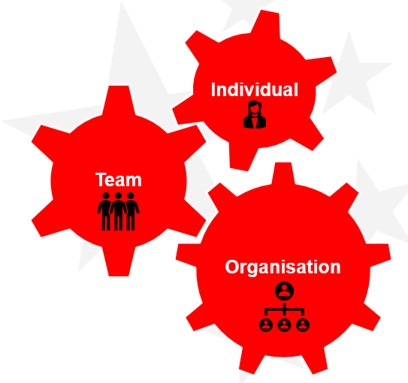
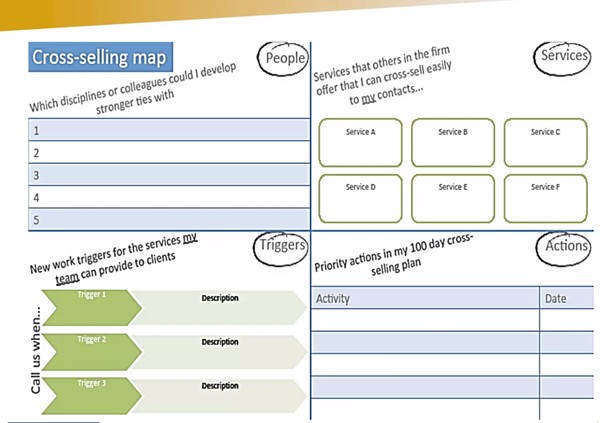
There are diagrams above for cross selling planning and mapping.
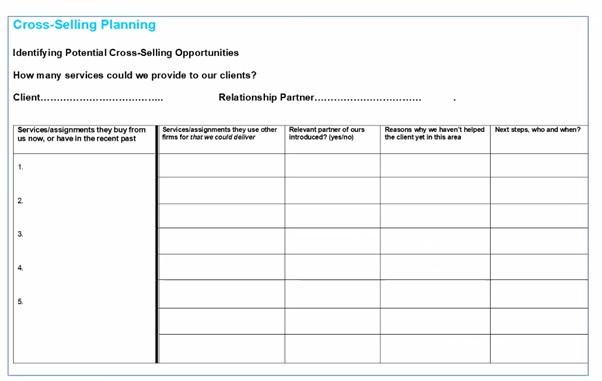
Adopt an issues-focused approach (Identify an issue that you could highlight to colleagues so that they can position you and your team for an introduction to their clients or contacts)
- The issue
- Why your client may need to act
- How we can help
- Where have we done it before?
- Our experience and credentials in the area
- Our contacts
He mentioned some technology solutions to help with cross-selling
- Introhive
- Identifies interactions between staff and clients
- ClientSense
- Identifies your strongest relationships with organisations and individuals
- Assists with cross-servicing as it can automatically report on the clients that are known to one group in the firm but not another
- Creates key client “heat maps” showing gaps in key relationships and potential “white space” for different practice groups
- Pre-meeting notifications identifying the individuals, their contact details and if anyone else from the firm has had recent communication
Cross-selling and referrer management – Data, focus
Ingredients of a good cross-selling plan
- People
- Disciplines and colleagues to develop closer ties with
- Triggers
- Indicating potential for new work that you and your team provide
- Services
- Which others in the firm offer – and you can introduce easily to contacts
- Actions
- Your priority actions – what and when over a 100-day period
Common barriers to cross-selling
John talked through how to overcome the key barriers to cross-selling (common friction points in firms)
- Spotting the issue
- Wider firm knowledge
- Client sharing
- Client attitude
- Incentives and recognition
- Converting the opportunity
John can be contacted at results@winningbusiness.net
PM Forum members can watch the video Cross selling strategies that are actually working for firms
(It’s interesting that recently there have been a number of professional service marketers on LinkedIn saying that cross-selling is too inward looking and firm-oriented. They say that firms and fee-earners should be more focused on client needs and issues and promoting appropriate solutions in response. I agree with the client-focused approach. However, my view is that most firms understand the concept of cross-selling – and we should aim to achieve the mindset shift from internal (firm and service focus) to client need focus as part of our “cross-selling” solution. It’s a core component of any business development training)
Related posts on cross-selling
Cross-selling and referrer management – Past, present and future September 2025
Cross-selling and referrals – Listen, Focus and Proximity March 2025
Referrer management: Diagnosis, Aims, Strategies and Action November 2024
Referrer Management Strategies – Planning for the firm, teams August 2024
Cross-selling and referrer management – Data, focus (kimtasso.com) March 2024
Sales Targeting Toolbox for Professional Services Firms February 2024
Referrer Management – Capacity and Capability (kimtasso.com) October 2023
The EAST framework for behavioural nudges in marketing? (kimtasso.com) August 2023
Employee Communications and Alumni Programmes (kimtasso.com) August 2023
Referrer management – Grading, Research, Discipline, Storytelling (kimtasso.com) April 2023
Cultivate a cross-selling culture (kimtasso.com) March 2023
Referrer and Intermediary Management – Silos, Targets and Culture (kimtasso.com) February 2023
Referrer Management Strategies – Rationale and Challenges (kimtasso.com) January 2023
Referrer Management workshop (June 2022) (kimtasso.com) June 2022
Cross-selling and referrer management – Expectations, Data and Focus (kimtasso.com) March 2022
Referrals – The role of internal communications (kimtasso.com) December 2021
Three referrer management themes – Plans, Relationships (kimtasso.com) July 2021
Referrer Management and Cross-Selling Insights (March 2021) (kimtasso.com) March 2021
Highlights from a referrer management workshop (2020) (kimtasso.com) December 2020
Six themes on cross-selling and referrer management workshop highlights (kimtasso.com) September 2020
pragmatic steps to improved referrer management 2019 (kimtasso.com) December 2019
Structured programmes for Referrer Relationships – workshop July 2019
A personal approach to cross-selling – outbound and inbound internal referrals (kimtasso.com) August 2018
Client satisfaction benchmarks – How do you measure up? May 2018
Relationship and referrer management (kimtasso.com) December 2017