

Whenever you meet new people – at social and networking events and in client and selling situations, you need to establish rapport. Establishing rapport is the foundation for a relationship. You need rapport when influencing and negotiating. And for effective coaching and therapeutic relationships. So what is rapport? And how do you build rapport? How does rapport turn into trust? I’ve answered these and related questions. And provided links to further information on each topic. How to build rapport – An essential guide
- What is rapport?
- What’s the difference between rapport and trust?
- Rapport uses social skills and emotional intelligence
- How do you build rapport?
- Be authentic and find common interests
- Use non-verbal communication
- Adapt your style
- Develop empathy
- Be curious and ask questions
- Listen actively
- Adapt to environments
- Online
- Telephone
What is rapport?
Rapport is “a state of harmonious connection, mutual trust and understanding between individuals”.
Rapport is a social lubricant. It is an important feature of unconscious human interaction. It is a commonality of perspective – it feels like being in “sync” or being on the same “wavelength”. Some people consider rapport to be part of personal chemistry and those who are good at generating rapport as charismatic.
Rapport is an early, close and harmonious dynamic where people understand each other’s feelings and communicate well.
Some argue that there are three components to rapport:
- Safety: People feel safe and listen to each other
- Connection: A shared sense of harmony and mutual understanding
- Communication: Ideas flow easily without barriers
Others suggest these are the core components:
- Mutual attentiveness – listen actively and focus on the person (don’t be distracted)
- Positivity – keep the emotional tone warm, friendly, supportive and feeling safe. Be confident
- Co-ordination – similar in verbal and non-verbal ways
It is said by some that we have a natural rapport with between 10% and 30% of the people we meet. And suggested that training (for example with Neuro-Linguistic Programming – NLP) can help you double your starting figure.
What’s the difference between rapport and trust?
Rapport is about communication and connection; trust is about dependability and safety.
Rapport is the immediate, smooth connection and comfort you feel during a conversation. Trust is the deeper, longer-term confidence where you feel that a person is reliable, safe and honest. While they work closely together, they function differently in human relationships.
Rapport is about the interaction in the current moment. How the conversation flows and mutual attention. It happens quickly. Both people feel comfortable and heard.
Trust is a foundation that relies on character, intimacy, history and consistency over time. It takes time to earn trust through proven actions, predictability and reliability. Trust is built on credibility, reliability, intimacy and shared positive intentions.
trust for better business relationships
Conversation skills book review 3: Conversational intelligence
Book review: Digital Body Language – How to build trust by Erica Dhawan
Rapport is the starting point for relationships. Relationships progress through similar development stages:
-
- Acknowledgement
- Understanding
- Acceptance
- Respect
- Trust
- Bond
Rapport helps you in the initial stages: acknowledging the other person and starting to develop mutual understanding.
Better Business Relationships – The building blocks
DACRIE – A model to enhance business relationships
In Book review: Building B2B Relationships, the author offers a different definition of trust – ability, integrity and benevolence. And suggests that the factors to build trust between organisations:
- Capability to deliver
- Cultural fit
- Partnership mentality
- Components of trust: quality, governance (project management methodology) and problem-solving
- Ability to deliver successful projects and deliver tangible business outcomes
- Personal gain for client: personal satisfaction, career enhancement and replicating success
Rapport uses social skills and emotional intelligence
Building rapport requires a host of personal and interpersonal (soft) skills – which are conveniently wrapped up in emotional intelligence:
Emotional self-awareness – Be aware of what you are feeling and thinking in a situation – and how you “broadcast” these things to others in social settings
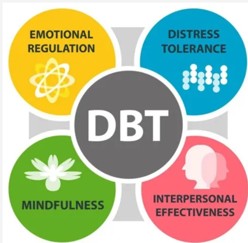
Emotional regulation – Once you are aware of what you are feeling and thinking, you can self-regulate. For example, in a social setting you may feel slightly anxious but learn to calm yourself so you can focus on others
Social awareness – Demonstrate empathy by tuning into how others are feeling and behaving
Relationship management – Know how to interact with people bearing in mind how they are feeling, thinking and behaving
You can learn more about empathy and emotional intelligence here:
An introduction to emotional intelligence (EQ) and empathy (Video) July 2020
Emotional Regulation – A key element of Emotional Intelligence (EQ) August 2021
Emotional Intelligence in legal practice (Globe’s Fundamental Skills July 2026
How do you build rapport?
There are various techniques that can help you build rapport:
- Be authentic and find common interests
- Use non-verbal communication
- Adapt your style to enhance rapport
- Develop empathy
- Show curiosity and ask questions
- Listen actively
- Adapt to different environments
Be authentic and find common interests
“Be yourself, everyone else is already taken” Oscar Wilde
“Seek someone else’s thoughts and opinions without judging them” Robin Dreeke (former head of the FBI’s Behavioural Analysis Program)
Try to relax and be yourself. Be real and comfortable in your own skin as it inspires trust.
Seek people who are similar to you (gender, generation, culture etc) as similarity attracts. Similarity suggests people may share your views so they feel more confident about their own opinions. Similarity suggests there will be an easy interaction requiring less effort. Similarity means there’s less social threat. Similar people are likely to act in ways that you can easily understand – so they are more predictable and you are more likely to perceive a connection.
Use non-verbal communication (NVC) to create rapport
Rapport starts before you even speak. We rely heavily on visual input when we meet new people – so first impressions count and will help (or thwart) our ability to develop rapport quickly. And when we do speak, it’s not so much what you say, but how you say it.
Early researchers found that when we first interact, the impact is
- 55% of the meaning is how you look (your posture, expressions and gestures)
- 38% by how you sound
- 7% of your meaning is conveyed with the words you speak
Researchers Linda Tickle-Degnen and Robert Rosenthal claim that building a good rapport involves three non-verbal key elements:
- Mutual attentiveness
- Positivity
- Coordination
When people have a natural rapport they will unconsciously adopt a similar stance, posture and gestures to the other person. There are mirror neurons in our brains that will fire similarly when we are in rapport with people.
Neurolinguistic programming (NLP) suggests that you can also enhance rapport by mirroring and matching behaviour. For example, mirroring stance and gestures or matching speaking or breathing rate.
In many cultures, maintaining eye contact and smiling will help with rapport development. However, there are significant cultural differences in non-verbal communication. So you may need to learn more about this in international situations (Book Review: The Culture Map by Erin Meyer).
And when you are communicating digitally rather than in person, you need to address the gender, generational and cultural issues (Book review: Digital Body Language – How to build trust by Erica Dhawan)
Non-Verbal Communication (NVC) – the basics (Video) August 2021
Assertive communication: The importance of voice May 2023
Adapt your style to enhance rapport
We know that similarity attracts and promotes rapport.
So, while remaining true to yourself, tune into the type of person that you are speaking to and adapt your communication style accordingly.
For example, if you are generally an enthusiastic, extravert and chatty person, you may need to tone your usual style down a little to connect well with someone who is more reserved, introvert. A simple model suggests we observe to see whether people are dogs (dependent, extravert), cats (detached, introvert) or bears (dominant, motivated by power and control).
dog, cat and bear personalities – Better business relationships April 2020
Develop empathy to build rapport
Empathy – part of emotional intelligence (see above) – is the ability to understand and share the feelings of another person by imagining yourself in their situation. In other words, see the world from their perspective – learn to walk in their shoes.
You can develop empathy by being curious and asking questions.
Be curious and ask questions to build rapport
Early psychologist William James said: “The deepest principle in human nature is the craving to be appreciated”. And we can do this by showing a real interest in the other person.
Being curious about people (rather than just “broadcasting” information about yourself) is a good way to develop empathy and rapport.
So be observant and respectful by asking questions that show you are interested in the person.
What is curiosity and why is it important in business relationships? (Video) July 2021
The Human Edge – How curiosity and creativity are your superpowers April 2020
Why are questions so important? (Questioning skills) February 2024
Listen actively to build rapport
You show respect and interest when you give your full attention to the person who is speaking. Be really present in the moment. You can use active listening techniques to ensure that you both: a) listen carefully and b) demonstrate this to the person you are speaking to.
- Our brain works at 500 words a minute. We listen at 150 words a minute. The difference is 350. So we must concentrate on listening or our brains switch off and think about other things
- Our brain subconsciously uses perception filters– and listens for words to which it can connect. Our brains are likely to filter out information that doesn’t support our pre-conceptions. So we need to remain open and really listen to what is said.
- Words and emotions expressed by others may trigger associations and ideasin our minds – so we start to pay attention to what we are thinking and feeling rather than what the person is saying
- Minimise distractions and become comfortable with silence (if you don’t jump into silence the other person is more likely to continue speaking)
- Use NVC to show you are listening – maintain eye contact, smile, nod etc
- Parrot, repeat back or paraphrase what the other person says
- Summarise what the person says – and seek confirmation you have understood correctly
Active Listening (Video) November 2020
You’re not listening – What you’re missing June 2024
Mike Schultz, author of Insight selling – building on consultative selling models, echoes many of these ideas and offers seven tips for building rapport in sales situations (How to Build Rapport in Sales and Connect with People)
- Be authentic
- Be friendly
- Practice active listening
- Find common ground
- Give genuine compliments
- Calibrate the rapport
- Read the culture
Many of these tips are echoes from “How to win friends and influence people” by Dale Carnegie
Develop rapport by adapting to environments
We can flex our approach to creating rapport depending on different environments. Particularly in online/virtual environments and on the telephone
Develop rapport online and in virtual environments
I wrote an article for barristers in Counsel magazine about developing rapport online and in virtual environments. Key points from Building rapport in the digital space for barristers include:
- Social distancing stopped face-to-face meetings. Yet before Covid we developed rapport in digital environments (e.g. the phone) with vulnerable clients and those who are physically distant.
- Engage in small talk – we used to do this as we walked to meeting rooms and settled with refreshments
- Be more human – this can be as simple as sharing information or revealing a small vulnerability
- Maintain visual contact – look at the camera rather than the screen
- Observe and respond to non-verbal communication – even though it might be difficult to detect micro-expressions through a screen
- Follow modern manners in the age of Teams and Zoom
Sometimes the issue is in our own head and this makes us behave differently. Our beliefs change the way we interact and this then alters the outcome. If you believe something will be more difficult, then you will make it so.
Develop rapport on the telephone
People don’t make decisions purely on rational criteria (e.g. the quality of service and price) but on emotional criteria – how they feel. The way you manage a telephone call has an impact on how the caller feels. You become part of the experience and value proposition of your organisation and its brand.
Some ways to create rapport:
- Smile – callers will hear the warmth in your voice. Express concern if the caller appears upset
- Introduce yourself – share your name and make a good first impression
- Focus on the caller – be genuinely interested in the caller. Ask questions. Make them feel valued. Use their name. Take your time to listen to them
- Be polite and respectful
- Communicate clearly – avoid using jargon. Don’t assume they know technical terms. Check for understanding. Ask questions. Offer explanations.
- Show empathy – demonstrate a genuine interest in learning about the caller. Imagine how the caller feels and adapt your communication accordingly
- Listen actively – really pay attention to what they say. Summarise and repeat back to show you heard and understand. Clarify any points where you are unclear
- Adapt your style – some personalities are chatty, some focus on the facts and others want to dominate and control. Notice their personality and style and adapt your behaviour accordingly
- Mirror and match their behaviour, language and style
- Find common ground – look for where you have something in common
- Be consistent and predictable – this creates a sense of safety and trust
- Remain calm and professional – but be authentically yourself
As I mentioned above, for help with good communication in written digital communications please take a look at Book review: Digital Body Language – How to build trust by Erica Dhawan
Links to related articles on rapport and relationships in business
Emotional Intelligence in legal practice (Globe’s Fundamental Skills July 2026
Why are questions so important? (Questioning skills) February 2024
Building rapport in the digital space June 2021
dog, cat and bear personalities – Better business relationships April 2020
Better Business Relationships – The building blocks June 2020
You’re not listening – What you’re missing June 2024
Conversation skills book review 3: Conversational intelligence May 2023
What are soft skills? And why are they so important? (Video) June 2020
trust for better business relationships February 2018
Book Review: The Culture Map by Erin Meyer July 2025
Telephone skills for lawyers and accountants April 2023
Book review: Digital Body Language – How to build trust by Erica Dhawan June 2021
Book Review: Smarter selling – Next generation sales strategies May 2022
The patterns of NLP applied to business interactions by Daryll Scott December 2023
Insight selling – building on consultative selling models March 2017
Book Review: The Coaching Manual by Julie Starr – Kim Tasso July 2024
Negotiating skills – Balancing task and relationship April 2024
Never split the difference: Negotiating by Chris Voss May 2021
Enquiry management: Converting more telephone enquiries July 2019
better business relationships with telephones January 2018
Assertiveness toolbox – Kim Tasso May 2025
A general law of interpersonal relationships? June 2022
Selling insights for fabulous first meetings March 2017
Confidence – How to get a word in when people keep talking July 2024