

I wrote the opening chapter “Emotional Intelligence in legal practice – developing a superpower for lawyers” for the new 2026 Globe Book ‘Fundamental skills for the Modern Lawyer’. I’m particularly pleased as the new book builds on the work in my 2020 Globe book Essential soft skills for lawyers. The chapter provides a comprehensive explanation of emotional intelligence (known as EQ or EI). Emotional Intelligence in legal practice (Globe’s Fundamental Skills for the Modern Lawyer).
You can obtain further details of the book which is supported by CILEX here: Fundamental Skills for Modern Lawyers | Globe Law and Business specialises in producing practical, topical titles for international legal and business professionals
Emotional intelligence chapter overview
Cognitive and intellectual abilities have always been highly-prized in lawyers. Yet our fast-paced, AI-driven world will further increase the importance of those human (personal and interpersonal) skills wrapped up in the envelope of emotional intelligence (EI or EQ).
Research shows that EQ subsumes the majority of over 30 important skills. And it accounts for 58% of performance in all types of jobs and is the single biggest predictor in the workplace. In this chapter we consider what emotional intelligence means, how it is measured and developed and why it is important for lawyers and their leaders.
We explore how empathy underpins effective communication and relationship building. There is guidance on emotional regulation – which allows lawyers to remain calm when under pressure. Improving the superpower of emotional intelligence enhances both performance and well-being of lawyers.
“The most important single ingredient in the formula of success is knowing how to get along with people” Theodore Roosevelt (1900)
The chapter covers:
- What does emotional intelligence really mean? Why is it important?
- Why is emotional intelligence important for lawyers?
- What is Emotional Intelligence?
- Self-awareness and emotional intelligence under pressure
- Manage emotional triggers in adversarial environments
- Empathy without losing objectivity
- EI as a risk management and leadership tool
Emotional Intelligence in legal practice
Emotional Intelligence (EI or EQ) refers to the ability to perceive, recognize, understand, integrate and reflectively manage our own emotions, as well as influence the emotions of others.
The immediate reaction of many lawyers to this is that emotions are not as relevant to legal practice as intellectual capability and technical expertise. So please bear with me while I explain why emotions are more important than you might, at first, think.
Having worked with hundreds of legal practices since 1989 on business development (which fundamentally relies on relationship skills) and as a practising psychotherapist I have long been an advocate for developing lawyers’ emotional intelligence. Emotional Intelligence is critical for the functioning and growth of law firms and also the well-being of lawyers and the staff that support them.
I remember conducting research into law firm leadership development two years ago and speaking to senior leaders in professional services firms. I asked the managing partner of a medium-sized and fast-growing legal firm what he felt was the most important leadership attribute required by law firm leaders. He said “self-awareness”. This is one of the four core attributes of emotional intelligence.
When researching Essential soft skills for lawyers (Globe publications, 2020) the topic of emotional intelligence arose regularly amongst the 20 case studies from firms such as: Cleary Gottlieb, Davitt Jones Bould, Hempsons, Keating Chambers, Law South, Mundays (later acquired by Knights), Norton Rose Fulbright, Osbornes Law, Ropes & Gray and Thomson Snell & Passmore.
Today’s legal market is focused on the great debate on automation: AI (Artificial Intelligence) vs EI (Emotional Intelligence). As technology and digitization disrupts the law firm model beyond recognition, and lawyers fear their skills and revenue models are under attack – it is those uniquely human skills within EI that will serve as our salvation.
So what does emotional intelligence really mean? Why is it important?
Psychologists Peter Salovey (now President of Yale University) and John Mayer (University of New Hampshire) formally published the concept in their 1990 article, “Emotional Intelligence”. Daniel Goleman, in his 1995 book “Emotional Intelligence: Why it Can Matter More Than IQ” popularized the concept.
Early research indicated that:
- Only 35% of people tested are able to accurately identify their emotions as they happen
- Tested alongside 33 other important skills, EI subsumes the majority of them including time management, decision-making and communication
- EI accounts for 58% of performance in all types of jobs
- EI is the single biggest predictor and strongest driver of leadership and personal excellence
- 90% of the high performers are also high in EI
- EQ skills are more important to job performance than any other leadership skill
Why is emotional intelligence important for lawyers?
In May 2019, the International Bar Association argued that lawyers need to be taught more about emotional intelligence (Why lawyers need to be taught more about emotional intelligence | International Bar Association)
In June 2024, law firm CMS reported an impressive array of research statistics about the importance of emotional intelligence for lawyers (Emotional Intelligence: A Secret Weapon for Elevating Legal Profession):
Client service and loyalty
- The UK’s Solicitors Regulation Authority reports that 78% of clients currently consider the emotional intelligence of legal professionals just as crucial as their legal expertise
- Research from the Chartered Institute of Legal Executives indicates that legal professionals with high EQ are 12% more likely to have successful client engagements. Emotionally-intelligent legal professionals are also 15% more likely to rise to leadership positions within an organisation
Communication and client satisfaction
- The Institute of Leadership & Management found that emotionally-intelligent legal professionals are 18% more effective at adapting their communication style to the needs of each client, ensuring a clear understanding, and minimising the risk of costly misunderstandings
- The UK Project Management Association discovered that legal professionals with strong EQ are 24% more successful at understanding and managing stakeholder needs and perspectives, fostering a sense of partnership and exceeding client expectations
Team dynamics and leadership:
- The Chartered Institute of Personnel and Development revealed that legal professionals with high EQ are 22% more effective at fostering inclusive and respectful team environments, unlocking the full potential of their colleagues
- The Chartered Management Institute found that legal professionals with high EQ are 15% more likely to be promoted to leadership roles thanks to their ability to inspire, motivate, and bring out the best in their teams. The value of emotional intelligence in business – CMI
Conflict resolution and resilience:
- The Chartered Institute of Arbitrators discovered that emotionally-intelligent legal professionals are 22% more effective at addressing underlying emotions, facilitating open discussions, and guiding parties towards resolutions that preserve relationships and move projects forward
- The Chartered Institute of Management Accountants found that legal professionals with strong EQ are 19% more likely to demonstrate resilience and adaptability in the face of unexpected challenges and deliver exceptional results regardless of the circumstances
Influencing and trust-building:
- The Chartered Institute of Marketing revealed that legal professionals with high EQ are 27% more effective at tailoring their approach to the emotions and motivations of those they interact with, giving them a significant edge in high-stakes negotiations
- The Solicitors Regulation Authority emphasised the importance of trust-building, with 78% of clients believing that their legal professionals’ emotional intelligence is just as important as their legal expertise in fostering an environment of authenticity, collaboration, and trust
Other firms appear to be wising up. For example, DLA Piper has scheduled a webinar for July 2026 on how legal teams can collaborate more effectively by understanding the values, motivators and perspectives that shape people’s behaviour at work Empathy meets impact: Emotional intelligence for high-performing legal teams | DLA Piper
What is Emotional Intelligence (EI)?
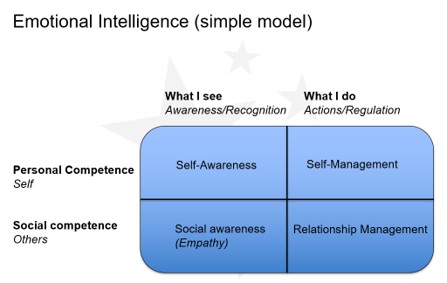
Let’s start with a simple model of Emotional Intelligence. As this diagram shows – there are four key components of emotional intelligence:
Emotional Intelligence
There are two personal competences – self-awareness and self-management.
And there are two social competences – social awareness (empathy) and relationship management.
Self-awareness
Emotions are how we interpret physical and chemical reactions in our bodies. They are complex, temporary physiological and psychological states – such as joy, anger or fear. They occur in response to internal or external events. For example, before presenting to an audience we may feel butterflies in our stomach and interpret this positively as excitement or negatively as nervousness.
Research suggests that although 95% of people think they’re self-aware, only 10–15% actually are. (Only 15% Of People Are Self-Aware — Here’s How To Change)
Emotions vary by type (e.g. joy, anger, fear) and intensity (mild, moderate, intense), influencing how they are experienced and regulated. Think about anger – in its mild form it may feel like discomfort or irritation – as it grows in intensity it becomes annoyance, anger and even rage.
So the first EI competence is being aware of and recognising our emotions. Being in tune with our bodies, alert to chemical and psychological changes and labelling them accurately.
Self-management
Having identified an emotion, how good are you at controlling that emotion?
Emotional regulation is something we learn as children – the ability to identify, name and manage an emotion appropriately. We learn from our parents and caregivers, the prevailing social and cultural context and early situations at home and at school.
Self-management skills appear to increase steadily with age. Unlike IQ (Intellectual Quotient) – a measure of intellectual capability – which is relatively fixed, our brains are neuroplastic – which means we can develop our EI skills throughout our lives.
While women and men are roughly equal in their ability to recognise their own emotions, men have recently caught up in their ability to manage their emotions and in other skills – so the gender gap is closing.
Being consistent in your behaviour – not prone to unpredictable outbursts – means it is easier for people to trust you.
But self-control is limited – we get decision fatigue as the day goes on. That’s why we can be grumpy with our loved ones in the evenings after a tough day at the law office.
So the second EI competence relates to how well we regulate or manage our emotions when we experience them. There’s an excellent 2025 book called “Shift” by Ethan Kross which explains how to manage your emotions so they don’t manage you (How to manage your emotions so they don’t manage you)
Social awareness (empathy)
Empathy is “The power of identifying oneself mentally with (and so fully comprehending) a person or object of contemplation”.
One of my favourite quotes about empathy is from the Cherokee Native Americans: “O Great Spirit Grant that I may not find fault with my neighbour until I have walked the trail of life in his moccasins”.
There are different types of empathy:
- Cognitive empathy
- Perspective taking – the intellectual ability to identify and understand another’s perspective, without feeling them yourself
- Emotional or affective empathy
- The ability to actually feel what another person is experiencing
- Compassionate empathy
- Going beyond feeling to being moved to help and reduce another’s distress
Part of our empathy skills come from an ability to read the Non-Verbal Communication (NVC) of people. To assess the extent to which the words they say are congruent with their body language – their expressions, their gestures, their posture and tone of voice.
Empathy is one of the three components (along with logic and authenticity) of trust. And all lawyers need to build trust with their partners, colleagues and clients. It’s fundamental to relationships and enshrined in the concept of the Trusted Advisor.
Relationship management
“The most important single ingredient in the formula of success is knowing how to get along with people” Theodore Roosevelt (1900)
Having recognised how other people are feeling – how good are you at managing their emotions?
Key aspects of relationship management include:
- Effective communication: Use assertive, non-defensive communication while listening actively
- Build bonds and trust: Establish rapport and foster long-term, trust-filled relationships through consistency
- Give and receive feedback
- Influence and leadership: Guide, inspire and motivate others. Act as a change catalyst and develop others
- Conflict Management: Approach and resolve emotionally-charged disputes constructively rather than avoiding them
In the 2015 book “Adult children of emotionally immature parents – how to heal from distant, rejecting or self-involved parents” by Lindsay C Gibson PsyD, there is helpful advice on how to recognise an emotionally-mature person. That is someone with well-developed emotional intelligence. (“Adult children of emotionally immature parents – how to heal)
With EI we have a psychometric tool to measure our EI and thus our ability to manage relationships. This ability is vital to managers whether considering leadership, change management, conflict resolution, sales, negotiation and business development, supplier arrangements or business growth.
There are various commercial assessments for emotional intelligence that are both valid and reliable. This enables you to obtain the starting scores for people’s EI. The baseline then provides a tool to help those people develop their abilities in the required areas.
Emotional Intelligence Test | EQ 2.0 Appraisal Test | TalentSmartEQ EQ Test
Hogan EQ Report | Hogan Assessments Emotional Intelligence
Take An Emotional Intelligence EQ Test – EQworks)
Self-awareness and emotional intelligence under pressure
However, most EI assessments are typically conducted when people are in a rational and calm state.
Yet law firm environments are usually far from calm. Most lawyers work under a lot of pressure – demanding clients, high stakes deals, a lack of time, the constant need to perform, billing targets, low capacity to complete the volume of work, competition from peers and fears about their future. To name but a few.
Emotional intelligence does not disappear under pressure, but access to it often changes. When conditions become demanding, people tend to operate with reduced emotional range, narrower attention and greater reliance on habit.
Many will be familiar with the book “The Chimp Paradox – The Mind Management Programme for Confidence, Success, and Happiness” (2012) by psychiatrist Professor Steve Peters. He suggested that human mental function comprised three components:
- the rational side of the brain or ego (the human)
- the more emotional id is the set of impulses which need to be managed to achieve high performance (the chimp)
- and the super-ego which governs automatic behaviour and memory and can greatly influence both (the computer)
When we are under pressure, the chimp part of our brain can take over. In those situations, it prompts our threat response (driven by the amygdala in the brain). There is then a flood of chemicals evoking the stress response. Most people are familiar with the ensuing fight, flight, fear and freeze reactions.
This is why individuals who are thoughtful, empathic and self-aware in calm situations may appear less so when pressure increases. The capability is still present, but it is harder to reach. The emotional chimp and/or computer has taken over the rational human.
If the pressure and stress is prolonged and chronic it can lead to burnout – a state of emotional, physical and mental exhaustion. It manifests as overwhelming exhaustion, deep cynicism, detachment from work, and reduced professional efficacy. Burnout is a real risk in law firms. And it is a growing concern. In 2025, the legal sector mental health charity LawCare supported 753 people – more than any previous year, including during the pandemic (LawCare supported record numbers in 2025 – Today’s Family Lawyer).
So lawyers need to develop resilience. Resilience is our ability to bounce back from difficulties, adapt to stress and recover from adversity. There are different types of resilience:
Emotional resilience – How we manage our emotional responses to challenges and deal with our feelings and strong emotions such as anger, fear, vulnerability or sadness. It is part of us accepting the reality of our situation while also have the emotional capacity to get through it. It is our ability to manage and regulate feelings like anger or fear. It is part of emotional intelligence.
Psychological resilience – The mental capacity to deal with or adapt to uncertainty, difficulties and adversity. Sometimes this is referred to as “mental fortitude”. Psychologically-resilient people develop coping strategies and skills that enable them to stay calm and focused during a crisis and move on without long term negative consequences such as distress and anxiety.
Physical resilience – The body’s ability to recover from illness, injury and stress. This is built through sleep, nutrition and exercise.
Social resilience – Being able to draw strength from supportive relationships, community and a sense of belonging.
Leading EI consultancy EQWorks argues that the six pillars of resilience for stress management (based on Neuro-Linguistic-Programming (NLP), EI (Emotional Intelligence) and Positive Psychology frameworks) (What are the 6 Pillars of Resilience for Stress Management?) are:
- Satisfaction with lifestyle
- Supportive relationships
- Physical wellbeing
- Solution-focused coping
- Emotion-focused coping
- Positive beliefs
Manage emotional triggers in adversarial environments
Managing your emotions is key to emotional intelligence. As mentioned above, it’s called emotional regulation.
“Emotional regulation refers to the process by which individuals influence which emotions they have, when they have them, and how they experience and express their feelings. Emotional regulation can be automatic or controlled, conscious or unconscious, and may have effects at one or more points in the emotion producing process.” (Gross et al. 1998)
There are three components of emotional regulation:
- Initiating actions triggered by emotions
- Inhibiting actions triggered by emotions
- Modulating responses triggered by emotions
We are not our emotions. We may experience sadness without being depressed, we may experience anger without acting out. We can choose how we react to our emotions.
Emotions are thought by some to be adaptive responses from evolutionary biology. Emotional regulation helps us to filter out the most important pieces of information and allows us to attend to it in a way that doesn’t provoke stress or fear.
As well as the obvious benefits, such as feeling better in the present moment, strong emotional regulation skills can also enhance long-term wellbeing, improve performance at work, enrich personal relationships and lead to better overall health.
Because we develop most of our emotional regulation abilities when we are young, we are often unaware of what it is that is triggering an emotion – it is a subconscious process. In 2018, Harvard Business School’s Gerard Zaltman showed that 95% of our decision-making takes place in the subconscious mind (The Subconscious Mind of the Consumer (And How To Reach It) | Working Knowledge). So, for example, a comment that is largely ignored by most people may have a dramatic impact on one person. Because it triggers a memory of a strong emotional response from their past.
So when we have a strong emotional reaction to something or someone, we should spend some time trying to understand what it was that caused the reaction. Was it something in that particular moment or was it evoking a memory of something in the past? Uncertainty – a daily occurrence in legal practice – triggers a “threat response” in the brain. This can cause anxiety, fear, and stress. Ambiguity impairs decision-making and often leads to maladaptive behaviours like rumination, avoidance or excessive risk-avoidance.
There are healthy approaches to emotional regulation:
- Talk with friends
- Exercise
- Write in a journal
- Meditate
- Engage in therapy
- Take care of self when physically ill
- Get adequate sleep
- Pay attention to negative thoughts that occur before or after strong emotions
- Notice when you need a break – and take it
And there are also unhealthy approaches to emotional regulation:
- Abuse alcohol or other substances
- Self-Injury
- Avoid or withdraw from difficult situations
- Physical or verbal aggression
- Excessive social media use
Some research indicates that emotions only last for 90 seconds. So a good first step in emotional regulation is to pause for 90 seconds before responding. You shift your approach from reacting (to the emotion) to responding to the point raised by whoever spoke the triggering words. The “respond don’t react” technique is why some people may speak more slowly – with more pauses. Confidence – Radiators and Drains and the 90 second rule
There are many techniques to help you manage emotional states. For example: the SIMPLY method by Owen O’Kane – author of “Addicted to Anxiety” (2026). Owen is a psychotherapist with over 25 years’ experience in the mental health sector, occupying the role of Mental Health Clinical lead for the NHS.
- Space – Step out to look in
- Identify – Consider “what’s going on?”
- Meet, greet and enquire – Tell your anxiety “I’m here”
- Pacify – Quieten the body
- Letting go – Release the symptoms
- You – Remember you are always the solution
Be aware too of emotional contagion. Your emotions, feelings and mood may be affected by those around you. It’s a particular challenge in adversarial situations. I encourage people to consider whether those around you generate warmth and positivity (the radiators) or leech out your joy with negative dialogue (the drains).
Similarly, how you feel will be picked up and “infect” those around you. This is particularly so when you are in a senior or leadership position. People will subconsciously tune in and mirror your emotions.
The way you communicate will also have an impact on the emotions of those around you. Neuroscience offers the SCARF framework (David Rock on the SCARF Model) which captures the common factors that can activate a reward or threat response.
The SCARF model involves five domains of human social experience:
- Status is about where you are in relation to others around you. Your sense of personal worth
- Certainty concerns being able to predict the future
- Autonomy provides a sense of control over events
- Relatedness is a sense of safety with others, of friend rather than foe
- Fairness is a perception of impartial and just exchanges between people
You can use this model to manage interactions to minimize threats and maximize rewards in each of these five domains. You can activate reward responses to motivate people more effectively using internal rewards. When the brain and body register a social threat in these dimensions, they light up the networks of the brain that register the threat of physical pain, a finding that has substantial implications for leadership practices. The model is especially relevant for leaders or anyone looking to build trust and influence others.
We become psychologically exhausted as the day progresses. Psychologist Roy Baumeister demonstrated that there is a finite store of mental energy for exerting self-control and making quality decisions (Decision Fatigue – The Decision Lab). So decision fatigue can set in. When we are tired at the end of the day, we have less energy to regulate our emotions. So try to schedule situations that are likely to evoke strong emotions for early in the day.
Empathy without losing objectivity
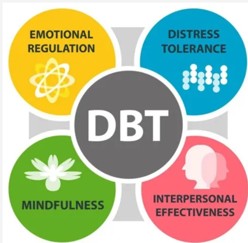
Some may fear that by being empathic they may lose their objectivity. But just because you feel empathy with someone doesn’t mean this is so. Dialectical Behaviour Therapy (DBT) has a model that helps you balance the two extremes of thinking: Rational Mind and Emotional Mind into Wise Mind (Wise Mind: DBT Skills, Worksheets, Videos, Exercises).
- Rational Mind focuses on facts, logic and problem-solving. It’s where we analyse situations without emotional influence
- Emotional Mind is driven by feelings, urges and reactions. It’s where our passions, fears and impulses come from
- Wise Mind is the intersection of both, where we make decisions with a balance of logic and emotion. It helps us respond thoughtfully rather than react impulsively.
Think of it this way: if Rational Mind is a scientist and Emotional Mind is an artist, Wise Mind is the skilled mediator who listens to both and finds a balanced, effective solution. (Finding Your Wise Mind: Balancing Rational and Emotional Thinking — Insights Counseling Center — Birmingham, AL)
If you still need convincing, consider the FBI model used in hostage negotiations – the Behavioural Change Stairway Model (BCSM). This is a five-step framework developed by the Crisis Negotiation Unit. It moves from active listening to empathy, rapport, influence, and finally behavioural change. It focuses on understanding the subject’s perspective to achieve a solution. Whilst trained to be highly empathic, no one would suggest that FBI hostage negotiators lose their objectivity. Never split the difference: Negotiating by Chris Voss
EI as a risk management and leadership tool
So let’s summarise all the different aspects of emotional intelligence by considering a more complex model of EI – building on those four main components considered above. This one was developed by Daniel Goleman and Richard E Boyatzis. Emotional Intelligence Has 12 Elements. Which Do You Need to Work On? (hbr.org)
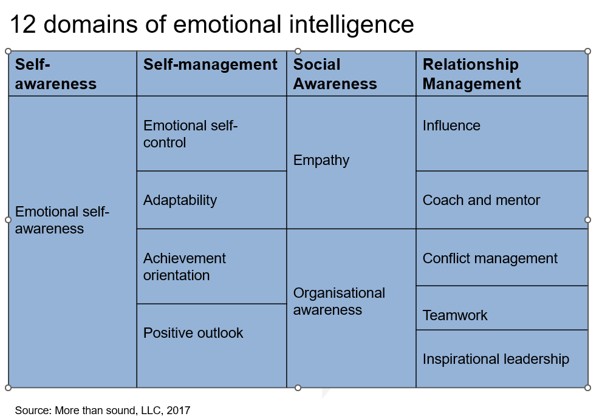
- Self-awareness
- Emotional self-awareness
- Self-management
- Emotional self-control (emotional regulation)
- Adaptability (learnability, curiosity and the ability to unlearn)
- Achievement orientation
- Positive outlook
- Social awareness
- Empathy
- Organizational awareness
- Relationship Management
- Influence
- Coach and mentor
- Conflict management
- Teamwork
- Inspirational leadership
Those 12 domains encapsulate the vast majority of those covered in this book “Fundamental Skills for Modern Lawyers”. But let’s take a look at EI in leadership and risk management.
These are similar to research reported in a December 2020 article by the Center for Creative Leadership which identified 10 essential leadership traits of characteristics (Center for Creative Leadership identified 10 essential leadership traits)
- Integrity
- Ability to delegate
- Communication
- Self-awareness (a core component of emotional intelligence)
- Gratitude
- Learning agility
- Influence
- Empathy (another core component of emotional intelligence)
- Courage
- Respect
In a recent article (From Intent to Impact: 3 Things Effective Leaders Do Differently – TalentSmartEQ – Emotional Intelligence Company March 2026) a leading EI consultancy suggested that effective leaders:
- Stop confusing effort with impact (Don’t confuse the effort of a conversation – how difficult it might be – but think instead about what people will remember – the impact)
- Let feedback set the agenda (Listen to others and develop empathy with them)
- Pause long enough to read what the moment actually needs (relating to the ability to tune into what others need and emotional regulation suggestions above)
I was struck by a recent (March 2026) LinkedIn post by Dan Kayne, founder of O Shaped lawyer (which comprises: Open-minded, Optimistic, Opportunity-oriented, Originality and Ownership). He was soliciting views on future skills for lawyers. Human-centric skills (i.e. EI) dominated the many responses including:
- Intersection of law, business and people
- Self-awareness
- Human communication
- Asking the right questions
- Relationship building
- Influencing
- Collaboration
- Resilience
- Compassion
- Managing people
- Commercial pragmatism
- Financial acumen
- Using LegalTech
Placida Uzoamaka Ojinnaka, after attending an event, commented “I was reminded that, before anything else, we are human.
- Our identity as lawyers is important, but it’s secondary to the qualities we bring as people – courage, emotional intelligence, and the ability to truly read a room
- AI may have its place, but it still lacks the compassionate, relational experiences that we possess
- Chronic stress and anxiety are all too common in our profession. When stress takes over, it can cloud our judgement and lead to poor decisions
- It’s vital to take moments to pause and reflect, as unresolved stress can accumulate and lead to burnout
- Psychological safety should be a priority in leadership – creating an environment where people can challenge ideas without fear leads to better information flow and addresses systemic pressures
- It’s important to remember that being a good lawyer doesn’t automatically mean being a good leader
- Senior management and leadership must model healthy boundaries to promote sustainability. Creating a safe workplace isn’t about following dominant norms; it’s about nurturing genuine wellbeing”.
In risk management, emotional intelligence is crucial because it enables better decision-making, enhances communication, and fosters a collaborative environment, ultimately leading to more effective risk mitigation strategies.
The neuroscience of risk decisions shows the dual-process theory in action. Our brains operate two distinct system when processing risk – System 1 (fast/emotional) and System 2 (Slow/analytical). Professional risk management requires training System 2 to override System 1’s natural responses. A little like the respond don’t react technique above.
In an article about traders, they found that those who maintained their composure and systematic approach significantly outperformed those who let emotions drive their decisions (Emotional Intelligence in Risk Management: The Psychology of Protection | by Kit Dimic | Medium July 2025)
It explored the emotional cycle of risk perception:
- Complacency – overconfidence
- Awakening – decline triggers uncomfortable feelings. Skilled people recognise these feelings as information, not instruction. They use discomfort as a signal to review risk parameters rather than panic
- Fear response – Fear-driven decisions typically involve abandoning a systemic approach in favour of emotional reactions
So we see the importance of emotional intelligence when we consider the day-to-day decision-making and risk management.
Law firm leaders have a duty of care for the well-being of their employees. So it is a key risk in legal practice – to manage performance and to avoid prosecution. Well-being includes both physical and emotional safety.
“The Thriving Lawyer – A multidimensional model of well-being for a sustainable legal profession” was published in 2024 by Traci Cipriano and offers a path. Book review: The Thriving Lawyer by Traci Cipriano (resilience). The author is American – a former practising lawyer, a PhD clinical psychologist and former leader at the American Psychological Association (ASA). Her model enshrines a significant amount of emotional intelligence.
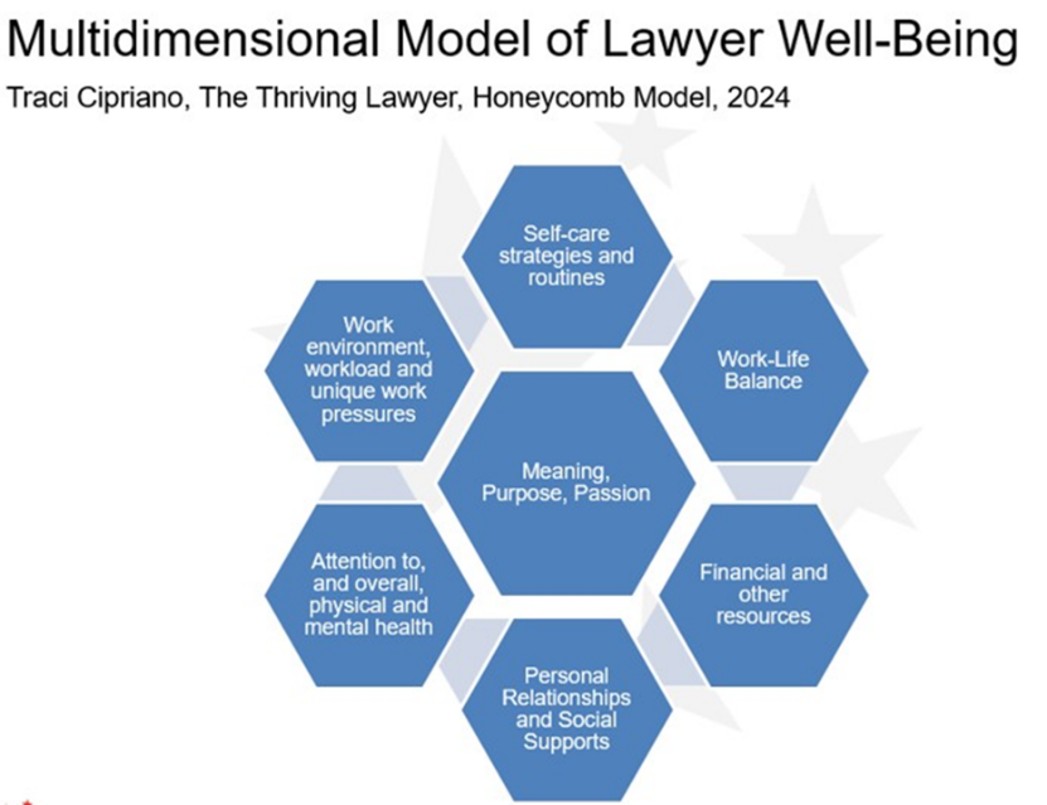
Emotional intelligence is important for risk management in that:
- There are reduced professional liability claims. Emotionally-intelligent lawyers are more adept at managing client expectations and navigating difficult conversations
- Conflict mitigation. EI allows lawyers to address underlying emotions in negotiations and disputes, supporting resolution and preventing escalation
- Improved decision-making. By managing emotions, lawyers avoid decisions driven by ego or stress which can lead to poor legal advice
- Enhanced team stability. Higher EI lowers rates of burnout and turnover, reducing the risks associated with poor well-being and instability within legal teams
In June 2025, in an article on JD Supra (The Underleveraged Advantage of Emotional Intelligence in Legal Practice | JD Supra Perspectives – JDSupra) author Rich Bracken argued that what separates good attorneys from the greats is emotional intelligence. He argued that EI is a strategic advantage that increases success with client retention, courtroom performance, teamwork and leadership. He also asserted that we should stop calling it a “soft skill” and recognise it as a critical skill. It enables lawyers to build stronger, trust-based client relationships, navigate high-stakes emotions without losing control, differentiate in a crowded market, lead and influence more effectively and make better decisions under pressure.
In an article where I argued “you can’t wellness your way out of a toxic culture”, I reflected on aspects of law firm culture that can exacerbate poor mental health – toxic achievement, perfectionism, presenteeism, passive-aggressive hierarchy, and the pressure to appear constantly coping. (see Improve mental health at work, in marketing and for women). The lack of autonomy and the way some firms treat compassion as weakness. These are all signs of poor emotional intelligence. In that article, Brodies (a Scottish law firm) indicated how it could be the model law firm for mental health. Emma Newlands is the firm’s Health and Wellbeing Manager and she explained how it’s well-being programmes are stitched into the culture of the firm – office design, billable hour targets, trauma response playbook and even its architecture. It has embedded mental health across its policies, people strategy and internal culture. An emotionally-intelligent law firm in the making.
About Kim Tasso (emotional intelligence chapter author)
Kim Tasso BA(Hons) DipM FCIM MCIJ MNCPS (Acc.) MBACP MBA is managing director of RedStarKim Ltd (a management consultancy specialising in professional services) and Tasso Talking Therapy Ltd (a private psychotherapy practice).
After graduating in psychology and working for several years in the technology sector in marketing and sales roles she worked for leading professional service firms (Deloitte and Nabarro). She started her own business in 1994. Over 30 years she has worked for over 300 clients including: solicitors, barristers, patent attorneys, accountants, insolvency practitioners, actuaries and surveyors.
She advises on and provides training and coaching in the strategic and operational aspects of management, change and relationship management. She has published seven books (on selling and business development, media relations and social media, soft skills for lawyers, growth strategies and business relationships) and hundreds of articles. As a qualified and accredited therapist, she started her private psychotherapy practice at the start of 2024 and has held Non-Executive Director positions in the property industry and was a Trustee of a mental health charity.
My therapy web site is: Tasso Talking Therapy (Please don’t hesitate to telephone or email for an informal and confidential chat about your mental health)
Overview of the book “Fundamental skills for lawyers”
Further details of the book and ordering facilities are shown here: Fundamental Skills for Modern Lawyers | Globe Law and Business specialises in producing practical, topical titles for international legal and business professionals
Part One – Mastering yourself
- Emotional Intelligence in legal practice – developing a superpower for lawyers
- Building resilient lawyers and legal teams
- Grief and trauma in legal practice – managing exposure in a loss-saturated profession
- Neurodiversity in legal practice
- Time management and prioritisation
- Decision-making under pressure
Part Two – Working effectively with others
- How to have difficult conversations
- Giving and receiving feedback
- Delegation and supervision – leading modern legal teams with confidence, clarity and humanity
- Negotiation as communication
- Agile and lean – new ways of collaborating and organizing work
Part Three – Influence, visibility and career development
- Networking with purpose
- Turning relationship into results – mastering business development in modern practice
- Developing your professional profile
Part Four – Leading through change
- Change management for lawyers – the human architecture of change in legal
- The modern digital lawyers
- Becoming a trusted adviser and beyond
- The profoundly human law firm
Related articles on emotional intelligence (EI), emotional regulation and soft skills
An introduction to emotional intelligence (EQ) and empathy (Video) July 2020
How to manage your emotions so they don’t manage you June 2026
emotional intelligence and teams in change management January 2024
Research on leadership and emotional intelligence (EQ) September 2021
Emotional Regulation – A key element of Emotional Intelligence (EQ) (kimtasso.com) August 2021
Research update on the most in-demand soft skills May 2023
Book review – Emotional Intelligence 2.0 January 2014
Book launch: Essential soft skills for lawyers – some research findings July 2020
What are soft skills? And why are they so important? (Video) June 2020
Soft skills revisited – with a leadership perspective November 2022
Emotional contagion, delegation, coaching and team meetings January 2018
Client perspective – empathy and emotional intelligence January 2011
Grounding tools (support for emotional regulation) – Kim Tasso April 2026
Healthy boundaries at home and at work – how to set and maintain January 2026
Confidence – Radiators and Drains and the 90 second rule January 2026
The stress bucket, healthy coping mechanisms and resilience December 2025
What do I do if I’m feeling stuck? – Kim Tasso October 2025
Improve mental health at work, in marketing and for women September 2025
Assertiveness toolbox – Kim Tasso May 2025
What happens in therapy? – Kim Tasso April 2025
Confidence to overcome a fear of failure – Kim Tasso September 2024
my relationships like rollercoaster rides? Volatile relationships (kimtasso.com) August 2024
How do you choose a therapist? – Kim Tasso July 2024
Psychology and business communication (kimtasso.com) January 2015 An introduction to Transactional Analysis (TA) and the Parent Adult Child model
10 tips to increase your resilience – Kim Tasso March 2013
Therapy and counselling self-help book reviews
Stop letting everything affect you by Daniel Chidiac (Overthinking May 2026
Book Review – ADHD 2.0 by Edward M Hallowell MD March 2026
Book review: The Gift of Anxiety – Harnessing the EASE method December 2025
What happened to you? Conversations on trauma, resilience November 2025. Book review: What happened to you? Conversations on trauma, resilience and healing by Bruce D Perry (psychiatrist) and Oprah Winfrey
Introduction to Internal Family Systems (IFS) October 2025. An overview of the therapeutic approach IFS that seeks to explore your internal parts – the exiles, managers and firefighters – and develop a greater sense of self and calm.
Attached by Dr Amir Levine and Rachel Heller August 2025. How attachment theory can help you understand your relationship style – secure, avoidant and anxious.
Book review: The Thriving Lawyer by Traci Cipriano (resilience) June 2024
Book review – Feel the fear and do it anyway by Susan Jeffers June 2024. Classic self-help book on managing anxiety
Book review – Counselling for toads May 2025. The modern classic explaining Transactional Analysis (TA) using a story by Robert de Board using Toad and other characters from “Wind in the Willows”
Book Review: The Power of Now by Eckhart Tolle March 2025 A best-selling guide to ceasing your incessant thoughts, focusing on the present “here and now”, spiritual enlightenment and finding inner peace.
Overcoming low self-esteem – a self help guide using cognitive behavioural techniques by Melanie Fennell January 2025
Book review: Taking charge of Adult ADHD by Russell A Barkley (kimtasso.com) October 2024
“Adult children of emotionally immature parents – how to heal (kimtasso.com) August 2024 An excellent book that has helped several clients suffering from anxiety, depression and “failed” relationships. How to recognise emotional, driven, passive and rejecting parenting styles and the coping mechanisms adopted (e.g. people pleasing, high independence etc).
Book reviews on stress and trauma – “When the body says No” (kimtasso.com) June 2024 Review of “When the body says no – The cost of hidden stress” by Gabor Mate and “The body keeps the score – mind, brain and body in the transformation of trauma” by Dr Bessel Van Der Kolk
Book review: The Thriving Lawyer by Traci Cipriano (resilience) (kimtasso.com) June 2024 A review of a book into the mental health and resilience of lawyers in law firm cultures. The author is a former practising attorney and clinical psychologist.
The Tools – Five life-changing techniques to unlock your potential (kimtasso.com) April 2024 A review of the book by psychiatrist Phil Stutz
Book review – Creating self-esteem by Lynda Field (kimtasso.com) March 2024 A classic book on realizing your true self worth
Book review: How to do the work (recognise your patterns (kimtasso.com) December 2023. Review of a book to support psychoeducation. Topics include: conscious self, theory of trauma, mind-body healing practices, inner child, boundaries, reparenting and emotional maturity.
Dr Julie Smith (Mental Health Guidance) (kimtasso.com) July 2023. Review of the book “Why has nobody told me this before?” that explores helpful ideas on low mood and depression, motivation, anxiety, emotional pain, grief, self-doubt, fear, stress and a meaningful life.
Overcoming clinical depression (2021) by Oliver Kamm (kimtasso.com) March 2023. A review of the book “Mending the Mind” which explores what it is like to suffer from depression and both the medical and psychological sources of help.
Lost connections – Why you’re depressed by Johann Hari (kimtasso.com) October 2019. A review of a popular book about the nine common reasons people suffer from depression.
Crazy busy – Book review – Dealing with stress (kimtasso.com) October 2009. This book examines modern life and offers practical advice to avoid stress and restore calm.
Book review: The psychology of successful women by Shona Rowan (kimtasso.com) June 2022. Topics include: confidence, assertiveness, boundaries, public speaking, impact, influence, visibility and bouncing back from setbacks.
Your personal transition – Endings, neutral zone and new beginnings (kimtasso.com) June 2020. Helps you navigate major changes in your life and prepares you for the emotional roller-coaster of change.