
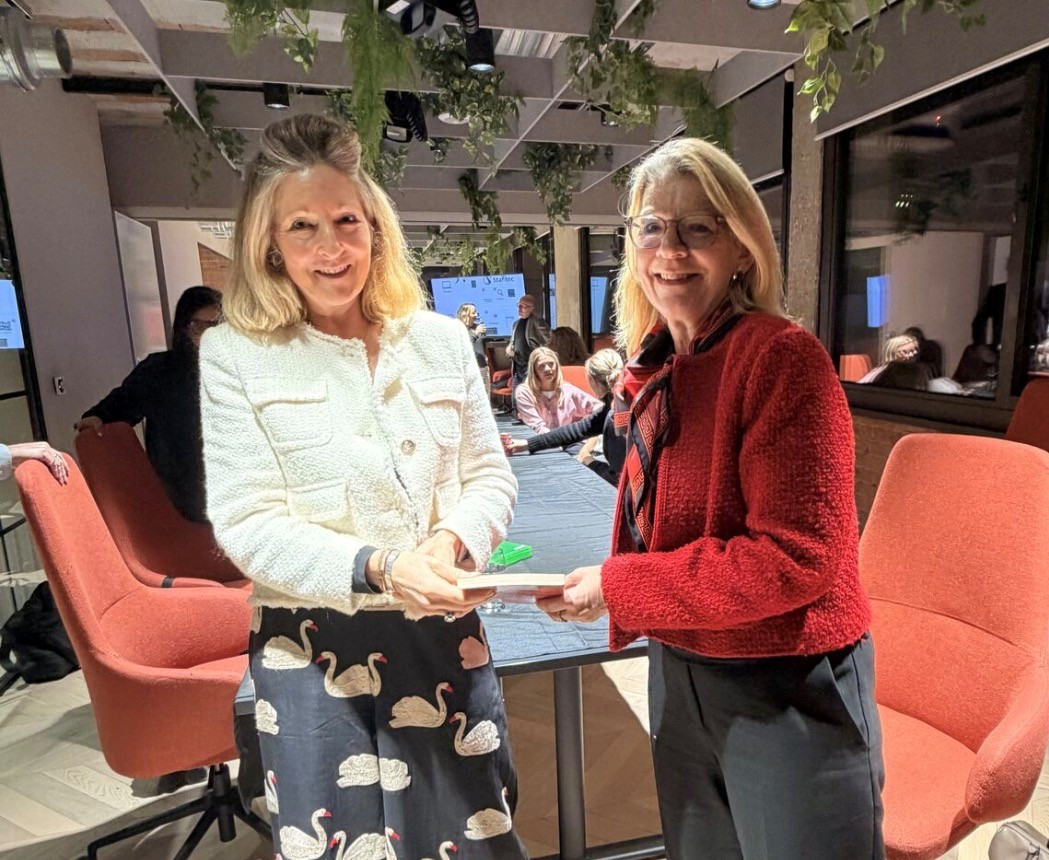
On Wednesday 18 November 2026, I interviewed Louise Rose, Director of Media Relations of the Rural Division of Savills UK | Estate Agents & Lettings UK & London | Commercial Property. The Profile | Property Marketing Forum seminar was titled “From pureplay PR to integrated marcomms and beyond”. We considered key media relations and PR strategies for professional services firms, interesting case study stories, the impact of AI and careers guidance for PR professionals. Whilst some firms have dedicated, specialist teams to manage media relations, many firms expect marketing and business development (MBD) professionals to absorb the responsibilities within their roles. Thanks to Stantec who hosted the event, Profile community director Neha Sawjani | LinkedIn and the Profile Advisory Board for their support. Media Relations – A Profile interview with Louise Rose of Savills
This article covers:
- About Louise Rose – Career and Key Achievements
- Role as Director of Media Relations
- Key media projects
- Manage the press office
- Manage internal stakeholders
- Evolution of media relations
- Key PR and media relations strategies
- Integrate media relations into MBD campaigns
- Balance national, specialist and niche media
- Thought leadership
- Storytelling
- Manage online and social media
- Impact of artificial intelligence (AI) on media relations
- Careers advice for those in property PR
- Questions from the audience
- Blast from the past – Media Relations in Property book
About Louise Rose – Career and Key Achievements
I’ve had the privilege of knowing Louise for many years and enjoyed working with her at Savills way back in 2018. She is currently Savills Director of Media Relations for the 800 strong national rural team and for rural research, having worked at Savills for many years.
She is used to preparing other people for interviews – so I appreciated her agreeing to take the hot seat on the other side at the fireside chat.
Louise started her career as a journalist. Her interest in the rural community led to her first role in 1993 as a journalist at Reed Elsevier’s Farmers Weekly. She was Editor of the Land and Farms Section when she left in 2000. She pursued other roles in the property world.
She was invited to “move over from the dark side” and join Savills. One role supported what was then the Savills Southern region business. From there she has had national roles, and most recently that of Director of Media Relations for the rural team. She has spent years developing her skillset which includes working with PR colleagues from other divisions in the business including residential, commercial, planning & development and infrastructure.
Role as Director of Media Relations
Louise’s role as Director of Media Relations encompasses many responsibilities and activities:
- Be “always on” to respond to whatever media opportunities and challenges emerge
- Co-ordinate the national PR contribution and support for the Rural business often working closely with colleagues to maximise output
- Develop media plans for six main research reports a year
- Create media strategies for five to 10 significant farm and estate launches a year
- Manage strategic campaigns to launch new services or introduce new people (lateral hires)
- Drive communications when Savills made a significant acquisition
Key media projects
I asked Louise about those projects of which she is most proud
In 2002, Louise initiated the creation of Aspects of Land with a colleague– the firm’s flagship rural magazine. It remains an important platform for the firm’s rural market Aspects of Land 2026
She also helped to develop the profile of one of Savills leading spokespeople – Lucian Cook – a well-known commentator on residential property who is regularly quoted in national media. Savills UK | Lucian Cook
Manage the Press Office
Managing the Rural press office is a key function and:
- Serves as the first point of contact for journalists – managing inbound calls and enquiries
- Cultivates relationships with journalists in a proactive way. You need to remember that journalists are human too and that they will each have preferences for how they interact and the specific markets and stories of interest
- Is responsible for providing a centralised and consistent response
- Promotes and protects the brand (Savills (UK) Ltd holds Business Superbrand status in the UK, including recognition as a 2026 Business Services Superbrand, and has repeatedly ranked at the top of the real estate agents/advisory category in UK Business Superbrands surveys)
- Prepares people to talk to the media
- Finds, packages and pitches stories
- Prepares for, prevents and manages media crises
She wryly noted “For every mention of the firm in the media, there’s probably a similar number of instances where we have worked hard to ensure the firm’s name is omitted”
Manage internal stakeholders
A key part of media relations is managing the multiple, complex relationships with internal stakeholders. With other members of the extensive marketing and business development teams, amongst frontline surveyors and agents and across different offices and divisions.
Sometimes media relations professionals need to help balance conflicting demands within the business – for example, where information may be difficult for some internal or client groups. For instance, the interests of landowners balanced against those who want to access or cut across their land for an infrastructure project. She commented “Sometimes it is a bit like managing a jigsaw puzzle”
Whilst sometimes internal stakeholders can have unrealistic expectations, she feels fortunate that at Savills most people understand media relations. But there are occasions where there’s a lack of awareness about the impact of an action. She notes “Once something is out there on the Internet it is there forever – we can’t remove it”.
Editors are under pressure – and sometimes people don’t understand that editors have different interests and priorities than what one property professional thinks is important.
The evolution of media relations
I asked Louise how media relations and public relations has evolved over the years. She commented “Marcomms has changed so much that now we are much more integrated with various specialist marketing and business development teams – and many other business functions within the business”. She mentioned that the press office team take it in turns to speak to new staff at induction – to explain the importance of promoting and protecting the brand for everyone in the business.
She mentioned an earlier case study Property marketing case study – Integrated campaign on farmland value to illustrate what a campaign typically involves:
- Have early sight of the data and identify the storylines with other MBD professionals and front line property advisers
- liaise with national, regional and specialist journalists
- create content for all channels (including the web site, internal communications and social media)
- prepare blogs and manage their timely distribution
- manage major mailings with partners and sponsors
- organise events nationally and regionally
She commented “I have a personal fascination with data – It supports just about everything we are talking about. Savills invests significantly in collecting, analysing and producing data and research. We must interrogate and analyse the data to identify the important themes and stories”
Key PR and media relations strategies
Integrate media relations into marketing and business development campaigns
Secure early involvement in discussions about potential campaigns so that media relations are considered from the outset. And to embed media relations into the relevant elements in advance of, during and after the campaign. This raises the overall effectiveness of any campaign. And is better than having media relations tacked on at the end as an afterthought.
Balance national, specialist and niche media
Most people hope to reach the national media. The Financial Times (FT) remains the Holy Grail for most people. Louise mentioned how happy she was when she pitched a story to the FT and was delighted when it appeared online. But her bubble was burst when a colleague asked when it would appear in print versions. Luckily, that story captured the business community’s imagination and went on to appear in print versions.
Yet sometimes, obtaining coverage in a specialist or niche media generates interest amongst a specific target audience that sparks significant business development and client opportunities. For Louise, those specialist media include the property trades and rural media. Businesses have mostly moved away from the old “spray and pray” approaches to sharing information with the media in a more targeted and personalised way.
But each audience has its own challenges: “When you move from small, specialist informed audiences to wider and general audiences they sometimes lack the background knowledge we are expecting and used to”.
Thought leadership and media relations
Thought leadership is one of the most successful marketing strategies within professional services and property sectors. Most firms invest significantly in research and data collection to generate information and insights that clients value. Yet key stakeholders are often time poor when it comes to advanced thinking and preparation to ensure media campaigns are effective.
Savills was way ahead of the curve – it started talking about natural capital back in July 2018, when it released an introductory blog post titled “In plain English: Natural Capital”. Louise commented: “I recall conversations about the value of trees, carbon emissions and water quality way back in the early 2010s – and these things – especially water security are now mainstream public issues along with the rising concern about our natural world. Savills rural division has played a key part of raising these issues into broader consumer perceptions – whereas historically everyone was interested in residential house prices – there is now increasing interest in natural assets, alternative power sources and the preservation of water quality and climate change”
For further information on thought leadership see:
- Thought leadership update: insights and tools – Kim Tasso June 2026
- Confident campaigns, thought leadership and project management June 2026
- client feedback playbook – How professional services firms January 2026
- Campaigns, thought leadership and project management – People July 2025
- Thought leadership manual by Tim Prizeman June 2016
Storytelling
Storytelling is at the heart of PR and thought leadership – and Louise explained how to find and develop great stories.
“You have to find an angle and then craft a story. For this you need to really think about the target audience and what might interest them. Then you have to pitch the ideas by tailoring and personalising every email to the specific needs of each journalist and media. Focus on the human element – the personalities. Be authentic and genuine. Answer the “So what?” question”
For further information on storytelling see:
Book review: Unleash the power of storytelling by Rob Biesenbach November 2024
Book review: Everybody writes by Ann Handley – Kim Tasso October 2024
Storytelling book reviews: The Story Advantage and The Story Factor March 2021
Video – The art of storytelling – Kim Tasso explains April 2021
selling legal services with storytelling September 2017
Manage online and social media
News stories break now with lightning speed. And there are so many influencers with significant followings who might drive issues and campaigns. There is a lot of noise and distortion – and sometimes little time to verify facts or organise spokespeople. So you need good systems and processes to constantly monitor what is happening. It can be hard to manage a new and fast-moving story.
Louise commented “We used to have so much more control – we would prepare a story and send it out – and maybe the next day we might receive follow up questions. It would be 48 hours before coverage. Now a story can break instantly – with no warning, from one person’s phone – and be around the globe in minutes – that’s a significantly more complex situation to manage”
We must remember that some of our audiences – older generations or more conservative groups – might still prefer hard copy delivery of information. So we have to ensure that we are presenting information in all formats across an ever-increasing number of digital and traditional channels.
Louise mentioned a recent media situation where things backfired. The Duchy of Cornwall wanted to sell some of the estate to raise money to support homeless and mental health charities. And this was promoted to the media. However, stories started to emerge about the negative impact for current residents and farms. This demonstrated how quickly things can backfire when a negative angle emerges. The Prince of Wales was then scheduled to be the guest editor of Country Life magazine. Louise noted that the transaction was handled by a low profile property consultancy which didn’t get into the headlines. And reflected that it might have been different if the consultancy was a major brand like Savills. Sometimes there’s a disadvantage in being high profile.
Duchy tenants may have to buy farms or leave as Prince William plans sell-off – BBC News
The impact of artificial intelligence (AI) on media relations
Whereas historically a lot of marketing attention was on owned media such as web sites and blogs, AI is giving PR an unlikely resurgence.
The constant accusations of “AI slop” means that great writing skills and genuine, authentic content are more in demand. Which is good news for professional writers and PRs.
AI is changing the landscape in favour of third party, earned media. I saw a recent MuckRack report examining the impact of Generative Engine Optimization (GEO) in digital marketing
- 94% links cited by AI tools are non-paid media
- 82% come specifically from earned media
- 27% of AI answers cite journalists
This means that PR will be required to help organisations obtain more coverage in valued external media.
Louise was keen to stress that a key challenge in the AI era is trust. Journalists and markets want to know who they can trust for reliable information. It takes years of effort, transparency and relationship building to earn that trust – for the firm, the brand and individual PR practitioners.
Louise also believes that AI will drive more collaboration with similar brands – like lawyers and accountants and banks. Combined resources, cross-pollinating ideas and harnessing each others’ profile and awareness (leveraging the halo effect).
And in terms of other future developments, Louise believes that every firm – not just the big ones – will need to have tested and resilient crisis management policies, plans and training. “These days, once a crisis has broken, it’s too late to call in an external agency”
Careers advice for those in property PR
Louise offered the following careers advice to those involved in property PR
- Really get under the skin of the business – learn their goals, interests and language. Understand what sits well with them and their potential challenges
- Bring all your stakeholders together at the earliest opportunity – so that you are literally all on the same page and aligned from the outset. Your aim is consistency
- Always be up front, open and honest – both internally and externally. For example, be comfortable advising people if their proposed content might not be quite appropriate for the audience or media they are targeting
- Don’t be afraid to speak up and voice concerns or potential consequences to people – that’s your job. You are “policing” the content from your firm (in the best possible sense)
- Invest time and money establishing a strong understanding and processes to manage information sharing – so there is co-ordination and consistency
Her final words “It takes years to build trust and credibility in a brand – and just moments for it to be impaired or even destroyed – that’s a huge responsibility”
Questions from the audience
There were a few questions from the audience:
An audience member expressed their frustration with AI which often uses their organisation’s research information but fails to acknowledge the source. Others commented that sometimes people would scrape and reuse their images without permission or acknowledgement. Louise recognised the frustration and recommended approaching those (wherever possible) who didn’t use the appropriate acknowledgements – and use the situation to start a dialogue.
Another person asked how to harness PR as part of a firm’s growth strategy. Louise referred to the need to integrate PR into campaigns from the outset. She also shared stories (on sustainability and minerals mining) about how PR has been instrumental in helping low-profile services reach the mainstream – and even support the creation and promotion of new services.
Blast from the past – Media Relations in Property
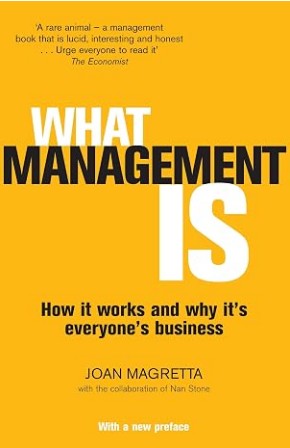
At the end of the session, I mentioned that 20 years ago (in 2006) I wrote a book called “Media Relations in Property” which was published by Estates Gazette. My co-author was Graham Norwood who remains a leading residential journalist (my role was to cover commercial property). Media relations in property – Kim Tasso and Graham Norwood
I presented Louise with a copy of the book – which I thought she might find amusing. And issued a challenge to the audience that it was perhaps time for someone to pick up the gauntlet and write an up to date version!
Media relations skills training
If you would like to develop your media relations skills, PM Forum is introducing a new half day training session in 2027 Integrating media relations into MBD (and crisis management) – PM Forum
The speaker is (1) Ben Rowe | LinkedIn who is a media relations specialist, having worked with global, national and regional brands on their PR strategies and press office activity for the past decade. He has seen firsthand how the media landscape has changed across national, regional and trade news – working with businesses to navigate these shifts across sectors including professional services, tech, healthcare, charity and transport. In his role at Definition, he has worked with organisations including Walker Morris, Addleshaw Goddard and HGF to set up press office functions, build media strategies, launch campaigns and help manage crisis situations, making him well-placed to advise teams on how they can enhance their media activity and support their commercial goals.
Related articles on media relations and PR
Thought leadership update: insights and tools – Kim Tasso June 2026
Business Development (MBD) property firm case studies December 2025
Marketing and Business Development (MBD) law firm case studies November 2025
Book review: Unleash the power of storytelling by Rob Biesenbach November 2024
Book review: Everybody writes by Ann Handley – Kim Tasso October 2024
Marketing and BD case studies in legal, accountancy, consultancy April 2024
Law firm media relations and integrated campaigns (Kysen) December 2023
Share this – the social media handbook for PR professionals April 2023
The Legal PR Guide – Gaining buy-in to law firm media relations December 2019
Property marketing case study – Integrated campaign on farmland value April 2019
Thought leadership manual by Tim Prizeman June 2016
Media relations in property – Kim Tasso and Graham Norwood August 2013
Legal marketing case study – Withy King solicitors research and media June 2013
How to write a press release – Kim Tasso June 2013
Digital PR in the legal profession – An interview with Clare Rodway of Kysen – Kim Tasso October 2012
The move to digital PR – a conversation with Tim Prizeman of Kelso Consulting – Kim Tasso September 2012