
In October, there was an excellent Home – PM Forum panel webinar on growth strategies through existing client development (rather than new client acquisition). Increasingly, we are seeing marketing and business development (MBD) professionals adopting new roles focused on client development. Client development might include programmes such as: client listening, client experience management (CEM), relationship management (CRM) and key account management (KAM).
Client development is such an important topic that I felt it was worth reporting on the ideas discussed. There is no one “right way” to do client development and firms adapt their approach according to their aims, clients, stage of development and their systems and resources.
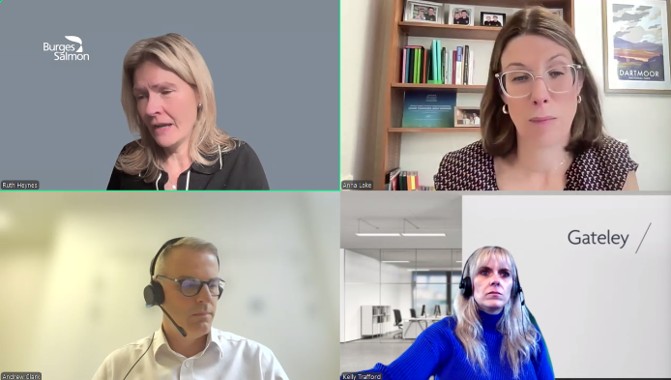
Organised by South West – PM Forum, the session was expertly facilitated by Anna Lake | LinkedIn of Client Talk | Coaching, Training & Client Listening | Coaching Leaders & Business Professionals. With two law firm panellists – Kelly Trafford | LinkedIn, Head of Key Accounts at Home – Gateley and Ruth Heynes (Liggett) | LinkedIn, Head of Client Programmes at Burges Salmon | independent UK law firm and the property sector represented by Andy Clark | LinkedIn, Clients Director at Carter Jonas Estate Agents & Property Consultants
Client development topics discussed included:
- What’s driving the growth of client development?
- How client development fits within a firm and MBD
- How client development adds value
- Different approaches to client listening
- Skills and attributes of client development professionals
- Systems and tools that support client development
- The future of traditional business development roles
Video taster: The rise of client development: How professional services firms are re-thinking growth – PM Forum. PM Forum members can also access the full webinar here: The rise of client development: How professional services firms are re-thinking growth
What’s driving the increasing importance of client development?
There were several reasons presented for the increased attention on client development strategies:
- Client development is everybody’s job, but nobody is doing it
- Clients want more than expert professional advice – they are interested in all aspects of the service and the relationship is central to this
- Clients are smart and getting smarter – they want to interact with their advisors in different ways
- Clients are more complex – there are more people involved in buying decisions and client roles and teams (and their needs) are changing
- Advisors are more specialist – so there’s a greater need to bring more people into the client relationship
- Clients expect more generally
- Relationship management is a team sport – there are lots of people across the firm involved
How does client development fit within the firm and MBD teams?
Some firms have long established teams and others are creating new teams. Key themes:
- Burges Salmon – A client development function existed but part of a blended role with existing programmes – but it was felt we needed more focus to add value to clients and achieve growth. So three programmes were extracted to be managed centrally with a portfolio of clients
- Gateley – The biggest change has been that firms have become more deliberate about client growth as previous myths about rainmakers and new business development subsided. It wasn’t sustainable to rely on an individual for client management. In broader business development roles it was hard to demonstrate impact. Smaller teams are more focused, and it is easier to measure revenue and other outcomes.
- Carter Jonas – My previous roles have been as a professional client-side, so I have a lot of empathy with client perspectives. Problems remain with the clients – they take them home with them at night – and I can leverage the empathy to show that we are down in the trenches with them. Client development programmes help clients see their experts as trusted advisors.
How have client development teams added value?
Increased client centricity, see the bigger picture, appreciation of the firm’s range of services and build collaborative client relationships.
- Carter Jonas – We are helping partners think that way – to be more client centric. Fee-earners can be very technical – so we help them see and leverage the bigger picture. We provide feedback and client views to the partners.
- Burges Salmon – I was surprised that client development function was so back office. So it’s encouraging to see them become more front line and client-facing. Business Development people will form different views of and takeaway different things from client meetings. Law firms can be silo’d and business development people often have a broader view of all the firm’s services. The role of the inhouse legal team has changed too – they want to be more collaborative
- Gateley – Client development teams bring a different view. They help build a collaborative relationship by supporting and enabling lawyers. A bit like CoPilot agents doing a first draft for them
How do you approach client listening programmes?
Some firms use external agencies and others manage the process inhouse (note: there’s a list of research agencies specialising in professional services here: Client satisfaction benchmarks – How do you measure up? and there is an excellent book on client research in professional services: client feedback playbook – How professional services firms)
- Carter Jonas – We outsource client listening to an agency. We have a model of Feedback – Action – Impact. We use our own people to manage the action and impact.
- Burges Salmon – The independence of an external provider is valuable. We used to outsource client listening but we bought it inhouse where it’s easier to manage. We explore where the client is at (in quantitative terms) and where there are opportunities for further engagement (in qualitative terms). We use the information to lead client conversations
- Gateley – We do inhouse qualitative work – through our Key Account Managers. We write specific questions for clients. We also have a dedicated listening manager who collects and interprets data from across the firm.
What skills and attributes do you look for in your client development teams?
Beyond MBD foundation skills, the primary skill is relationship management. Other skills included selling, commerciality, empathy, credibility, trust, influence, strategy, analytics and facilitation.
- Burges Salmon – Some skills are the same as in traditional business development roles. It’s a different approach to selling – where the focus is on client retention and growth. There needs to be a MBD foundation but it is essentially a relationship approach so we look for people who are good at managing internal and external relationships. We also seek influencing skills – for both internal and external use. We want people who look beyond today’s actions and think about long term growth strategically.
- Gateley – We’ve seen the skills evolve. We started a bit back-to-front – we had a key account management programme and worked back from that. The biggest difference is that the client development team built commercial awareness and analytical thinking. Sub skills include influencing and the ability to challenge senior stakeholders. There’s a skill in bringing people together to create drive and momentum.
- Carter Jonas – We currently have a senior client development vacancy! The absolute basics are credibility and trust. But they need to understand what our markets and client base looks like, how these two meet and create value. A differentiator would be people who can work with fee-earners and get under-the-skin and down in the trenches with the partners. Ultimately, they need to be seen in the room and a valuable part of helping that client.
Do client development professionals need technical knowledge of professional services? Do they need to be former lawyers, surveyors or accountants?
It seems that client development professionals can have a technical background, but they are also valuable if they don’t.
- Carter Jonas – I am a former surveyor. It helps. But if you aren’t, you need “just enough” information to hold a conversation. That upskilling can be done on the job
- Burges Salmon – You need curiosity. And enough knowledge to understand the proposition of different services
- Gateley – One team member is a former lawyer (“they came over from the dark side”) and they are experts in one area of law. We serve legal and non-legal buyers – so people need to know a little bit about a lot of things. We are making connections. And we shouldn’t underestimate the art of listening
Which tools and systems are making a difference in client development?
It seems that integrating data and tools is the key to success. Confidence, curiosity and the client voice are important. But ultimately it’s all about managing relationships.
- Gateley – There’s no particular tool I would mention but there’s a lot of talk about AI. The biggest difference is bringing all the data and systems together
- Carter Jonas – There are lots of tools that help. As we have a broad offering there’s value in segmentation – whether we can grow in all areas – learning from different markets and different types of clients. There’s clearly a difference in private and public sector clients – and we need to tailor the conversation accordingly
- Burges Salmon – What’s important is our approach. We add value by adopting a holistic, helicopter view and acting as brokers. We are central. We have confidence and curiosity and know how to bring in the client voice. We use systems to bring things together and manage internal and external relationships
Which CRM systems are the most useful?
- Burges Salmon – I’ve worked in several law firms and in financial services where CRM was at the heart. In law firms, the tech is there but often its in silos. It should be at the heart but we’re not good at showing the value of CRM to fee-earners. We need to know where the data is and bring it together. We use InterAction. With AI the data is often in different systems and can bring it together to get an overview. It’s more powerful to use tech to bring all the information from different systems into a unified dashboard
- Gateley – We use InterAction – not as it was intended, more like an electronic contact book. All systems are much of a muchness and only ever as good as the data within it. There can be a cultural resistance to share data – which is their currency. Yet we need the data to broaden narrow bow tie relationships (see KAM Basics – Bowties and Diamonds)
- Carter Jonas – It’s slightly irrelevant which platform you use (SalesForce or Dynamics) although there are significant cost differences. CRM isn’t a tool, it’s part of a culture and behaviour. CRM is an ecosystem – billing systems, market platforms, classic CRM – it’s how they all connect together to facilitate pooled client intelligence.
Is AI adding value to client development?
- Gateley – AI brings value when it summarises data and identifies themes in client feedback. It also helps teams prepare for client conversations. But it is not there to be relied upon – we still need human judgement in the context of the relationship. There is a risk that AI will make us lazy and we become over-reliant on it – which deskills us
- Burges Salmon – AI helps us get data that was historically hard to manage. Yet we need to layer on the “know your client” qualitative insight. One approach never fits all
- Carter Jonas – AI allows the client team to scale. We can hire more people or use systems. As AI becomes more intuitive you can leverage the tech alongside humans. We are slim team serving a wide business – AI is useful for that as it cuts through the noise
Do you think that the traditional business development role is ending?
- Burges Salmon – No. The business development role is a mixture of marketing and sales and we need both. Our client programmes focus on key accounts so we have hundreds of other clients where we need our business development professionals. We need them to develop best practice – and our sector BDMs will have a portfolio of clients and targets
- Gateley – Roles don’t end – they just evolve. We need to constantly check on what fee-earners and clients need and refine what we deliver
- Carter Jonas – Business development is more transactional in nature – and perhaps more important at the start of the client journey. We have a broad range of clients – some are materially different to key account management where there is investment in those big relationships.
Questions from the floor on client development included:
- Could a CRM specialist transition to a client development role?
- Yes – anyone could transition into the role. Especially if you are used to looking at client data and trends on the client journey. Other roles such as events or other aspects of the marketing mix will have relevant broad experience. Many start as generalists and then focus on client development. You need curiosity and confidence.
- How do you measure the benefits of a client development focus?
- Revenue billed and increases over each year – although there can be a challenge with attribution
- Improved retention and retender success
- Lifetime value of clients (CLV)
- Whether NPS scores are higher for key accounts
- Client listening tends to produce more qualitative data
- Client advocacy – winning new clients as referrals from existing clients or people transferring to other businesses
- Measuring the number of touchpoints to win additional business
- Other measures might include the number of key clients moving up categories over a three-year period
- We need to move away from measuring activity to measuring relationship strengths
- There’s no substitute for having a conversation with the client!
Related posts on client development
enhancing client service and experience July 2026
Key Account Management (KAM) – An integrated approach – Kim Tasso June 2026
Book review: Building B2B Relationships June 2026
Managing Partners’ Forum Growth Conference 2026 May 2026
turn feedback into strategic advantage (Research) March 2026
Annual Strategy and Marketing Benchmark Meridian West February 2026
client feedback playbook – How professional services firms January 2026
Marketing and Business Development (MBD) law firm case studies November 2025
Marketing and Business Development (MBD) accountancy firm case studies November 2025
Plan for different sales journeys and processes November 2025
Cross-selling and referrer management – Past, present and future September 2025
Strategic analysis – PWC’s UK Legal Services Market Report 2025 September 2025
Mapping the client journey in professional services – Kim Tasso August 2025
Key Account Management (KAM) – Start small, Be strategic June 2025
The Art of Listening – Kim Tasso May 2025
Highlights from the 2025 Professional Growth Summit – Kim Tasso May 2025
Book Review: Strategic Tendering for Professional Services April 2025
Cross-selling and referrals – Listen, Focus and Proximity March 2025
Political, Practice and Marketing Trends February 2025
The rise and power of AI and automation November 2024
Complex sales processes made simple October 2024
Business Development Coaching Insights – Kim Tasso September 2024
KAM – Less is more and take a different perspective June 2024
A three-tier approach to private client marketing May 2024
Why are questions so important? (Questioning skills) February 2024
Rainmaking best practice in professional services firms (Selling) November 2023
marketing and business development (M&BD) team structures September 2023
Cultivate a cross-selling culture March 2023
Six key KAM lessons – Education, Expectations, Exemplars, Emergence June 2022
Strategies for developing a private client practice – Business development September 2021
Managing client complaints – Process, anger and apologies June 2021
Selling Basics – Detectives and DMUs (Video) October 2020
KAM Basics – Bowties and Diamonds October 2020
Executive Engagement Strategies by Bev Burgess August 2020
Client Experience Management (CEM) – Nine takeaways June 2019
Client satisfaction benchmarks – How do you measure up? May 2018