
Rather late to the party, I attended a carbon literacy workshop as it’s recommended learning for my students on the Marketing Manager Apprenticeship – a Level 6 Qualification. It is produced by Cambridge Marketing College (CMC) and presented by fellow tutors Nigel Clark | LinkedIn and Neil Wilkins | LinkedIn. It’s rare that I’m impressed by a workshop – but I was wowed by this one. Whilst ESG is critical for professional service marketers in the real estate and built environment sectors – it’s growing in importance for those in the legal, accountancy and consulting sectors (both B2B and B2C). I’ve prepared this short summary to urge you to sign up for the workshop. Responsible marketing: Climate change, carbon literacy and sustainability
Topics in this article:
- About CMC’s Carbon Literacy Course
- Understanding climate change
- What is sustainability?
- The Responsible Marketing Framework
About CMC’s Carbon Literacy course
“Carbon literacy means having an awareness of the carbon dioxide costs and impacts of everyday activities, and the ability and motivation to reduce emissions on an individual, community and organisational basis” Carbon Literacy Trust (which has helped develop 150,000 carbon literate citizens)
This Carbon Literacy course aims to help you:
- Understand climate and sustainability issues
- Identify opportunities for action: individual and organisation
- Develop and communicate your sustainability and climate plan
- Engage and influence key stakeholders
The course provided general and scientific knowledge in the morning. And in the afternoon, we looked at the impact of responsible marketing and sustainability on marketing strategy, marketing communications and stakeholder engagement. A lot of the material linked well to the innovation material in the Level 6 Marketing Manager course (see Innovation in Marketing)
Delegates at the session were from a variety of organisations including: domestic appliances, tools, electrical wholesalers, electrical vehicle charging, water management, horse breeding, land management, civil engineering, exhibition stand manufacturers, wall insulation, school trusts and local authorities.
We participated in an excellent online game (The Climate Game — Can you reach net zero? created by the Financial Times in partnership with Infosys) where you make decisions to help you reach net zero by 2050. I’m pleased to report that my group achieved under 1.5.
Embedded with all the valuable knowledge shared during the day, there were plenty of opportunities for delegates to talk and share experiences. The regular break out sessions to discuss how to implement each element of the Responsible Marketing Framework were both interesting and stimulating.
Non-apprentices can attend the session for £200 – Get Carbon Literate: Understanding and Communicating Climate Change and Sustainability | Cambridge Marketing College. Those who submit a Carbon Action Plan after the session can obtain a Carbon Literacy Certificate from Carbon Literacy Trust (CLT). The college also provides a level 4 Corporate Responsibility & Sustainability Practitioner Apprenticeship | Cambridge Marketing College
Understand climate change
The three hours of pre-reading material contained a huge number of valuable resources to help you understand the context of climate change. So this helped speed you from absolute beginner to informed participant. The tutors kindly reviewed those resources at the start of the workshop in case you hadn’t had time to complete all of it. I’ve highlighted just a few of the great resources here:
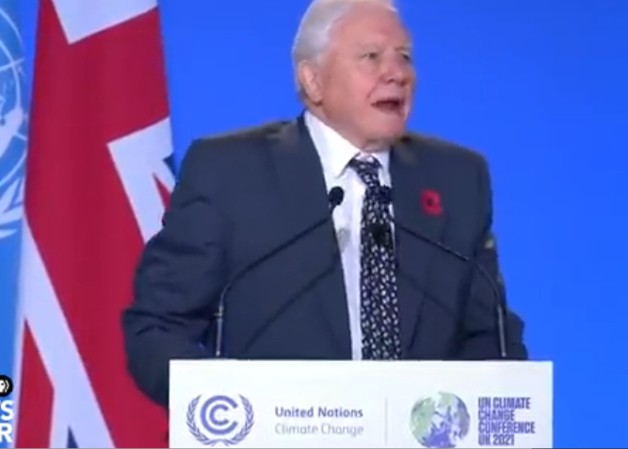
- Three films including Watch Sir David Attenborough’s full COP26 speech on the threat of climate change driven by the burning of fossil fuels (coal, oil and gas), Greta Thunberg’s “How dare you?” speech (2019) and an interview with Malala Yousafzai
- The United Nations Sustainable Development Goals Explained | History, 17 Goals, and Global Impact
- No Poverty
- Zero Hunger
- Good Health and Well-being
- Quality Education
- Gender Equality
- Clean Water and Sanitation
- Affordable and Clean Energy
- Decent Work and Economic Growth
- Industry, Innovation and Infrastructure
- Reduced Inequalities
- Sustainable Cities and Communities
- Responsible Consumption and Production
- Climate Action
- Life Below Water
- Life on Land
- Peace, Justice and Strong Institutions
- Partnerships for the Goals: Strengthen the means of implementation and global partnership for sustainable development
- BBC climate explainers What is climate change? – KS2 – BBC Bitesize
- Net zero explainers e.g. Net Zero Coalition | United Nations
- Carbon maps (e.g. The carbon map and Welcome to the ICAP ETS Map | International Carbon Action Partnership)
- FSB | Scopes 1, 2 and 3 explained Measure organisation footprints (1 is direct emissions (fuel burned), 2 is indirect emissions (from energy purchased) and 3 is everything else in the value chain (e.g. travel, distribution))
- And other resources from the Cambridge Marketing College
I really appreciated the facts and scientific analysis. And the discussion with the tutors and delegates on their personal experience of climate change.
What is sustainability?
Sustainability is usually talked about in the context of human economic and social development. The aim is to meet the needs of the present without compromising the ability of future generation to meet their own needs. It is usually part of an organisation’s Environmental Social Governance (ESG). The triple bottom line is People, Profit, Planet.
The sustainability triangle attempts to balance:
- Inter-generational (today vs. tomorrow)
- Intra-generational (rich vs. poor)
- Inter-species (humanity vs. the natural world)
There is a focus on the sources of greenhouse gases – both by type of emission gas (carbon dioxide, methane, nitrous oxide etc) and by economic sector:
- Electricity and heat production (25%)
- Agriculture, forestry and other land use (24%)
- Industry (21%)
- Transportation (14%)
- Other energy (10%)
- Buildings (6%)
It was interesting to learn that the US is more responsible for climate change through cumulative historical emissions (through fossil fuels, land use and cement) than anyone else, followed by China, Russia, Brazil, Indonesia, Germany, India, UK, Japan and Canada.
The Paris Agreement is a legally binding international treaty on climate change. It was adopted by 195 Parties at the UN Climate Change Conference (COP21) in Paris, France, on 12 December 2015. It entered into force on 4 November 2016. Its overarching goal is to hold “the increase in the global average temperature to well below 2°C above pre-industrial levels” and pursue efforts “to limit the temperature increase to 1.5°C above pre-industrial levels.” To limit global warming to 1.5°C, greenhouse gas emissions must peak before 2025 at the latest and decline 43% by 2030. The Paris Agreement | UNFCCC
There was an interesting review of greenwashing – including examples of where the Advertising Standards Authority (ASA) had taken action on false green claims in advertisements for major brands.
Sustainability reporting – PwC UK Create value by measuring impact, monitoring progress and meeting regulatory needs
The Responsible Marketing Framework
“Ratings, rankings, regulations and reporting are not strategy”.
As a fan of the much-loved 4 Ps of marketing (Marketing basics – What are the 4Ps and why are they still useful?), I welcomed them being adapted for the Responsible Marketing Framework. This provides a practical checklist to help you align everyday marketing work with a higher purpose. The course also provided a useful Sustainable Marketer’s Checklist.
There is a fabulous online tool for the framework Responsible Marketing Framework. You can use the framework to: scan and sense check, surface gaps, plot your journey and review progress regularly. It allows us to align commercial performance with wider wellbeing outcomes. And the framework can be used for both strategic planning and tactical execution – enabling purpose-led strategy (for marketing managers) and practical application (for marketing executives) within an holistic approach.
Throughout the CMC course we were given time to talk about how we might start to implement the framework within our organisation.
PRODUCT – Value creation through insight, ideas and connection
How you use insight, innovation and relationships to shape offers that create real value
- Research and analytics
- Innovation and co-creation
- Customer relationships
Responsible research moves beyond extracting data to understanding needs and societal context. It ensures insights are representative, unbiased and ethically sourced. It includes grounded theory – constructing theories through the analysis of data, rather than testing a hypothesis. It lets customer stories shape the product, rather than fitting customer into a pre-conceived product. And ethnography adds depth by observing customers in their natural environment.
True innovation is not just about new features – it’s about solving problems with the people affected by them. Co-creation invites customers and stakeholders into the design process. It links to Open Innovation where valuable ideas can come from inside or outside the company. Design thinking emphasises empathy, defining the problem, ideating, prototyping and testing.
Responsible relationships are built on trust, transparency and mutual value. Shifting from a transactional mindset to a relational one that respects the customers time, data and wellbeing. It taps into the theory of service-dominant logic (Vargo and Lusch) – the idea that service is the fundamental basis of exchange. Value is co-created with the customer meaning the relationship IS the product.
PEOPLE – Stakeholder value through direction, wellbeing and trust
How your leadership, teams and stakeholders experience the way you market
- Leadership and culture
- Employee engagement
- Stakeholder relationships
Leaders must model the value they want to see – creating a culture of psychological safety where ethical concerns are raised without fear. Greenleaf’s servant leadership – where leaders share power, put the needs of others first and help people develop and perform as highly as possible.
Employee wellbeing, fair workloads and meaningful work are prerequisites for sustainable marketing performance. Self-determination theory (Ryan and Deci) shows employees are most motivated when they have autonomy, competence and relatedness.
PROCESS – Value delivery through partners, channels and efficiency
How your channels, partners and data practices deliver value in responsible ways
- Supply chains
- Sustainable delivery
- Circular business
Sustainable supply chain management (SSCM) focuses on the management of material, information and capital flows as well as co-operation among companies along the supply chain. Taking goals from all three dimensions of sustainable development (economic, environmental and social) into account.
Digital is not carbon neutral – as every email, video and ad impression has a footprint. Responsible delivery means optimising channels for efficiency, accessibility and minimal environmental impact. Digital responsibility and accessibility (WCAG) ensures digital products and channels are accessible to all (inclusivity), respect user privacy (ethics) and minimise carbon footprint (environment). In a circular economy (Ellen MacArthur Foundation), marketing must drive use, repair and reuse. Keeping products and materials in use for as long as possible.
PROFIT – Value return through worth, choices and evidence
How commercial decisions, pricing and investment serve long term wellbeing as well as revenue
- Value based pricing
- Conscious cost and revenue
- Metrics and measurement
Price is a signal of value. Responsible pricing reflects the trust cost of production and fair value delivered to the customer. It avoids exploitative or deceptive tactics. Value-based pricing strategy sets prices on the perceived value to the customer rather than just cost-plus. This includes the value of sustainability and ethical practices, which customers are increasingly willing to pay for.
Conscious cost management means directing budget towards ethical partners and sustainable practices even if it costs slightly more in the short term. This relates to the Triple Bottom Line (Elkington) – an accounting framework with three parts: social, environmental (ecological) and financial.
Responsible marketing requires new metrics beyond ROI and CPA. It must measure impact, sentiment, trust and wellbeing to understand true performance. Kaplan and Norton’s balanced scorecard (Using Kaplan and Norton’s Balanced Scorecard in a PSF) is used to identify and improve various internal business functions and their resulting external outcomes. It balances financial measures with customer, business process and learning and growth perspectives.
Related links on marketing qualifications
Chartered Institute of Marketing (CIM) updates standard September 2024
Book review – Managing Brands May 2023
Marketing Manager Apprenticeship – a Level 6 Qualification January 2022
Innovation in Marketing August 2020
New CIM professional marketing qualifications – 2020 March 2020
2014 CIM professional marketing qualifications syllabus changes September 2014
Old and new digital marketing qualifications – Kim Tasso June 2012
Internationally recognised marketing qualifications? – Kim Tasso July 2011
Related links on environmental analysis and strategy
AI’s impact on bids and pricing in professional services August 2026
Political, Practice and Marketing Trends February 2025
28th PM Forum Conference: Organisational culture, mentoring November 2023
Book review: The Strategy Book by Max McKeown November 2023
Managing Partners’ Forum – Highlights September 2023
Being more strategic – Case studies and insights (Ireland May 2023) June 2023
Annual International Marketing Benchmark – PM Forum and Meridian West January 2023
Thought leadership campaigns: Arcadis, JLL and Remit December 2022
Be more strategic – PESTLE, Positioning and Plans December 2022
Nine Marketing and Business Development trends in 2021 December 2021
Law Society Research Report – Future Worlds 2050 July 2021
Be more strategic – Strategy in a post-Covid19 world July 2020
Marketing basics – What are the 4Ps and why are they still useful? May 2020
Environmental analysis and planning – Future of Jobs Report 2018 February 2019
Marketing planning in a nutshell – simple and complex plans June 2017
Law Society legal market research 2016 – The future of legal services – Kim Tasso April 2016
Strategy book – corporate social responsibility and regulation March 2014