
What’s your personal value proposition? What value do you bring to your clients? (or employer?) You may have considered these questions as part of your personal brand development. I’m looking at the process through the lens of value proposition development – and through my personal lens. Develop your value proposition (and a personal story)
What prompted this article on value propositions?
Some recent conversations prompted this article:
- A commercial client asked for help developing a value proposition for a team to go to market and win new business
- Value propositions emerged as a key area of interest in a recent pitch training workshop (Pitching and Tendering – Process, Propositions and Presence – Kim Tasso).
- I requested objective feedback into how I am perceived – effectively an informal audit into my brand presence, content and messaging
As I thought about value propositions, I was reminded of the famous line from the film Taken “What I do have are a very particular set of skills; skills I have acquired over a very long career. Skills that make me a nightmare for people like you”. Hopefully I’m not a nightmare though!
I’m sharing how I refined my own personal value proposition: “Help professional services firms and people change and grow by combining strategy, commercial and leadership expertise with psychotherapy experience”.
I help people within an organisation become more intentional, adaptable and self-directed in a fast-changing professional world. I focus on more than achievement – I enable people to feel less passive and more capable in environments that can sometimes overwhelm them.
So what do I do?
In professional services firms, people are a key asset. In my leadership development programmes, I talk about the challenge of balancing task and relationship. (see emotional intelligence and teams in change management)
As a consultant, I tackle clients’ challenges and add value by helping them to:
- Identify the issue and articulate the challenge
- Develop strategic options to resolve the issue (or grasp the opportunity)
- Make decisions
- Assess and align the organisation’s resources to achieve change
- Implement and embed the required change
- Whilst balancing the needs of the organisation, its teams and its people
Contrary to many consultants, my career trajectory has shifted from technical expert to experienced generalist (see Range – How generalists triumph in a specialized world” by David Epstein)
My core philosophy focuses on balancing the success of the organisation with the well-being and motivation of its people. This permeates organisational strategy and change management, through team alignment and motivation and onto leadership coaching and personal therapy.
In an age where youth and newness dominate, I possess what fresher consultants, coaches or therapists don’t yet have: accumulated pattern recognition from decades of real-world organisational exposure. Hopefully, that creates a quieter but deeper authority.
What is a value proposition?
A value proposition is a clear, concise statement that explains the “unique” benefits a product or service provides, outlining why a client should choose it over competitors.
A value proposition must:
- resonate (why act and why now?)
- differentiate (why your firm?)
- substantiate (why trust you?)
There’s a whole book on the topic: Malcolm McDonald on value propositions – How to develop them
Value propositions exist on a number of levels e.g.:
- Firm wide (the brand promise)
- Sector (your value to those in a sector or market segment)
- Service (your value in terms of a specific service and its benefits)
- Client (how you will deliver value to a specific client with a particular need at a specific time)
Naturally, there needs to be alignment and cohesion between all levels.
How do you develop a value proposition?
You develop a value proposition by being clear about:
- Who are your clients? (segmentation and targeting)
- What do clients want and need?
- How do you meet those needs?
- Why are you best placed to solve the problem and deliver the service and benefits?
- The price of your service compared to the value delivered
You will need to conduct significant research into the market and clients’ needs – as well as the sector, comparable businesses and the competition. Both internal and external research to take a deep dive into client needs.
It also means that you need a strong relationship with the decision-makers and players at client organisations. With trust and a strong relationship, you can ask questions and elicit information – as part of a structured sales or business development process. This enables you to develop empathy with the client and its people. And that provides a deeper understanding of both the emotional as well as the rational and technical needs.
What is a value proposition or USP – and how do I create one?
Pitching and Tendering – Process, Propositions and Presence – Kim Tasso
Integrating marketing and selling with value propositions
Malcolm McDonald on value propositions – How to develop them
Pitching, differentiation and competitor analysis
Expertise and services – What’s different about what I do?
What’s unusual is that I provide two service lines into two markets:
- Consultancy, coaching and training for commercial organisations (mainly professional service firms)
- Private psychotherapy, counselling and coaching services to individuals
These bridge two worlds which are often kept separate:
- Organisational strategy and performance particularly in the context of growth, marketing, business development, client relationships and change management
- Human emotion, motivation, identity, mental health and personal change
Many consultants understand organisational systems but underestimate the impact individual psychology. Therapists understand individual psychology but rarely see the organisational culture, performance or commercial context. My work lets me see both simultaneously. That creates a distinct dual lens.
It is also reflected in my tone – strategic, commercial and yet human. I’ve spent decades around performance, targets, positioning and organisational politics. Psychotherapy sharpens awareness of vulnerability, defensiveness, motivation, resistance, attachment, burnout, meaning and fear.
There’s a strong niche in the intersection where they both revolve around change, growth, resistance, communication, trust and adaptation under pressure:
- psychologically-informed leadership
- discovery of aims and appropriate strategies
- organisational change through human behaviour rather than process alone
- helping technically capable people develop relational competence
- developing emotionally intelligent people with resilience who navigate transitions well
I have credibility with professionals because I understand both the business pressures they face and the internal psychological experience of facing them. That combination is comparatively rare. And commercially, people increasingly want this integration.
I speak into that gap authentically rather than as a trend. My story (see below) may itself be part of my value proposition. Because the progression from business developer to management consultant to psychotherapist suggests depth, maturity and integration. It shows someone who became increasingly interested in the humans beneath organisational culture, performance and behaviour.
AI is a major force. Interestingly, I studied artificial intelligence decades ago as part of my psychology degree’s cognitive psychology module. I am a fan of any technology that makes life easier for people. So AI gets my vote – particularly with regards to data analysis which is a touchstone for modern marketing and business development. Yet as AI takes over many technical and analytical roles, the value of human skills will become even more valuable. I love this debate which is articulated so brilliantly in this book: The Human Edge – How curiosity and creativity are your superpowers
I’ve worked with over 300 professional service firms – as well as numerous not-for-profit, membership, creative and other service businesses. Clients of Kim Tasso – legal, accountancy, property and other firms. And some were kind enough to share their views: client references for Kim Tasso at RedStarKim Ltd
Side line story – My career journey in a nutshell
Storytelling is a compelling way to convey information. See Book review: Unleash the power of storytelling by Rob Biesenbach. So I was urged to share my story…being so “mature” means that I have a lot of back story!
Unusually, and contrary to most people and the current trend, I’ve moved from the tech space into the people space…
My early career (1979 to 1987) was spent working with three technology giants having foreseen the growth in what we then called programming. First, I promoted innovative user-friendly application cloud services (before that label existed) at Comshare Inc. Then I marketed software and services at British company Logica plc (which was acquired by CGI) and then promoted hardware (both information and control systems) at US business Honeywell.
Using my functional expertise and track record in marketing and sales – I entered the world of professional services. My initial inhouse roles were at a Big Four accountancy firm and then a leading London law firm. During that time I completed a post-graduate diploma in marketing (that was four tough papers). Then I set up my own – to serve professional services and property firms. And over 30 years, I have supported 300 firms.
The underlying theme was always business development in the broadest sense, marketing and sales specifically. And this morphed – with help from an MBA – into strategy, planning, leadership and growth. I even took on a couple of Non-Executive Director and Trustee roles along the way – to stretch that Board muscle. I had seven books published over the years – on growth strategies, business development, media relations, social media, selling, business relationships and soft skills.
Professional services is essentially a people business. It quickly became apparent that to achieve commercial success you needed to be able to work with people. To gain their interest and engagement and to encourage them to adopt new behaviours. But people can be tricky – learning to help a disparate group of really smart people to become an aligned and integrated force aimed at a specific goal is a constant challenge. After refereeing numerous Board room battles, I became a qualified and accredited mediator along the way.
My first degree was in psychology – approved by the British Psychological Society. So I guess the people thing was always there before I was swept away on the commercial wave. But I needed to scratch that itch – which I tried with qualifications in psychometrics, NLP, coaching and mediation. But it wasn’t enough.
So in 2014 I embarked on the arduous training journey in counselling and psychotherapy. Doing this part-time and in conjunction with my day job and raising a family as a single mum, it took a total of six years. But with a few breaks I finally qualified as a psychotherapeutic counsellor and set up a private practice. And then went onto gain a level 5 qualification in the topic. So the learning continues.
Does having two professions make it hard to keep up? Certainly.
Is it worth it? Absolutely. Always follow your purpose and passion.
Evidence – What’s valued by my clients?
From the many kind client testimonials (client insight) client references for Kim Tasso at RedStarKim Ltd, some key themes emerge:
- Strategic insight and commercial acumen
Clients emphasise my ability to quickly understand complex businesses, identify core challenges and provide practical strategic direction. Repeatedly described as: sharp, objective, focused, data-driven, decisive, clear-minded and “able to see the wood for the trees”. Clients value the combination of strategic thinking with pragmatic implementation
- Deep expertise in professional services marketing and business development
Widely recognised as a specialist authority in professional services sectors such as law, accountancy, surveying, and consultancy. References highlight: extensive sector knowledge; expertise in business development, client relationships, strategy, coaching, and marketing; understanding professional partnerships and fee-earner psychology; and credibility with senior leadership teams. Several testimonials explicitly describe me as a “thought leader” or “expert”.
- Strong emotional intelligence (EI or EQ), coaching and relationship skills
Beyond technical expertise, many testimonials emphasise human and coaching qualities: understanding organisational culture and personalities, helping individuals think differently, combining psychology with commercial insight, building confidence and capability and balancing challenge with support. Clients frequently mention: integrity, empathy, warmth, humour and professionalism alongside an ability to influence behaviour and drive change.
- Engaging, energetic and challenging facilitation style
There’s repeated praise for delivery style and interpersonal effectiveness. Common descriptors include: engaging, warmth, energetic, interactive, thought-provoking, inspiring and challenging in a constructive way. Many references note an ability to encourage participation, maintain attention and motivate even sceptical or reluctant audiences.
- Bespoke, practical and results-focused training
A dominant theme is the ability to tailor training and consultancy precisely to client needs while ensuring immediate practical application. Testimonials repeatedly mention: bespoke workshops and sessions, detailed preparation and needs analysis, actionable takeaways and practical tools delegates can use immediately. Clients consistently note: measurable outcomes, behavioural change, and business impact rather than just theoretical learning
Evidence – How do I deliver value to clients?
So much of my work is confidential that people often only see the work I do on public training courses. So maybe it’s time to share elements – whilst protecting confidentiality – of some of this “hidden from view“ consultancy and coaching work (you can learn about my therapy approach and work at www.tassotalkingtherapy.co.uk)
I’m best known in professional services. But I also work with allied not-for-profit and membership organisations. And sometimes those in different sectors – like real estate, technology, media, education or retail.
As a consultant I don’t fit into a neat and tidy “specialist” box. Clients approach me with a problem or challenge and a key part of the value I deliver is helping them identify:
- the underlying challenge (and it’s rarely one thing in these complex times) and
- the options to overcome those challenges
I don’t set out methodologies, services or products – wheeling out the same tired formula regardless of whether it “fits” the client’s needs. Unlike many consultants who work in teams, I work alone. My clients are really bright people – whether Board members or marketing and business development professionals. They need something different from me. The value I deliver is less from specialisation in a narrow technical field and more from integration – connecting domains that are usually siloed. That becomes more valuable as the world becomes more complex and psychologically demanding.
Value to clients usually – but not always – revolves around one of three things: generate more money, save money or minimise risks. Sometimes there are multiple elements. Often, speed is sought.
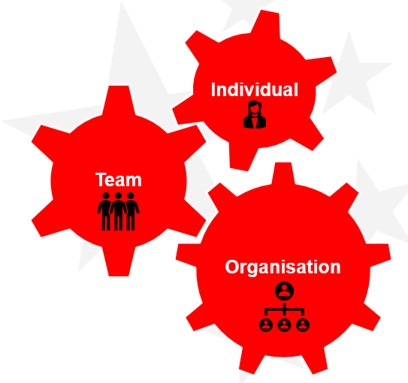
| For organisations | For teams | For individuals |
| Energise the future leadership team to achieve organisational goals (developed a leadership development programme – delivered some of the modules and outsourced others) | Increase new business development (guided a specialist team through market and data analysis, relationship mapping and service delivery to develop compelling value propositions to integrate innovative marketing and business development programmes)
|
Save the business (supported a business owner fighting an unfriendly potential takeover and leadership challenge)
|
| Guide and sustain business growth (facilitated Board away days over a number of years to focus and evolve strategy, build new profit streams and manage succession) | Deliver growth in new markets (supported a newly-formed business development team to prioritise opportunities and identify focused interventions to deliver the desired growth)
|
Scale a business (coached a business owner to scale up the business and transition to a corporate structure on the way to the exit strategy. They exceeded all growth targets)
|
| Diversify the business (led a strategic analysis project to develop a marketing and business development strategy that seized new opportunities and beat the competition)
|
Focus growth activities (shaped the strategy for a growing practice group in the private client market – and helped implementation) | Support a successful career (coached a senior professional through numerous partnership transitions across a number of firms internationally)
|
| Increase efficiency and effectiveness in client engagement (facilitated a detailed audit to develop an internal engagement strategy to achieve the targets) | Increase client retention and loyalty (educated a law firm board on the opportunities and options to develop its client service strategy to differentiate and fuel future growth) | Reignite career progression (supported a senior finance professional in a toxic work environment to rebuild confidence and transition to a new environment where their success accelerated)
|
| Grow business in a particular market (increased the number of enquiries and conversions for a fast-growing property business) | Improve Board effectiveness (helped a senior team navigate conflicting goals and different personalities to achieve team cohesion and high performance) | Enhance performance and drive progression (combined coaching and mentoring for a development and visibility programme to accelerate career success for a senior professional)
|
| Win new profitable clients (enhanced commercial conversation skills within a structured sales process to enable a law firm to increase its new business development effectiveness) | Reposition to be more effective (revitalised a restructured marketing and business development team to be more proactive in helping practice groups adapt to changing market conditions and meet the firm’s goals)
|
Help free a high performing professional from continuous and growing anxiety. Thus supporting continued career and financial success without compromising family life. |
| Achieve ambitious growth targets (implemented a multi-layered cross-selling strategy for a fast-growing firm encompassing communication, systems, training, relationships and incentives)
|
Gain share of a new market (became part of an established, successful team to develop a strategic thought leadership campaign to reposition a team to drive its new market entry strategy) | Transition from employee to business owner (helped an entrepreneur establish a business without compromising their financial security or family life) |
| Generate more loyalty and profits from clients (refreshed a declining key client management programme to build momentum and achieve the desired growth)
|
Improve productivity (shadowed a MBD team through meetings and work tasks to identify potential improvements for team and personal productivity) | Plan future career and life priorities (supported an analysis of past and present challenges and resolved sticking points to enable a future vision to be developed and implemented) |
| Transform the business (developed an internal communication and engagement programme to support the implementation of a major technology transformational change programme)
|
Improve effectiveness and internal image of a key functional team (conducted multiple structured conversations, promoted collaboration and beat the effectiveness and perception targets) | Achieve next promotion (assessments and tailored development programmes to win promotion faster than planned) |
The world changes. Businesses change. Clients demand change. People today face non-stop change. My role is to support businesses, teams and individuals adapt and change swiftly – with minimal angst and maximum achievement.
Related posts on value propositions, personal brands and perception
Pitching and Tendering – Process, Propositions and Presence – Kim Tasso May 2026
Another qualification as a practicing psychotherapeutic counsellor August 2025
CPD and Chartered Marketer status renewed – Kim Tasso August 2025
Building the confidence of young professionals – Four tools July 2025
LinkedIn personal branding for women in real estate – Kim Tasso June 2025
Book review: Unleash the power of storytelling by Rob Biesenbach November 2024
MBD Assistants – Perception, variety, events and specialising September 2024
How to create and promote your personal brand – Kim Tasso May 2024
Kim Tasso qualifies as a psychotherapeutic counsellor January 2024
Pitching, differentiation and competitor analysis June 2023
Future Marketing/BD Manager – Build your personal brand December 2022
PM Conference Report 2022: Strategy implementation November 2022
Kim Tasso mediation services – interpersonal conflict January 2022
Brand Basics (Video) – What is a brand? May 2021
“The State of the Marketing Profession – Past, Present and Future” May 2020
A practitioner’s guide to Account-Based Marketing (ABM) February 2020
Malcolm McDonald on value propositions – How to develop them May 2019
Building a personal brand – Key Person of Influence October 2017
Non-Executive Director at Earl Kendrick Associates February 2017
Anderton Gables building consultancy appoints NED March 2016
Personal introductions: BrandMe the power of 3 in networking August 2015
What is a value proposition or USP – and how do I create one? October 2011
Integrating marketing and selling with value propositions August 2011