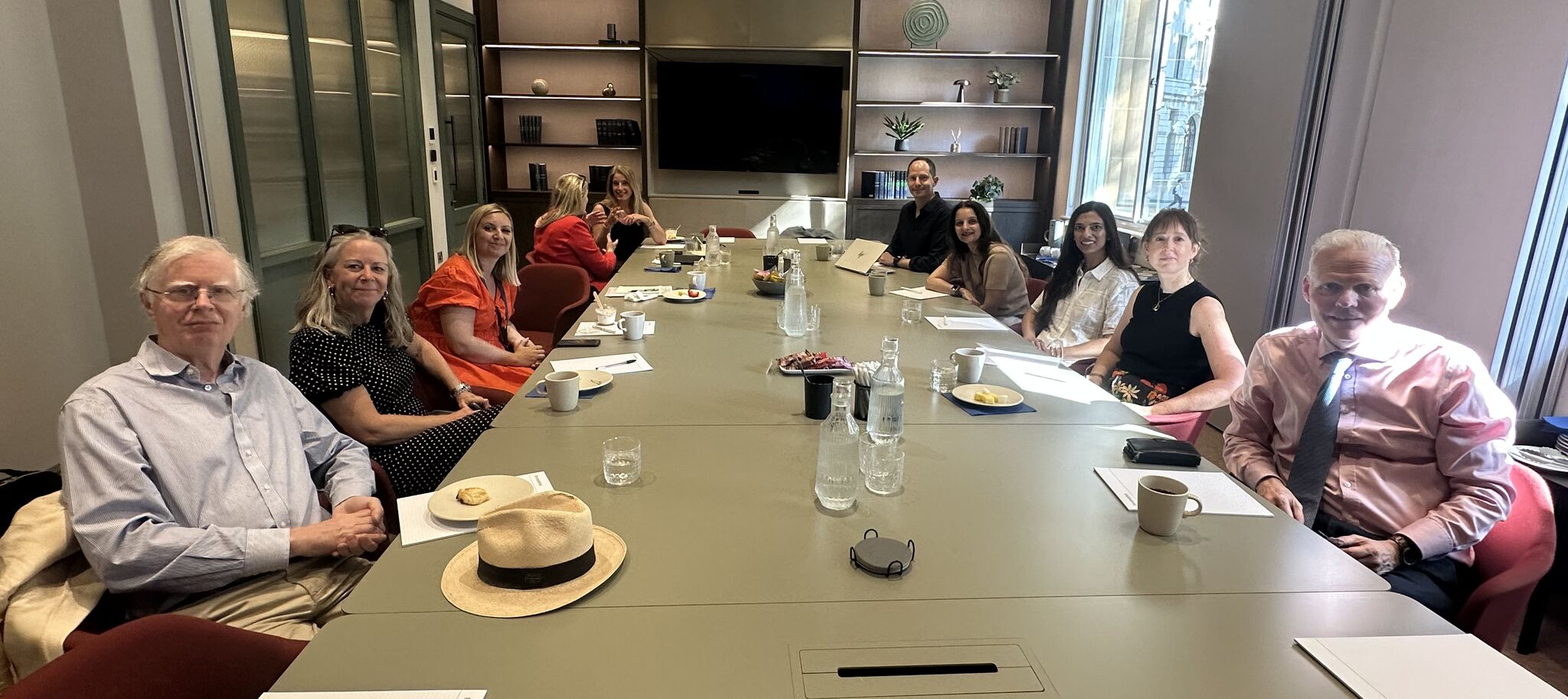

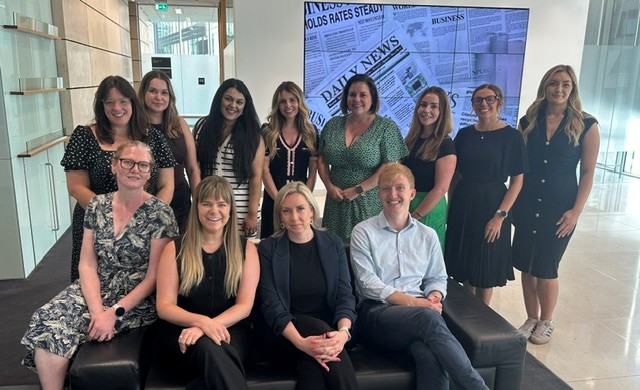
Last week I was excited to facilitate the much-anticipated new PM Forum workshop on “Aspiring Marketing and Business Development Leaders”. 12 delegates – three quarters from law firms – gathered to tackle a tough, demanding agenda. I’ve tried to provide a synthesis of the key points of interest from the delegates: increase commercial awareness; be more strategic; observe and learn from the market; renegotiate relationships with stakeholders, promote collaboration; lead the MBD team; drive development of the MBD infrastructure and ecosystem; and transition from MBD expert to MBD leader. Key insights from aspiring MBD leaders
The Aspiring MBD leader session outline
Part one – Align with the firm’s leadership
- Introduction – Adopt the mindset of a senior leader
- Build your commercial awareness
- Align with the firm – Vision, strategy and change
Part Two – Drive MBD strategies and processes
- Plan future (MBD) strategies
- Manage yourself and the team
- Develop your personal brand, influence and career
Thanks to Simmons & Simmons for hosting the workshop. And to the CMOs and Heads of MBD who shared their views during session development (including: Crowe UK, Kennedys, Kreston, Pinsent Masons, SA Law, Trowers & Hamlin and Womble Bond Dickinson). And to those who shared their views “on the record”:
- Aspiring MBD leaders – Advice from a CEO – Kim Tasso Edward Gordon-Hall, Druces (July 2026)
- Aspiring MBD Leaders – Advice from a Chief Commercial Officer Leor Franks, Kingsley Napley (June 2026)
- Aspiring MBD leaders – Advice from recruitment consultants – Kim Tasso Colette Norfolk and Victoria Capsey (May 2026)
- Aspiring MBD leaders – Advice from a CFO – Kim Tasso Steve Rowan (RPC) (April 2026)
Key insights from Aspiring MBD leaders
It was a highly interactive and productive day covering a lot of topics. I can only convey a snapshot of some of the key themes that resonated with delegates.
Increase commercial awareness
A key element of any senior MBD role is to analyse markets to spot opportunities and threats early. And to then balance the risks and rewards. Some firms have a bigger appetite for risk than others. MBD leaders need to understand their firm’s attitude towards risk and reward.
MBD leaders establish, maintain and use systems that monitor trends and market changes:
- Develop systems to pick up changes in the environment and market whether they are opportunities or threats (risks)
- Consider weak signals. Most monitoring systems look at majorities and trends whereas weak signal analysis is picking up on unusual one-offs or outliers that may potentially grow
- Some firms are blessed with dedicated teams to analyse and research markets and clients. Other firms rely on stretched MBD teams to do this
We spent time analysing and comparing the financial information of traditional partnerships, network firms, those backed by private equity and public limited companies.
It was interesting that only half the delegates had prepared a business case. Understanding the commercial context and being comfortable with finance is key to preparing a business case. And to assess an opportunity through the eyes of senior decision-makers.
Some firms embed commerciality training into their fee-earner development programme. So MBD leaders must not only develop their own commerciality but also that of fee-earners across the firm.
Most delegates committed to speaking further to the CFO and other members of the finance team. There was a recognition that they needed to undertake a deep dive into the firm’s financial data. To understand the financial drivers and constraints of the business
Aspiring MBD leaders – Advice from a CFO – Kim Tasso April 2026
Managing Partners’ Forum Growth Conference 2026 May 2026
Be more strategic
Leaders are strategic. They craft a compelling and inspiring vision for the future and develop plans to ensure that vision can be achieved. Leaders see the big picture, shift from being reactive to proactive and are confident and bold. We explored different styles of leadership depending on the required balance of task and relationship.
Strategy and plans naturally dominated conversations. And there were various threads:
- Strategy is about clarity, focus and choice
- MBD strategy must be aligned with and supportive of the business strategy
- Strategy must be based on reliable data and aimed at tackling the core issues
- Leaders constantly ask “Why?” and “What next?” as well as “How?”
- Strategy balances how you are perceived in the market and competitors (external perspective) with the resources you command (internal perspective). It treads carefully between preserving the valuable elements of the firm’s heritage, legacy and values with reinvention and investment for the future
- The plan is a roadmap that shows the building blocks of future action – leaders are responsible for directing the operational and change processes for successful execution and implementation
- We may be “pushed” by fee-earners, but must pay heed to the “pull” of markets and clients
Strategies and plans are not fixed. They are a choice of what seems most suitable with the available data. Plans must be constantly re-assessed using information from the market and by tracking progress and results. Leaders are constantly reassessing strategic priorities.
Where firms separate the activities, there needs to be a greater integration between marketing and business development activities. We need more cohesion between what MBD professionals do and how fee-earners pursue the opportunities generated.
Ultimately, MBD leaders need to make a strategic (and financial) impact.
Promoting strategy conversations with questions December 2025
Be more strategic – Strategy is about making choices August 2025
Be more strategic – Strategy into Action (Strategy Implementation) December 2024
Be more strategic – Stretch your strategy muscle May 2024
Be more strategic: Top-down or bottom-up, marketing (kimtasso.com) December 2023
Book review: The Strategy Book by Max McKeown (kimtasso.com) November 2023
Observe and learn from the market
MBD is responsible for championing the client’s perspective – for ensuring that client needs influence decisions. Most firms will have significant resources for market analysis and client research and listening (see client feedback playbook – How professional services firms). The data must be collected – and interpreted – and used as a basis for decision-making.
In one exercise we reviewed 10 professional service MBD case studies. Observations included:
- Invest in being really specific about the target audience – and addressing their wants and needs in their language
- There’s growing use of collaboration and partnerships with third parties. There were examples of sponsorship, joint research and co-marketing. Identify and work with third parties who reach our target audience, match our brand position and values and who contribute positively to the insight we share for our target audience
- Make clients the hero of the story
- B2C marketing concepts are increasingly being applied to B2B markets
- The impact of a campaign is not necessarily a function of spend
- Some campaigns convey a genuine passion for where people work
- The human element appealed – some firms show lived experience and real empathy with clients
- The best performing campaigns were based on genuine client insight and mirrored the clients’ journey
Renegotiate relationships with stakeholders
As we progress to leadership roles, we must change the perceptions of partners and renegotiate relationships.
Perception – Consider how others perceive us. Actively manage how we are perceived rather than leaving it to chance. The way we behave and speak at meetings and in other interactions will be the basis of their opinions. Sometimes, people’s perceptions become “stuck” at how they first saw you in your role.
From doers to enablers – We transition from reactive “doers” to strategic “enablers” – creating the space to develop mutual understanding and respect and setting the scene for collaboration. We need to bring others into discussions and tap into the “hive mind” as that builds engagement and buy in.
Accountability – As a leader, “the buck stops here”. We are accountable for our actions and those of our team. We must balance accountability with our approach to being bold and innovative and taking risks. We must be confident of our own judgement. It can be lonely at the top so we must develop a support system.
Collaboration – In our increasingly complex world, it’s more likely that we need several people or teams to work together to achieve our aims. Success relies on how well we promote collaboration between teams and individuals. We cannot remain in silos. Developing empathy – seeing what others are trying to achieve (and why) – is essential if we are to align our efforts and work together to achieve the changes we seek.
Some commented that whilst the majority of their relationships with stakeholders were healthy, some still had to navigate carefully around the “control freaks” who are used to dictating what should be done and how. What do you do when your boss is a micro-managing control freak? Communication, diplomacy and negotiation skills come to the fore. Negotiating skills – Balancing task and relationship
To manage relationship transitions we need to start inside. By bolstering our self-belief and self confidence. To trust our own decisions. If we feel confident, we will convey confidence and promote it in others. There were some smiles when one delegate commented “Fee-earners smell fear”.
There was some discussion about how we learn to recognise and adapt to different personalities of leaders, lawyers and accountants. Adaption is a building block of relationships. dog, cat and bear personalities – Better business relationships
Better Business Relationships – The building blocks
Proactive marketing and business development executives
Change challenges – Culture, Communications and Clutter
Buy in – Influence and Persuasion Toolbox – Kim Tasso
Promote collaboration
We need to understand what drives others to build relationships. We also need this understanding to promote collaboration.
Complex problems require the collective intelligence, diverse perspectives and combined resources of many people. And we know that the best decisions are based on diverse views.
Many firms operate in silos. We play a vital role in breaking down those silos. We promote cross-firm and cross-team communication, engagement and collaboration. This supports relationship building, knowledge sharing and trust.
In many professional services firms, there is a matrix structure. This is where teams are organised into groups with similar technical expertise but go-to-market through sectors. This requires collaboration. One delegate’s firm had moved beyond this and focuses on key themes relating to the needs of clients in particular sectors.
Those silos can extend into business or support functions. So we need to understand what drives our fellow leaders in finance, human resources, technology, compliance, know how, operations, premises and facilities.
So we build our internal network – to connect with a range of both senior and junior stakeholders. In fee-earning and support functions. MBD can take the lead on promoting better internal communications which supports a shared vision, motivates people to act and supports behavioural change. MBD can act as a cross-pollinator of ideas – drawing people together and sharing best practice in the pursuit of common goals.
One delegate commented “Leaders don’t have all the answers – they are curious, ask questions and seek opinions”.
Lead and Manage the MBD team
Leaders need to have good emotional intelligence. Leaders must be self-aware. They must know and master their own feelings and to be able to connect with and help others manager their own emotions. Emotional Intelligence in legal practice (Globe’s Fundamental Skills Leaders must be aware of the impact of their emotions on others – and alert to the possibility of emotional contagion.
Great leaders have vision. Regardless of their style. They are clear, honest (even in communicating their own vulnerabilities) and transparent to create psychological safety. Leaders are role models for those in their teams. Leaders establish and maintain boundaries. And support team members in doing the same. Healthy boundaries at home and at work – how to set and maintain
As we become more senior we shift from “doing” things ourselves to “enabling” others.
Structure follows strategy – Teams need to be structured in a way that allows them to align with and deliver the strategy. This matters for the organisation overall – not just marketing and business development.
There was plenty of discussion about how we manage delegation and feedback to empower and develop the people in our teams. We were reminded that to help team members develop confidence and skills we delegate the outcome – not the process. We need to trust our people and avoid micro-managing.
A good leader will balance push with protection. Understand the strengths of each individual and provide some stretch in allocated projects. But provide protection to allow them to learn (which may involve making mistakes). And advocate for our team members when it is time for them to be promoted.
Leaders are responsible for the physical and mental health of their people. We must check in with our people regularly and watch out for signs of stress and distress.
There was also a reminder that succession planning isn’t about cloning. Future leaders may be different to current leaders – requiring different skills sets and approaches.
One delegate commented “We need to shine as a team – not just as an individual”
Drive the development of the MBD infrastructure and ecosystem
Senior MBD leaders lead, manage and develop the MBD infrastructure and ecosystems. And this isn’t a purely technology or technical challenge.
There was plenty of discussion around the issue of engagement and adoption of systems. And the lack of integration between the firm’s operational systems and different elements of the marketing ecosystem. Integration issues are real. And this can impact the quality of the data being used to make decisions. So we return for the need for collaboration.
It was noted that some firms have significant resources for data management, research and knowledge management. Those firms have a competitive advantage.
It was also interesting to hear from delegates that in some firms, as they progressed from systems such as InterAction to systems like Microsoft Dynamics or HubSpot, some fee-earners were requesting a return to the former systems. Familiarity is comforting, change is challenging.
Others commented:
- It takes time to adopt and deploy AI technologies. It takes time and skill get processes working properly before attempting to automate them
- There were often challenges around deriving the necessary reports for both MBD use and for senior stakeholders
- There was a need for the CRM team (often in IT and systems roles) to have a good understanding of or background in marketing and business development
- In other sectors, there are business analysts who act as bridge between those in the tech team and users. Business analysts help translate the needs of fee-earners and marketing and business development into terms understood and needed by tech teams.
Transition from MBD expert to a MBD leader
There was discussion about creating and promoting your personal brand as a leader. LinkedIn personal branding for women in real estate – Kim Tasso And to be your own advocate. Several delegates talked about developing an inner coach to counter their inner critics and Imposter Syndrome.
MBD leaders take responsibility for planning and prioritising their personal development. Not least to set a good example to their team members. Others mentioned the value in obtaining a coach or mentor (remember the free mentor service at PM Forum Mentor Match – PM Forum
There was recognition that progress for leaders is not so much about deepening MBD expertise (although we have to keep up with professional changes as part of our CPD) but more about increasing the range of knowledge and understanding we have with areas beyond marketing and business development.
There was interest in the concept of a T-shaped professionals (like the O shaped lawyer) resonated (see Future Marketing Manager – T-shaped people, senior promotions). This integrated with the earlier material on developing your commercial awareness and building understanding and relationships with others in different functions and teams within the firm.
Transition from technical expert to adviser
Your personal transition – Endings, neutral zone and new beginnings
Practising emotional intelligence, at one emotions check-in, the delegates’ reported feelings included: envious, excited, overwhelmed, driven, determined, inspired, content, processing, distracted, torn, relieved, reassured, reflective, positive, motivated and “Pumped”! It was wonderful to witness such energy in the room.
Delegate aims
At the start of the session, delegates shared what they hoped to achieve. And there were common themes around confidence, adapting to a new role, making a strategic impact, improving peer relationships and self-development:
- Improve confidence in speaking amongst senior leaders
- Regain confidence that was depleted during maternity leave
- Adjust to working in a legal environment
- Just moved into a more senior and strategic role – managing six people
- Make an impact in a new role with a new team
- Adjust to a new role following a restructure
- Identify my strengths and development gaps
- Shift from feeling “stagnant”
- Learn what others at a similar level are thinking and doing
- Compare myself with peers in similar firms and roles
- Identify how to make a more strategic impact
- Augment my plans for creating a MBD operations function
- Build a network of peers for ongoing support
- Forge connections with others in a similar position
- Solidify relationship with new Chief Client Officer
- Find ways to improve how others perceive me in a leadership role
- Consider how to achieve ambitious next step in career
Morning session takeaways from delegates
- Focus on the firm’s strategy – and how MBD supports it
- Develop skills to use insights to influence
- Monitor weak signals
- Build commercial awareness
- Be fluent in the financial numbers
- Structure follows strategy
- Influence and manage how others perceive you and the team
- Build your internal network
- Revisit value of models previously learned (but somewhat forgotten in the busy-ness of day-to-day life)
- We are not alone!
- Be a change catalyst
- Collaborate!
Related links for aspiring marketing and business development leaders
Aspiring MBD leaders – Advice from a CEO – Kim Tasso July 2026
Aspiring MBD Leaders – Advice from a Chief Commercial Officer June 2026
Aspiring MBD leaders – Advice from recruitment consultants – Kim Tasso May 2026
Managing Partners’ Forum Growth Conference 2026 May 2026
Aspiring MBD leaders – Advice from a CFO – Kim Tasso April 2026
Nick Hughes talks about brands in real estate April 2026
future marketing and business development managers March 2026
Annual Strategy and Marketing Benchmark Meridian West February 2026
Strategic marketing case study – Brand at Mishcon de Reya November 2025
Political, Practice and Marketing Trends February 2025
Chartered Institute of Marketing (CIM) updates standard September 2024
Future Marketing Manager – New product development March 2024
Future Marketing and Business Development Manager: Connections December 2023
Context and curiosity drive commerciality and pricing September 2023
know about commercial awareness by Christopher Stoakes August 2023
Managing Partners’ Forum Strategy Summit July 2023
Top six leadership qualities? July 2023
Annual International Marketing Benchmark – PM Forum and Meridian West January 2023
PM Conference Report 2022: Strategy implementation November 2022
Book review: Influential Internal Communication by Jenni Field September 2022
How to advance your career in professional services marketing April 2022
Research on leadership and emotional intelligence (EQ) September 2021
A practitioner’s guide to Account-Based Marketing (ABM) February 2020
Effective marketing – a discussion with managing partners January 2019
Professional services leadership handbook – Book review October 2018
Future Marketing Manager – T-shaped people, senior promotions April 2018