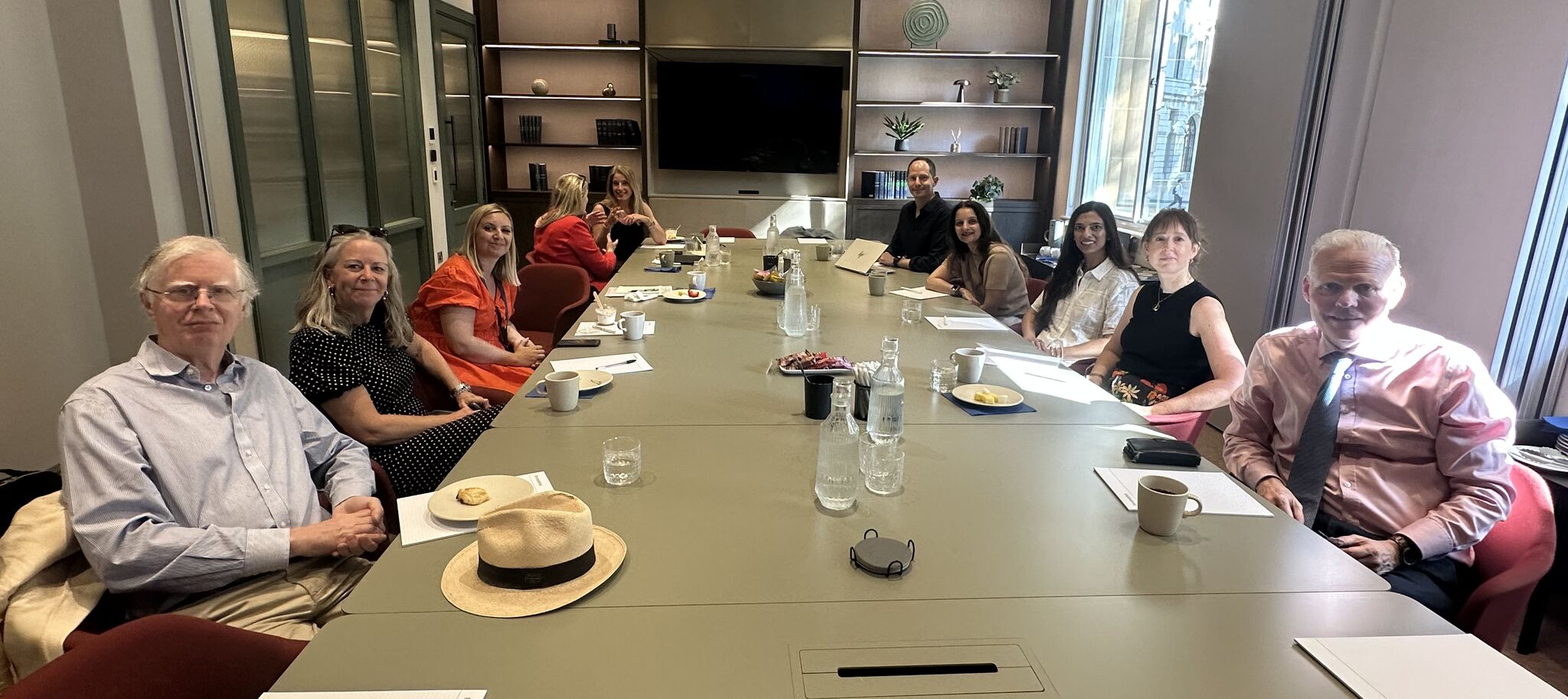


I’ve summarized the highlights of the recent PM Forum online training workshop: “Strategic Marketing and BD Planning: In a nutshell”. Most of the delegates were in general MBD roles (mostly at executive level) – two were focused on event planning. Some were within large teams (30+) and others were in comparatively small teams. Some had responsibilities spanning the globe while others focused on national, regional, local markets and sectors. Some had separate marketing and business development teams – whereas others were integrated. A key takeaway for most delegates was to ensure that client needs remain uppermost in our minds whilst preparing and implementing marketing and business development plans. MBD Planning – Keep the client’s needs at the heart of the process.
The session covered:
- Marketing and Business Development (MBD) theory and fundamentals
- The MBD planning process (overview of the frameworks)
- Conducting a MBD audit (external and internal analysis tools)
- MBD goal setting
- MBD strategy selection and development
- Overcoming planning challenges in professional services
Details of future PM Forum training sessions: PM Forum – PM Forum
MBD plans are pulled in many directions – remember to focus on the clients
A key challenge when planning MBD is to navigate the many – often competing – needs that we face:
- A MBD plan explains how we intend to meet the firm’s goals to achieve the reputation, relationships, revenue and profit growth sought
- We have to consider how to navigate the complex and changing external environment and sector differences that confront our markets and clients and position our firm within the competitor landscape
- MBD teams are also faced with a constant flow of requests from fee-earners focusing on their sector, service, office and clients – who are keen to push their messages out
- There’s also stiff internal competition for the resources – time, money and attention – required to design, implement and monitor MBD plans
- Then, as marketers, we want to flex our creativity and be bold to innovate and adopt new technology and channels
With so many competing demands, it is easy to lose focus on the most important needs – those of our clients. They are our target audience and we must ensure that our MBD adds value to them.
Sometimes the overall purpose of marketing becomes blurred:
- “The aim of marketing is to know and understand the customer so well the product or service fits him and sells itself.” Peter F. Drucker
- “Marketing is the art of creating genuine customer value.” Philip Kotler
- “Our job is to connect to people, to interact with them in a way that leaves them better than we found them, more able to get where they’d like to go” Seth Godin
- “Good marketing makes the company look smart. Great marketing makes the customer feel smart.” Joe Chernov
- “Make the customer the hero of your story.” Ann Handley
- “Content marketing is like a first date. If you only talk about yourself, there won’t be a second one.” – David Beebe
How can we improve our MBD planning?
Breakout discussions revealed several insights into how we can improve our MBD planning
- Data is the foundation of a good MBD plan. And we need a lot of data (markets, trends, competitors, client needs, client preferences, client relationships and interactions, past performance, conversion rates, fees and profit generated, analytics etc). Some firms have excellent systems (primarily in their CRM) which provides that data. Other firms are less well-served. Some firms have fantastic resources to undertake detailed market and client research. Other firms are operating in a data vacuum.
- Be clear and realistic on what we hope to achieve. We need to understand what fee-earners want to achieve. And shape those expectations to fit the reality of what is feasible within the time and resource constraints. And to align with the firm and team’s goals.
- Set measurable goals. We know what SMART objectives we need from a marketing and business development perspective. But we need to understand what the firm and fee-earners expect a plan to deliver. Business goals and marketing goals can look different. So we need to translate the fee-earner ambitions into things we can monitor and measure. There’s often a gap. For example, fee-earners don’t always fully understand the link between web site visits and social media engagement on the health and value of the future business pipeline.
- Be more strategic. We all want increased activity and action. But raising activity levels alone isn’t enough unless they translate into the results sought. Strategy is about making choices. We need to follow a strategic framework – understand the current position, set clear goals and then decide what action is most likely to achieve those goals most effectively and efficiently. Marketing and Business Development professionals are skilled at selecting which activities are most likely to achieve the desired results.
- Improve evaluation. We are all conducting a lot of plans and managing a lot of activity. The use of AI means that we can automate more processes to make it easier and cheaper to do more things more quickly. We need to build in strong evaluation from the outset. So we can apply the lessons learned to improve future plans and action.
- Focus on the client. And again, the need to keep the target audience – the clients and referrers – front of mind as we bring all those elements together to craft a plan.
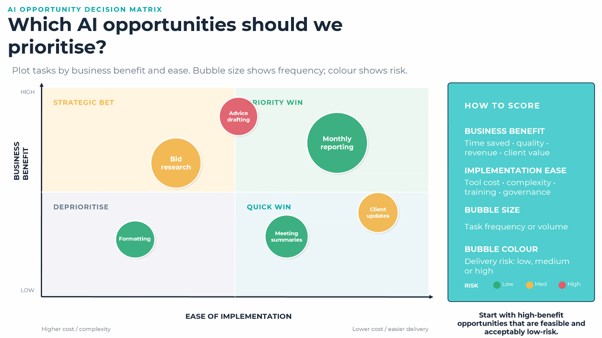
There was naturally significant discussion about how we can use AI to tackle some analysis and research tasks. And to automate key planning and monitoring processes.
Key components of a good MBD planning process
We need to step back and see the big picture. Be more strategic about how aims and plans across the firm, its divisions, the sectors it serves and the services it provides work together. Where the alignment, synergies and collaboration occurs.
We reviewed theoretical models and practical tools to help with planning including: McDonald’s 10 steps, four levels of a marcoms plan, SOSTAC, DRIP and AIDA, RACE and STAR, pipelines and funnels, seven step ABM planning and guidance from experts in professional services marketing. (There’s further details here: Marketing planning in a nutshell – simple and complex plans)
Delegates discussed the main components of the MBD planning approaches and templates they use in practice.
A key challenge was showing the extent to which plans were successful. Ultimately, this is to do with whether the plan achieved (or exceeded) its objectives.
But there was plenty of discussion about measurement. Return on Investment (ROI) remains the Holy Grail – but was a constant challenge considering data and attribution, fee-earner behaviour and results tracking, the long and complex B2B sales cycles to name a few. Some marketers are looking at other ways to build a business case and measure value (e.g. the CARD method and the 4Rs of a value case).
Compliance was mentioned too. Observing legal and professional regulations, adhering to the firm’s governance and policies and reflecting best practice.
Key challenges in MBD planning in professional services?
Many challenges in MBD planning were discussed – particularly budget allocations and MBD team capacity (see Annual Strategy and Marketing Benchmark Meridian West).
Achieving visibility, differentiation and traction when the market is flooded with (AI generated) thought leadership was considered a growing challenge.
Tracking progress and reporting results was also a challenge for some firms.
Delegates agreed that a major challenge was around stakeholder engagement. There were many suggestions on how to tackle this including:
- Tap into their deep knowledge of markets and clients
- Make the planning process relevant to them
- Seek their views
- Promote healthy competition
- Show where and how clients responded previously
- Present research into competitors and clients
- Use coaching techniques to elicit their views
- Let them think the strategy is their idea
- Organize workshops and discussions Consulting Skills – The power of workshops – Kim Tasso
- Present material in bite-sized pieces
There are more ideas on stakeholder and fee-earner engagement here:
Proactive Marketing and Business Development Executive December 2024
How to engage fee-earners in the M&BD planning process? August 2023
Key issues in Marketing and Business Development Planning July 2022
Again, we considered how AI might help avoid or alleviate some of the marketing and business development planning challenges.
Delegate key takeaways
Several delegates said that their biggest takeaway was remembering to think about what the clients want and need.
A lot of the MBD planning process is internally focused – gathering information, interrogating our systems, engaging the fee-earners, allocating resources across the MBD team and ensuring project plans are embedded. But we must consider external factors too – we aren’t marketing in a vacuum.
Comments included:
- Keep the clients front-of-mind when planning
- Think more about the client, their needs and products/services they want moving forward when looking at BD plans
- Consider what clients want from interactions such as events and webinars
However, our MBD plans are designed to raise awareness, generate connection and add value with our potential and existing clients (and referrers). So we must ensure that we are totally focused on building a deep knowledge of our target audience and ensuring we reflect their needs in our plans.
Other key takeaways included:
- The importance of strategic planning and taking time out to fully focus on this before agreeing to go ahead with the fee-earners’ plans
- Dig deeper into our current BD sector plans and look at giving them more measurable objectives
- Conduct more in-depth discussions with fee-earners at the very beginning of planning to get their engagement from the start
- Ensure the relevant people internally are engaged
- Will definitely use AI more to prepare, create and support plans
A delegate commented: “Plans succeed when they have strong fee-earner buy-in, clear ownership, measurable objectives and sustained implementation”.
Several delegates expressed their thanks for the session – for example: “Thank you. It’s been really insightful”
I would like to thank the delegates from law and accountancy practices. And express thanks too to Neha Singhvi | LinkedIn of Strategy meets growth – Expert Circle for stepping in to co-host the session while Morag Campbell was away
Selected delegate poll results
During the session, we ran a series of polls to help delegates compare their firms and attitudes to others
Are you qualified in marketing?
- 100% No
How much experience do you have in MBD planning?
- 33% A little
- 67% About average
Which topic is of most interest?
- 0% MBD theory and fundamentals
- 100% MBD planning process
- 0% Overcoming M&BD planning issues
Where is your planning focus?
- 17% Marketing (awareness/lead generation)
- 17% Selling (nurturing and winning new clients)
- 17% Existing client development
- 50% All of them
How clear are you on the client (buying) journey?
- 20% It’s clear and well-established
- 20% It’s clear but constantly changing
- 40% OK – but could be better
- 20% There are too many different client journeys to manage
Which is the main segmentation approach used at your firm?
- 83% Industry/sector
- 17% Size of business/transaction
Which frameworks for MBD planning to you use? (multiple choice)
- 83% Where Now? Where To? How?
- 67% Sales funnel/pipeline/opportunity management
- 33% Awareness/Engagement/Conversion/Loyalty/Advocacy
- 17% SOSTAC
- 17% STAR/digital marketing
- 17% Communications – AIDA and DRIP
- 17% Other
Having considered key elements of plans, how would you rate MBD plans at your firms?
- 17% OK – internal analysis is good (not so much external)
- 83% Good – but we could improve
Our objectives are:
- 33% OK
- 50% Good
- 17% Excellent
What do you see as the biggest MBD planning challenge in your firm now?
- 67% Engagement/Too busy
- 17% Engagement
- 17% Data and knowledge
Related marketing and business development planning articles
Confident campaigns, thought leadership and project management June 2026
Marketing case studies: Sponsorship, brand campaigns June 2026
Thought leadership update: insights and tools – Kim Tasso June 2026
Book review: Building B2B Relationships June 2026
Managing Partners’ Forum Growth Conference 2026 May 2026
Assistants – Event management April 2026
Annual Strategy and Marketing Benchmark Meridian West February 2026
Private Client – Strategic and Operational Plans – Kim Tasso January 2026
client feedback playbook – How professional services firms January 2026
Plan for different sales journeys and processes November 2025
CIM’s hype-free guide to AI agents for marketers – Kim Tasso September 2025
Mapping the client journey in professional services – Kim Tasso August 2025
Be more strategic – Strategy is about making choices August 2025
Referrer management: Diagnosis, Aims, Strategies and Action November 2024
Planning Digital Marketing Campaigns and Content Strategy November 2024
Key Insights from the AI in Marketing training by Optix at PM Forum September 2024
Sales Targeting Toolbox for Professional Services Firms February 2024
How to engage fee-earners in the M&BD planning process? August 2023
Be more strategic – PESTLE, Positioning and Plans (kimtasso.com) December 2022
Key issues in Marketing and Business Development Planning (kimtasso.com) July 2022
Book review: B2B Marketing strategy (kimtasso.com) February 2022
Marketing and Business Development Planning in a Nutshell (kimtasso.com) November 2021
Proactive Marketing Executive – Plans, Budgets, Relationships and Career (kimtasso.com) September 2021
Marketing and BD planning – Segmentation, Rock Stars and Engagement (kimtasso.com) February 2021
Marketing basics – Marketing audits with onions and pestles (kimtasso.com) August 2020
Why do you need a business plan? 10 reasons why (kimtasso.com) March 2020
marketing planning process into a professional service firm (kimtasso.com) March 2018
Marketing planning in a nutshell – simple and complex plans (kimtasso.com) June 2017
referrer management strategies for professional service firms (kimtasso.com) November 2016
marketing planning – stepping stones, persuasion, motivation (kimtasso.com) September 2015