

What were the key themes arising at the recent PM Forum – PM Forum workshop on “Towards KAM and ABM: Helping fee-earners with client relationship management”?. 60% of the delegates from law and accountancy firms (including those in the energy, financial, public sector, charities and education sectors) across UK were focused on KAM for the firm and 40% for specific clients. Most of their firms were at the exploratory and establishment stage of KAM in their firm. Discussions revealed a need for a strategic and systemic view of Key Client Management (KCM). Key Account Management (KAM) – An integrated approach
Key Account Management (KAM) – An integrated approach
Taking a strategic and systemic view of KAM, the workshop covered:
- Understand: Context, aims and strategy
- Plan: Process, data and systems
- Implement: Activities, skills and motivation
At the start we considered how mature is your firm in its approach to Key Account Management (KAM)? Some pioneering firms (e.g. Eversheds Sutherland – KAM culture – ten years on access for PM Forum members only) have been developing and refining their programmes for decades and are highly sophisticated. Many firms are on their third or fourth iteration of KAM. Whereas other firms are just embarking on the journey.
Most of the delegates were in firms where KAM was at the introductory phase. A key insight from this workshop was how KAM (and ABM) programmes need to be fully integrated with existing marketing, business development and infrastructure projects as well as assimilating into the culture of the firm.
The latest marketing priorities research from Meridian West (Annual Strategy and Marketing Benchmark Meridian West) reflects that integration when they show that leaders in professional services have the following top priorities:
- Improvements in client service and experience
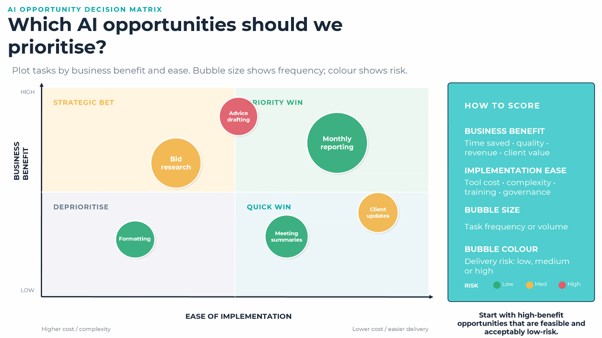
- Investment in AI and automation
- Obtaining feedback from clients
- Improving/establishing account management
There’s often a “chicken or egg first?” dilemma with KAM. Is it best to start with a KAM programme or by first establishing an excellent CRM? Is it better to have client listening programmes established first or is that something that emerges as KAM develops? Do we try to impose a centralised KAM approach from the top or allow it to filter up from the bottom?
Firm and Marketing and Business Development (MBD) Strategy
It’s not surprising that we start at what the firm is trying to achieve overall when we look at KAM programmes. Larger firms will anticipate achieving the lion’s share of their ambitious growth targets from existing clients. So KAM is a natural choice for focus. However, those firms whose strategy depends on the acquisition of a lot of new clients are more likely to focus on other marketing and business development initiatives.
There has to be Board-level, firm wide and MBD support to enable a KAM to be established and flourish. KAM takes a huge amount of financial and time resources. And it can take time for the benefits and value to emerge.
Sector groups
Several delegates at the workshop had responsibility for sector groups at their firm. Many firms adopt a sector “go to market” strategy. And this is a natural place to start thinking about key account programmes.
Your firm’s competitive strength may depend on how many major clients it has in a sector. The sector focus may have even evolved as a result of key clients in the sector. Leveraging the expertise and experience in winning and developing those major clients might be the spur to consider a) how to retain and grow those key clients and b) how to apply the key client process to new and future major clients.
Furthermore, the KAM process you adopt for any client may depend significantly on the sector they are in. As we saw at the workshop, there’s rarely a “one size fits all” approach to key account management. However, there may be strong similarities in how we approach key account management to clients within a particular sector. So it makes sense to try to systemise the process for broader application from a sector perspective.
Client listening
Many firms have client research and listening programmes to ensure that the service experience they provide is of the required quality to attract, retain and grow their clients.
Furthermore, many key client programmes start with a structured research exercise to identity the strengths, weaknesses, opportunities and threats that exist within current strategically important clients.
So it makes sense to consider KAM from a client listening perspective. Client research is an important foundation on which to base a KAM programme. And also a vital tool in assessing whether your KAM programme is generating the desired results.
There is a maturity index showing how professional services firms have embraced client listening. Meridian West’s Client Listening Maturity Benchmark (CLIMB) indicates 30% are foundational firms, 50% are intermediary firms and 20% are advanced (PM Forum members can access the article: Reaching new heights in client listening PM Magazine January 2024)
These articles are also relevant for those interested in client listening:
turn feedback into strategic advantage (Research) March 2026
client feedback playbook – How professional services firms January 2026
Client experience (CX) and service excellence
The client experience and service provided by your firm is the foundation of its differentiation and brand. And that is why client listening programmes are important – to understand a) how satisfied clients are with the service your firm provides b) what clients value most about the service you provide and c) how you can improve the service provided to enhance client value.
It’s natural that firms will want to ensure consistent good service for its most important clients. And also to tailor the service more tightly to the needs of each specific client. Yes, the firm needs standards. But each client may require a different blend of service delivery preferences – whether their day-to-day communications, billing arrangements, receipt of marketing communications and invitations, knowledge sharing, integration of systems, collaboration and a host of other elements.
Part of the key account management programme will be to ensure that each client’s needs are known, met and monitored. And these may vary by geographical location or division or service type. So some KAM programmes may start from these aims and grow from there.
CRM and data
Most delegates were concerned that their CRM system (those mentioned included InterAction, Sugar and 3E (Elite/Thomson Reuters) wasn’t embedded in their firm and/or had insufficient data to support KAM.
Yes, you need good data to fuel a KAM programme. KAM programmes need significant contact and relationship data (typically from a CRM) and financial data (showing what a client is spending in various services and offices across a firm). However, sometimes you can use the KAM to drive CRM adoption. When fee-earners see the value in good client relationship data for a specific client, they are more likely to use the systems and manage their data generally.
A lack of data isn’t an excuse to avoid KAM programmes. Often, the Board and fee-earners will only see the value of a comprehensive and up-to-date CRM when they witness what can be achieved with the data – for example, in a highly successful KAM programme.
There are options for those without fully functional CRMs – for example:
CRM – Applications, systems and fee-earner engagement Simon McNidder’s Promptr system harnesses data in Outlook to support marketing and business development programmes
Book review: Building B2B Relationships Ryan O’Sulllivan suggests simpler tools (like spreadsheets) can be used to manage the vast amounts of contact data needed to produce relationship maps and manage multi-threading in key clients (managing multiple relationships between contacts at client organisations and contacts at your firm – classic many-to-many relationship networks)
Culture
In some firms, there are no cultural incentives for fee-earners to dedicate time and energy to key client programmes. And the stringent billing targets regime may be barriers that drive fee-earners to avoid anything that doesn’t result in short term fee-earning activities. Some firms may have a client protectionism culture – where fee-earners guard their clients from others in the firm. Fast growing firms may have stretched resources leaving little time for anything other than managing technical client work.
Firms need to review their values, policies and reward systems to encourage fee-earners at all levels to value their role and focus their efforts in creating, managing and growing client relationships.
Furthermore, there needs to be transparency in how fee-earners are expected to behave when it comes to their relationship responsibilities. Too many firms are not clear on what they expect key client partners or client relationship partners to do and deliver. Yet alone other members of key client teams. There’s little accountability.
Cross-selling
Some firms have cross-selling programmes to identify short term opportunities to win further business from existing clients. And some firms may have this as the only reason to drive key client programmes.
But this is missing the point. Key Account Management is about becoming a trusted adviser to a client – and to put the client’s business goals and needs first. KAM is about properly establishing a client-centric philosophy. True key account management is to “achieve long-term profitable relationships with key clients by making consistent, measurable contributions to their profitability and their customer relationships”
Today’s sophisticated clients will quickly detect when a firm is looking for short term cross-selling wins rather than trying to establish a real strategic partnership delivering real value.
Of course cross-selling ambitions are important – but they are not the only reason to establish a key client programme. Cross-selling is one of the likely downstream outcomes of a good KAM programme.
Fee-earner relationship skills training
KAM programmes are essentially about generating more opportunities for your fee-earners to talk to the right people across a client organisation. But the fee-earners need to know what they will talk about and why they are having those conversations if they are to be successful.
So a KAM system and processes in their own right will not help. Fee-earners need to be equipped with the confidence, communication skills, insights, relationship and selling skills to know how to forge and develop relationships and to deliver value at every interaction.
Every KAM process – at a firm-wide level and for specific clients – will require knowledge and skill development programmes. For behaviour and system use. For key client partners and others in the team.
Introducing AI
In the short term, AI tools can do the heavy lifting in analysing markets, client data and competitors to help understand the context of a key client’s relationship with the firm.
If internal information systems are good, AI can be a powerful force in analysing the multitude of relationships (and gaps) in the web of relationships within the client organisation and your firm. And in reporting activity and success across sectors and key clients and client teams.
Looking to the future, when processes are established and embedded, AI agents can take the lion’s share of the marketing and monitoring work to help fee-earners see what they need to do next and to provide the information to help them do it.
So you need to establish good KAM behaviours and processes – which may vary significantly within a firm – before you can tap into the full power of AI in KAM applications.
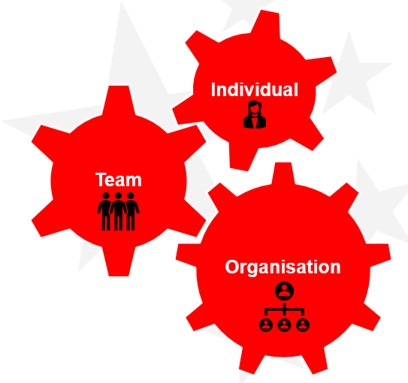
The image comes from 10 Best Key Account Management Practices — PNI | Global Management Consulting which is a valuable article albeit not specific to professional services
Delegate key takeaways
- Find out more about our existing key client programme
- Investigate how MBD can contribute more to KAM programmes
- Undertake a version of the KAM process for a top five client of the firm
- Expand KAM teams beyond the key account partner
- Look at the whole client lifecycle and the basic account management process
- Use the KAM building blocks for our firm going forward
- Make sure we are always focussed on the philosophy of how we can better service our key clients to help support their business objectives (not just cross selling)
Delegate selected poll results
My KAM/relationship management experience (0=low, 10=expert):
- 20%
- 40%
- 20%
- 20%
Have you had formal sales training?
- 0% Yes
- 60% No
- 40% Sort of
Which is of most interest?
- 60% KAM/ABM processes for the firm
- 40% KAM/ABM processes for specific clients
Where do you see your main KAM role at present?
- 0% Part of client team
- 20% Strategic input and planning
- 20% Coaching fee-earners
- 20% Client listening
- 20% Research/developing plans
- 0% Process, systems and procedures
- 20% Administration and information
Are there clear aims/goals for your KAM/ABM?
- 40% Yes
- 60% No
Which goals do you have for your KAM (multiple choice)
- 100% Satisfaction/loyalty
- 100% Retention
- 75% Cross-selling
- 75% Revenue
- 75% Profit
- 50% Collaboration
- 25% Referrals
- 0% New products/services
To what extent do you think your fee-earner buy into the concept of KAM/ABM?
- 40%
- 20%
- 40%
Do you have an agreed firm-wide process for KAM/ABM?
- 20% Yes – and it’s used
- 60% It’s being developed now
- 20% No
Do you have a process for developing each KAM client?
- 0% Yes – the same across the firm
- 60% Yes – but it differs for some teams, territories and clients
- 20% No – each client team adopts their own approach
- 20% No – we are developing it at present
How good are your KAM information systems? (10=excellent)
Intapp leads the way with client lifecycle management (CLM) solution (kimtasso.com)
At a previous session a delegate said they were using Nexl and here is a case study from January 2023 Strategic Account Management for Law Firms in the Age of Remote Working – Nexl
- 40%
- 20%
- 40%
How well do you understand the DMU and decision-making processes at your key clients? Selling Basics – Detectives and DMUs (Video)
- 25%
- 50%
- 25%
Which of the following do you use to support KAM implementation
- 80% Regular internal communications
- 60% KAM information systems and reporting
- 40% MBD as part of key client teams
- 40% Dedicated KAM meetings
- 20% Fee-earner skills training
- 20% KAM as part of fee-earner assessment and reward
How do you report KAM/ABM success? (multiple choice)
- 100% Regular updates to the Board
- 25% Teams present at departmental meetings
- 25% Regular report for firm overall (by M&BD)
- 25% Dashboard for senior management
- 25% Regular reports for each key client (by CRP)
- 25% Intranet – automatic updates
- 25% Other
Related KAM and ABM articles
turn feedback into strategic advantage (Research) March 2026
Key Account Management (KAM) – Start small, Be strategic June 2025
Key Account Management (KAM) programme (kimtasso.com) February 2016
KAM – Less is more and take a different perspective June 2024
Meet Account IQ: Our New Feature Aimed at Helping You Shine in Every Call (linkedin.com) November 2023
Key Account Management (KAM) – Research companies (kimtasso.com) June 2023
Enhancing your ABM strategy: The power of tools and technology – Inflexion Group June 2023
Strategic Account Management for Law Firms in the Age of Remote Working – Nexl January 2023
Fearless feedback at Mills & Reeve – Meridian West October 2022
Six key KAM lessons – Education, Expectations, Exemplars, Emergence (kimtasso.com) June 2022
Beating Six Barriers to KAM and Training (Kim Tasso) June 2021
Top picks from KAM training workshops (October 2020) (kimtasso.com) October 2020
KAM Basics – Bowties and Diamonds (kimtasso.com) October 2020
client portfolio management with dinosaurs – Be more T Rex (kimtasso.com) July 2020
Managing key client meetings – Key Account Management (kimtasso.com) July 2017
Baker McKenzie Gains Global Visibility Into Its Key-Client Relationships Case Study • Intapp
Key account management best practice – training and pruning (rnapierconsulting.co.uk) May 2023
KAM and ABM Book reviews
Book review: Building B2B Relationships June 2026
Account-Based Marketing : A revolution for professional services firms still stuck in first gear? (PM Forum members only) March/April 2026
client feedback playbook – How professional services firms January 2026
Executive Engagement Strategies by Bev Burgess (kimtasso.com) August 2020
A practitioner’s guide to Account-Based Marketing (ABM) (kimtasso.com) February 2020
Book review: Managing key clients (professional service firms) (kimtasso.com) June 2019
Malcolm McDonald on value propositions – How to develop them (kimtasso.com) May 2019
Successful Large Account Management (Key Account Management) (kimtasso.com) Book review June 2015
Book review: Effective client management in professional services (kimtasso.com) January 2015
Book review seven keys to managing strategic accounts (kimtasso.com) June 2013
For PM Forum members
Bidding & listening strategies for winning work and retaining key accounts (pmint.co.uk) March 2024
Tom Ash, Digital Executive, Simmons & Simmons (pmint.co.uk) May/June 2023
Manage clients for success by Darren Francis, Pepper BD/Account Managers Academy (PM Magazine April 2022)
Why client account management (CAM)? by Laura Dawson (PM Magazine March 2021)
Making account management work by Francesca Ayers, Get Serious (PM Magazine April 2020)
KAM culture – ten years on by Elizabeth Corcoran, Eversheds Sutherland (PM Magazine April 2019)