
Most people are aware of CBT (Cognitive Behavioural Therapy). But fewer are familiar with DBT (Dialectical Behaviour Therapy). This post supports psychoeducation – helping you understand more about how your mind works and exploring different types of therapy. It describes DBT therapy – its core concepts and some of its tools that you might use to improve your sense of personal control and self-esteem. What is DBT therapy? Is DBT right for me?
What is DBT?
DBT stands for Dialectical Behaviour Therapy.
“Dialectical” means exploring and comparing opposites and understanding that two things can be true at the same time. It helps people move from extremes to balance. For example, you might say “my childhood was awful” or “my childhood was wonderful” whereas the reality is probably closer to “my childhood had both difficult and pleasant aspects”.
Like CBT, DBT offers a way to step out of distorted thinking patterns – such as having a black and white view of the world. It helps you start to appreciate the grey areas.
DBT adopts a skills-based approach to help you change your relationship with uncomfortable thoughts. It helps you balance acceptance and change. DBT provides healthy coping mechanisms and helps you build a life worth living.
Origins of DBT and who finds it helpful
Dialectics Behaviour Therapy (DBT) is a third wave CBT (Cognitive Behaviour Therapy) talking therapy approach.
Cognitive Behavioural Therapy (CBT) is a structured, goal-focused type of talk therapy that helps you understand and change the connection between your thoughts, feelings, and behaviours. As there is a lot of evidence of its effectiveness, CBT is supported by the NHS.
DBT was originally created in 1993 by Marsha M Linehan, a US psychotherapist, to help those with personality disorders (particularly BPD – Borderline Personality Disorder which is now referred to as emotionally unstable personality disorder (EUPD)).
DBT has a philosophy of acceptance and is non-judgmental. DBT offers ways to challenge unhelpful thoughts, adopt healthier ways to think and behave and develop new skills to help you change and find new ways of dealing with distress. Whereas CBT is thought focused, DBT is more emotion focused.
DBT therapists may be more directive than other therapist types – they may provide more guidance. And there is a focus on helping clients learn new skills.
By helping you to understand yourself as a person and make sense of why you might do certain things – it can also help to reduce self-harm, depression (and suicidal thoughts), drug and alcohol and eating issues. Dialectical behaviour therapy (DBT) | Treatments | Mind
What’s involved in DBT therapy?
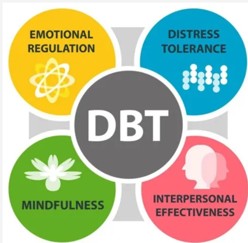
There are five principles and some core skills in DBT:
- Dialectics – moving from opposites to a more balanced view
- Mindfulness – to be fully present in the moment, aware of where we are and what we’re doing, and not overly reactive or overwhelmed by what’s happening around us
- Distress tolerance – manage emotional pain and high stress without making the situation worse or reacting impulsively
- Emotion regulation – monitor, manage and respond to your emotional state in a healthy way instead of letting intense feelings control your actions (see Emotional Regulation – A key element of Emotional Intelligence (EQ) and How to manage your emotions so they don’t manage you)
- Interpersonal effectiveness – social and communication skills that help you meet your needs, handle conflict and build healthy relationships
Many DBT practitioners use a variety of therapy interventions: one-to-one sessions to track behaviours and assess progress, skills training groups and phone coaching. DBT therapists will provide interventions that:
- Reduce life-threatening behaviours
- Reduce therapy-interfering behaviours (from both the client and the therapist)
- Address quality-of-life interfering behaviours
- Increase behavioural skills
DBT therapists will validate clients – promoting self-acceptance – before attempting to help a client change their behaviour. A DBT therapist will help a client to slow down and pace themselves. DBT therapists may use behavioural chain analysis to look at the target behaviour, prompting or triggering events, vulnerability factors, links and consequences.
DBT encourages you to avoid the extremes of rational, logical mind and emotional mind. It helps you blend them together to use your wise mind (the 90 second rule to respond rather than react may help here: Confidence – Radiators and Drains and the 90 second rule)
- Rational Mind
- Emotional Mind
- Wise Mind
Some DBT tools and skills to help you
Typically, you work with your therapist on these activities. Like all new activities and skills, it may take time to learn, practice and master them. Naturally, people differ in which techniques they find most helpful for them.
Monitor your moods
Find a way to monitor your moods. Perhaps in a diary or journal.
Develop a scale of 1 (bad day) through to 10 (great day) – and note words that you might use to describe in between days (how would you describe a “not so bad” day at 3? Or a “better day” at 8?)
You might also start to note down what happens to prompt days at either end of the scale. Note down what you are feeling and thinking and doing at different points on the scale.
TIPP technique for distress tolerance
A well-known DBT technique is TIPP – it helps if you rate your level of emotional distress (on a scale of 1 – 10) before the exercise and afterwards. You are encouraged to work through the stages for each situation causing distress
- Temperature – Reduce your facial temperature to trigger the mammalian dive reflex, which slows a racing heart
- Intense exercise – A short burst of fast movement to burn off extra adrenaline and physical energy caused by anger, anxiety or panic
- Paced breathing – Slow and deepen your breath to signal to your nervous system that you are safe (breathing exercises are shown here: Grounding tools (support for emotional regulation) – Kim Tasso)
- Progressive muscle relaxation – Tense and release different muscle groups noticing the physical sensations – move from your toes, up your body and to your face
TIPP: DBT Skills, Worksheets, Videos, Exercises
ACCEPT technique for distress tolerance
Helping you to regain control of yourself and your reactions to situations. It is a skill that needs to be learned and practiced.
- Activities – Take action. Even a small step that takes your mind away from the distress. This might be as simple as going for a short walk. Or entering a different room or making a hot drink
- Contribute – Notice other people and offer to help them in some way. Interacting and supporting someone else will reduce focus on ourselves and help diminish our negative state
- Comparison – Consider people who may be enduring greater issues than you do. Show compassion to others to help remove our focus from self-destructive processes
- Emotions – Think about a different state or emotion than you are experiencing. You don’t necessarily have to think positive thoughts. Consider a time when you felt something different and focus on that thought – remember what it felt like
- Push – When feeling an extreme emotion, gently push against that state and build energy that motivates you to take back control
- Thoughts – Try to move from what you are feeling to what you might think about. Engage your brain – watch an instructional video or TV documentary. Or tackle a puzzle or crossword
Other techniques are described here:
Grounding tools (support for emotional regulation) – Kim Tasso
How to manage your emotions so they don’t manage you
PLEASED technique to help with emotional regulation
Self-care skills reduce emotional vulnerability and promote well-being
- Physical Health – Attend to your physical health – go to check-ups. Treat illness when it arises. Rest when you need it. Take some exercise.
- List resources and barriers – List people who can help you and other sources of comfort and help. List things and activities that help improve your mood. Consider what presents a barrier to your self-care and find ways to overcome them
- Eat balanced meals – Plan and eat regular balanced meals with healthy ingredients. Drink plenty of water to remain hydrated. Eat slowly and mindfully. Don’t eat too much or too little. Consider how to have a nutritious and balanced diet as part of your lifestyle
- Avoid drugs and alcohol – Whilst these may provide temporary relief or numbness, it is likely that you will require more of these substances and that can create other issues. If you are concerned about inappropriate use then seek help.
- Sleep between 7 and 10 hours – Sleep is important for our physical health and it regulates our energy levels and moods. Adjust your sleep routine if necessary
- Exercise – Aim for 20 to 60 minutes exercise a few times each week. Try to move during the day – avoid long periods of just sitting or immobility.
- Daily – All PLEASED skills need to become daily habits. Record your progress on your phone, a card or in a journal.
There are further tools to help with emotional regulation:
Emotional Regulation – A key element of Emotional Intelligence (EQ)
Grounding tools (support for emotional regulation) – Kim Tasso
How to manage your emotions so they don’t manage you
Stop letting everything affect you by Daniel Chidiac (Overthinking
Behaviour change exercise
Changing the way you feel, think and behave is hard. It requires time and practice. DBT offers a series of prompt questions to help you manage behaviour change
- What behaviour do you want to change?
- What small steps have you or could you take now to start your change process?
- How have you or how might you reinforce this behaviour change?
- What results have you seen so far?
- What results have others seen in you and commented on?
- What adjustments or enhancements might you make to the change process as you move forward?
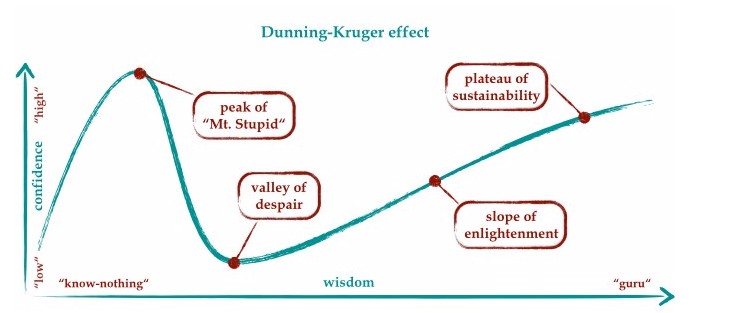
Change process – Emotions when reacting to change
FAST technique to help with interpersonal effectiveness
Dialectics are central to healthy relationships. You need to be balanced about considering yourself and the other person (people). This approach helps you find balance based on the nature of the relationship and the situation.
- Fair – Take a non-judgemental stance with yourself and others. Avoid extremes (use your wise mind) in interactions with others. We treat others with respect because it builds our sense of self-worth.
- Apologies not always needed – Avoid unnecessary apologetic behaviour. You are entitled to your own viewpoint and opinion. You are allowed to disagree. Avoid apologies for things over which you have no control. Unnecessary apologies erode self-respect
- Stick to values – Remember your goals, priorities and values. Choose behaviours and interactions that build your self-respect. Know which of your values are non-negotiable. Learn to adopt productive conflict resolution techniques
- Truth and accountability – Be honest and accountable with yourself and others. Take responsibility for yourself
As a practising therapist, I recently attended some excellent training with Martin J Smith of ITC Consultancy. ITC Consultancy – “taking control of life, work and relationships”
Related posts on therapy topics
You can learn more about therapy and Tasso Talking Therapy at Counselling and Psychotherapy by Kim Tasso in Folkestone, Kent
All change? Mental health in the legal sector – Kim Tasso August 2026
Confidence – Does it increase as we get older and wiser? – Kim Tasso July 2026
Emotional Intelligence in legal practice (Globe’s Fundamental Skills July 2026
Grounding tools (support for emotional regulation) – Kim Tasso April 2026
Healthy boundaries at home and at work – how to set and maintain January 2026
Confidence – Radiators and Drains and the 90 second rule January 2026
The stress bucket, healthy coping mechanisms and resilience December 2025
What do I do if I’m feeling stuck? – Kim Tasso October 2025
Improve mental health at work, in marketing and for women September 2025
Assertiveness toolbox – Kim Tasso May 2025
What happens in therapy? – Kim Tasso April 2025
Confidence to overcome a fear of failure – Kim Tasso September 2024
my relationships like rollercoaster rides? Volatile relationships (kimtasso.com) August 2024
How do you choose a therapist? – Kim Tasso July 2024
Emotional Regulation – A key element of Emotional Intelligence (EQ) (kimtasso.com) August 2021
Psychology and business communication (kimtasso.com) January 2015 An introduction to Transactional Analysis (TA) and the Parent Adult Child model
10 tips to increase your resilience – Kim Tasso March 2013
Related posts on therapy, counselling and self-help book reviews
Book Review: Addicted to Anxiety by Owen O’Kane – Kim Tasso September 2026
How to manage your emotions so they don’t manage you June 2026
Stop letting everything affect you by Daniel Chidiac (Overthinking May 2026
Book Review – ADHD 2.0 by Edward M Hallowell MD March 2026
Book review: The Gift of Anxiety – Harnessing the EASE method December 2025
What happened to you? Conversations on trauma, resilience November 2025. Book review: What happened to you? Conversations on trauma, resilience and healing by Bruce D Perry (psychiatrist) and Oprah Winfrey
Introduction to Internal Family Systems (IFS) October 2025. An overview of the therapeutic approach IFS that seeks to explore your internal parts – the exiles, managers and firefighters – and develop a greater sense of self and calm.
Attached by Dr Amir Levine and Rachel Heller August 2025. How attachment theory can help you understand your relationship style – secure, avoidant and anxious.
Book review – Feel the fear and do it anyway by Susan Jeffers June 2024. Classic self-help book on managing anxiety
Book review – Counselling for toads May 2025. The modern classic explaining Transactional Analysis (TA) using a story by Robert de Board using Toad and other characters from “Wind in the willows”
Book Review: The Power of Now by Eckhart Tolle March 2025 A best-selling guide to ceasing your incessant thoughts, focusing on the present “here and now”, spiritual enlightenment and finding inner peace.
Overcoming low self-esteem – a self help guide using cognitive behavioural techniques by Melanie Fennell January 2025
Book review: Taking charge of Adult ADHD by Russell A Barkley (kimtasso.com) October 2024
“Adult children of emotionally immature parents – how to heal (kimtasso.com) August 2024 An excellent book that has helped several clients suffering from anxiety, depression and “failed” relationships. How to recognise emotional, driven, passive and rejecting parenting styles and the coping mechanisms adopted (e.g. people pleasing, high independence etc).
Book reviews on stress and trauma – “When the body says No” (kimtasso.com) June 2024 Review of “When the body says no – The cost of hidden stress” by Gabor Mate and “The body keeps the score – mind, brain and body in the transformation of trauma” by Dr Bessel Van Der Kolk
Book review: The Thriving Lawyer by Traci Cipriano (resilience) (kimtasso.com) June 2024 A review of a book into the mental health and resilience of lawyers in law firm cultures. The author is a former practising attorney and clinical psychologist.
The Tools – Five life-changing techniques to unlock your potential (kimtasso.com) April 2024 A review of the book by psychiatrist Phil Stutz
Book review – Creating self-esteem by Lynda Field (kimtasso.com) March 2024 A classic book on realizing your true self worth
Book review: How to do the work (recognise your patterns (kimtasso.com) December 2023. Review of a book to support psychoeducation. Topics include: conscious self, theory of trauma, mind-body healing practices, inner child, boundaries, reparenting and emotional maturity.
Dr Julie Smith (Mental Health Guidance) (kimtasso.com) July 2023. Review of the book “Why has nobody told me this before?” that explores helpful ideas on low mood and depression, motivation, anxiety, emotional pain, grief, self-doubt, fear, stress and a meaningful life.
Overcoming clinical depression (2021) by Oliver Kamm (kimtasso.com) March 2023. A review of the book “Mending the Mind” which explores what it is like to suffer from depression and both the medical and psychological sources of help.
Lost connections – Why you’re depressed by Johann Hari (kimtasso.com) October 2019. A review of a popular book about the nine common reasons people suffer from depression.
Crazy busy – Book review – Dealing with stress (kimtasso.com) October 2009. This book examines modern life and offers practical advice to avoid stress and restore calm.
Book review: The psychology of successful women by Shona Rowan (kimtasso.com) June 2022. Topics include: confidence, assertiveness, boundaries, public speaking, impact, influence, visibility and bouncing back from setbacks.
Your personal transition – Endings, neutral zone and new beginnings (kimtasso.com) June 2020. Helps you navigate major changes in your life and prepares you for the emotional roller-coaster of change.