

Boundaries are important for many things – defining yourself, being heard, asserting your needs, self-care and protecting yourself. A lack of boundaries at work may result in you feeling unseen, undervalued and overworked. A lack of boundaries in your personal life may leave you in dysfunctional and unhappy relationships with family, friends and loved ones. Both recovering therapy clients and coaching clients seeking personal growth gain a lot by assessing and changing their boundaries. Healthy boundaries help you feel better about yourself, improve your mental health and support healthy relationships. Healthy boundaries at home and at work – how to set and maintain them
In this article about healthy boundaries we consider:
- Awareness: What are boundaries? Why are they important?
- Reflect: How are my boundaries?
- Understand: How were my boundaries created?
- Change: How do I set (new) boundaries?
- Sustain: How do I maintain my (new) boundaries
Boundaries are a bit of a paradox. We need social connection for our wellbeing and good mental health. But we also need to manage the type and nature of our social interactions otherwise they may cause us harm.
Awareness: What are boundaries? Why are they important?
Personal boundaries are the limits and “rules” we set for ourselves in relationships. They allow authentic self-expression. Whether those relationships are at work or at home. Boundaries define what we find acceptable and unacceptable in how others treat us. Boundaries protect our well-being, maintain self-respect and foster healthier connections.
Our boundaries act like an invisible fence. They communicate our needs and allow us to say “no” without feeling guilt. They help ensure a balance between our own needs and others’ demands.
Boundaries are important for self-care. To rebalance the extent to which we respond to others’ needs with how much we respect our own needs. Those with weak or porous boundaries often need to reduce the time they spend pleasing other people and to take responsibility for looking after themselves.
There are many advantages of healthy boundaries:
- Good emotional and mental health
- Greater autonomy
- Developed identity
- Avoidance of burnout
- Influence others’ behaviour
There are different types of boundaries:
- Physical boundaries (protect your personal space and body and communicate your views on physical touch)
- Emotional boundaries (protect your thoughts, feelings and opinions)
- Verbal boundaries (protect how you speak and are spoken to and what is discussed)
- Time boundaries (protect how you spend your time)
- Spiritual boundaries (protect your values and what you believe in)
- Financial boundaries (protect your finances and assets, your decisions about giving or lending money)
- Sexual boundaries (consent, confidentiality, protect your safety and preferences)
- Work boundaries (protect your limits in the workplace)
Healthy boundaries at work can protect you from burn-out:
- Define your work hours – and honour them
- Stop responding instantly
- Say “no” without overexplaining or justifying
- Protect your focus time
- Separate work from rest
- Don’t normalise overwork
- Model boundaries if you are a leader
Boundaries at work aren’t about doing less – they are about protecting your energy so that you can do your best work. If you’re constantly tired, overwhelmed or resentful at work it could be the result of weak boundaries. Boundaries are not a weakness, they are a strategy to prevent burnout.
Personal Boundaries: Types and How to Set Them | Psych Central
Reflect: How are my boundaries?
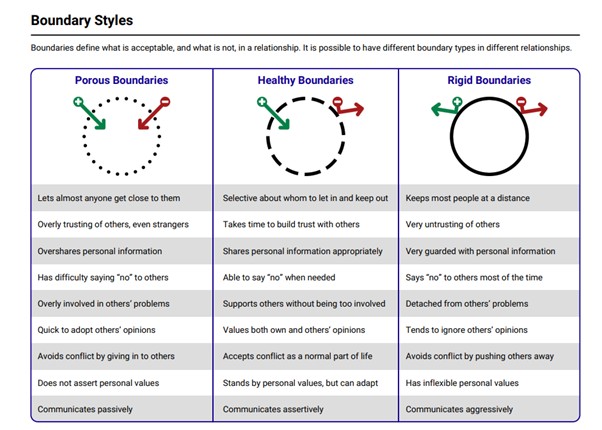
Start by considering your boundary style. Are your boundaries mostly porous, heathy or rigid?
Porous boundaries
- Allows anyone to get close
- Overshares personal information
- Has difficulty saying no
- Overly involved in others’ problems
- Quick to adopt others’ opinions
- Avoids conflict by giving in to others
- Does not assert personal values
- Communicates passively
Healthy boundaries
- Selective about whom to keep out
- Takes time to build trust with others
- Shares personal information appropriately
- Able to say “no” when needed
- Supports others without getting too involved
- Values both own and others’ opinions
- Accepts conflict as a normal part of life
- Stands by personal values, but can adapt
- Communicates assertively
Rigid boundaries
- Keeps most people at a distance
- Very untrusting of others
- Very guarded with personal information
- Says “no” to others most of the time
- Detached from others’ problems
- Tends to ignore others’ opinions
- Avoids conflict by pushing others away
- Has inflexible personal values
- Communicates aggressively
When you have weak or porous boundaries you are at risk of:
- Being seen as a people pleaser. Your weak boundaries may be because you fear disappointing other people. You may value the views and validation of other people more than your own. You may use compliance as a way to stay safe and avoid conflict. You may fear that you will lose relationships if you assert your own needs.
- Preserving low self-esteem. Weak boundaries may be the result of a low sense of self-esteem (see Overcoming low self-esteem – a self help guide using cognitive). Low self-esteem often means feelings of unworthiness or being undeserving of attention and love. People with low self-esteem often feel uncomfortable when people ask them to put their own needs first. People with low self-esteem may be so focused on other people’s needs that they are completely out of touch with their own wants and needs. Low self-esteem is often the result of a lack of appropriate attention from your care givers when you were young (see “Adult children of emotionally immature parents – how to heal
- Being seen as a rescuer. Having weak boundaries may be a learned defence mechanism. For example, In the drama triangle, one person acts as the persecutor, another as victim and the third as rescuer. Often, rescuers focus on the needs of others to deflect attention from their own situation Business relationships – Using the drama triangle to resolve conflict
- Enmeshment refers to relationships that have become so intertwined that boundaries are non-existent or identical. While this concept most often occurs between a primary caregiver and their child, it can also happen in romantic relationships. What is Enmeshment? Definition and Signs – Attachment Project
- Codependency is a dysfunctional relationship dynamic in which one person assumes the role of “the giver,” sacrificing their own needs and well-being for the sake of the other, “the taker.” Codependency | Psychology Today United Kingdom
People with porous or rigid boundaries may find it helpful to look at resources on assertiveness:
- Assertiveness toolbox – Kim Tasso May 2025
- assertiveness, impact and effectiveness March 2018
- Assertiveness skills – getting what you want and saying “No” March 2017
There is usually a focus on boundaries at the outset of therapy. You will discuss and agree how you will work with your therapist. There are likely to be boundaries about things like: when sessions start and end, confidentiality, what you feel comfortable discussing, what happens in between sessions, what happens if you see your therapist outside of therapy etc. There are often professional boundaries – your therapist has to operate within the ethics, standards and rules of his or her professional body.
Understand: How were my boundaries created?
Your boundaries are the result of learned behaviour. They have become a way of thinking and behaving – they are a habit. Often unconscious. But you can change them. Although it takes work and effort to change your boundaries. And those around you may resist your attempt to change your boundaries.
Your boundaries are influenced by the environment in which you grew up and how you learned to behave (or survive) in the past. Boundaries are generated by many things – for example:
- Parenting styles – Parents set boundaries so children learn social and cultural “rules” in their environment. Children absorb and assimilate those boundaries
- Experience – You may have learned that certain behaviours generate praise or criticism from others. You may have learned that certain behaviours keep you safe
- Defence – You may have learned to behave in a certain way to avoid difficult or unpleasant situations
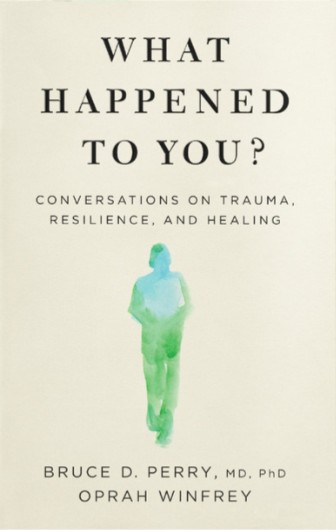
Your attachment style will affect your boundaries (Attached by Dr Amir Levine and Rachel Heller). Trauma may affect your boundaries (What happened to you? Conversations on trauma, resilience and Book reviews on stress and trauma – “When the body says No”). And your assertiveness style is also relevant (i.e. porous boundaries suggest passivity and rigid boundaries suggest aggressiveness – see above).
Assertiveness is the ability to communicate your needs, feelings and opinions clearly, directly and honestly. Whilst respecting the rights and beliefs of others. Developing healthy boundaries means recognising your rights.
Setting boundaries boosts self-esteem and ensures your personal needs are prioritized. They allow you to self-advocate and get your needs met.
Change: How do I set (new) boundaries?
“Daring to set boundaries is about having the courage to love ourselves even when we risk disappointing others” Brene Brown
“When we fail to set boundaries and hold people accountable, we feel used and mistreated” Brene Brown
“Givers need to set limits because takers rarely do” Rachel Wolchin
“Walls keep everyone out. Boundaries teach them where the door is” Mark Groves
“The difference between successful people and really successful people is that really successful people say “no” to almost everything” Warren Buffet
Start by considering your personal values and beliefs. And your needs. These are the foundations of what boundaries are important to you – and why you get upset when people break those boundaries. There are tools in CBT (Cognitive Based Therapy) to help you explore your core beliefs.
Boundaries don’t start with words, they start with regulation (The Feeling Expert – Psychotherapy IFS Therapist Florida | The Feeling Expert – Holistic Therapy for Body Mind Spirit)
- When you begin regulating your nervous system, something important shifts
- Your body slowly learns that connection doesn’t disappear just because you protect your energy
- Learn you can say “This doesn’t work for me” and still be loved
- You learn that your needs are not a burden
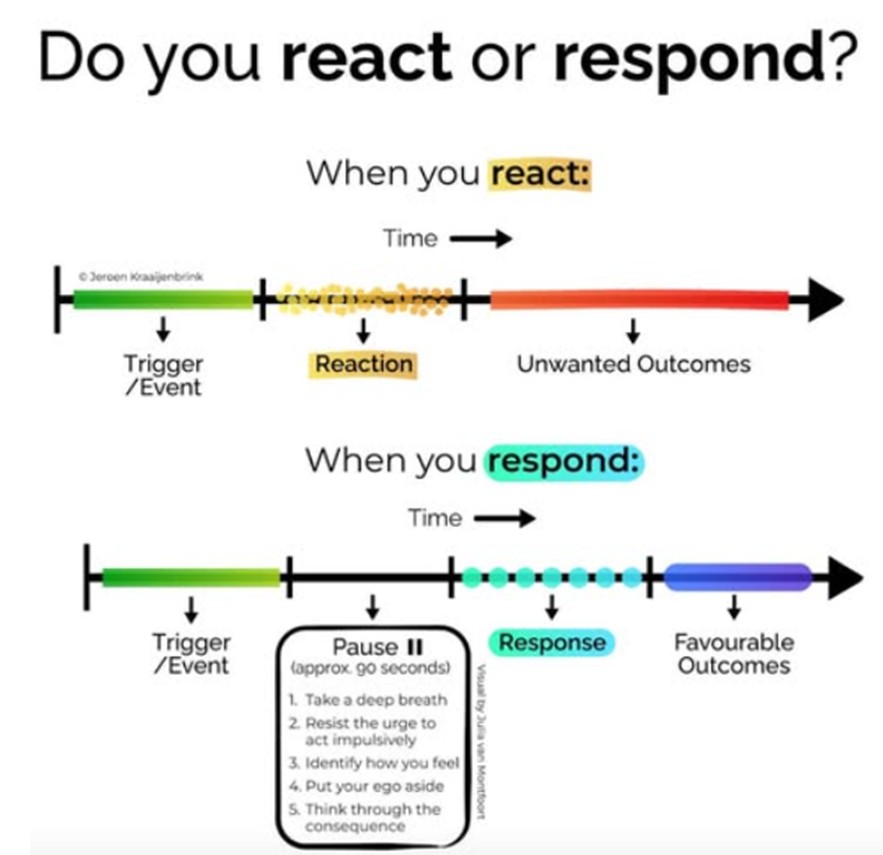
There’s more on regulation here: Confidence – Radiators and Drains and the 90 second rule
In DBT (Dialectical Behaviour Therapy), the DEARMAN method is used to help set boundaries:
- Describe the situation that leaves you feeling uncomfortable or resentful (“I’ve noticed that when…”)
- Express how you feel about the situation using “I” statements (“I feel frustrated and upset when….as it seems that….)
- Assert your needs and communicate clearly what you want (“Please do this…..”)
- Reinforce why the boundary is important to your needs (“This will make me feel…”)
- Be Mindful when making your point – stay focused on your objective
- Appear confident by taking up space with your body (Shoulders back, make eye contact and speak in a calm but assertive tone)
- Negotiate when needed – or offer alternative solutions to the problem (“If there’s an urgent…”)
Examples of how to set boundaries at work:
- Thanks for the reminder, I’ll get to that as soon as I can
- I’m honoured you asked me to help, but I’m unable to add anything else to my workload
- I check my emails between 9am and 5pm, I will respond to you then
- I’m not comfortable discussing this at work
- I don’t have the capacity to do all that today, which tasks would you like me to prioritise?
- While I am on leave, I will not be available to take calls or respond to emails
- Although I can work late in emergencies, I am unable to do so on a regular basis
See also:
Creating Healthy Boundaries – InMindOut March 2023
5 Things to Know About Setting Boundaries | Psychology Today December 2022
How to Set Healthy Boundaries & Build Positive Relationships January 2018
Sustain: How do I maintain my (new) boundaries?
It is hard to set boundaries. And it can be harder to maintain and enforce boundaries
It can take enormous effort to maintain your boundaries. You are trying to overcome a lifetime of behaving in a certain way. Your learned behaviour (habits – like motorways in your brain when your new boundaries are like rarely-trodden footpaths) will try to revert to your old ways of behaving.
People around you are used to you behaving in a certain way. And when you start behaving differently – as you implement new boundaries – they will react. They will literally try to push your boundaries. Some people may attempt to use “emotional blackmail” to get you to behave in ways that suit them but challenge your boundaries.
Remember how reinforcement works. If someone makes an unreasonable request and you comply – that’s positive reinforcement and they will do it again. If they make an unreasonable request and assert your boundary by pushing back or challenging, that’s negative reinforcement and they may think twice about repeating it in future.
Remember the wise words of Dr Gabor Mate “If you don’t know how to say no, your body will say it for you through physical illness” (see Book reviews on stress and trauma – “When the body says No”). I have several therapy clients who have experienced stress, anxiety, depression and burnout as a result of family, friends and work colleagues overstepping their boundaries.
There are assertiveness tools to support you in maintaining your boundaries. (See Assertiveness skills – getting what you want and saying “No” for further information):
- Understand their needs
- Probe
- Acknowledge
- Prepare yourself
- The three-part sentence
- Play a broken record
- Point our discrepancies and consequences
- Practice saying “No”
Consider how high performers at work set boundaries:
| Topic | Don’t | Do |
| Unrealistic deadline | Try to make it work | Explore how to set a more realistic deadline |
| Last minute project | Stay late regularly | Explain that you can start in the morning |
| Personal time | Work into your own time | Say the times you are available |
| Role expansion | Take on everything | Request a review of your core duties – and what activities might be allocated elsewhere or ceased |
| Last minute meetings | Change plans to attend | Indicate what notice you require unless it’s an emergency |
| Meal interruptions | Skip meals | Advise you will help after your break |
| Everything is urgent | React to every ASAP | Request information about the deadline and the reasons |
| Weekend work | Respond immediately | Explain you will address it first thing on Monday unless it’s an emergency |
| Scope creep | Accept additional work silently | Explain it is outside the agreed project and request additional time or resources |
| Holiday messages | Keep checking emails | Use your out of office message to explain your return date – and offer someone else to help in emergencies |
| Meetings overload | Accept all invites | Manage your schedule and allocate breaks in between. Check why you are needed at the meeting – and whether you can join just for a portion. Ask whether an email would be preferable. |
| After work calls | Always be available | Say that unless it’s an emergency, you’ll call in the morning |
Inevitably, there will be times when you are not be able to maintain a boundary. We all make mistakes. And it is hard to learn and consistently apply a new behaviour. But it’s OK. Don’t give up. You can try again. Practice makes perfect.
Eventually, you and people around you will adjust to your new boundaries. And it will become easier – it will feel more like second nature.
Related posts on boundaries, assertiveness, mental health and therapy
My therapy web site is: Tasso Talking Therapy (Please don’t hesitate to telephone or email for an informal and confidential chat about your mental health)
Articles
Confidence – Radiators and Drains and the 90 second rule January 2026
The stress bucket, healthy coping mechanisms and resilience December 2025
What do I do if I’m feeling stuck? – Kim Tasso October 2025
Improve mental health at work, in marketing and for women September 2025
Assertiveness toolbox – Kim Tasso May 2025
What happens in therapy? – Kim Tasso April 2025
Confidence to overcome a fear of failure – Kim Tasso September 2024
my relationships like rollercoaster rides? Volatile relationships (kimtasso.com) August 2024
How do you choose a therapist? – Kim Tasso July 2024
Emotional Regulation – A key element of Emotional Intelligence (EQ) (kimtasso.com) August 2021
Psychology and business communication (kimtasso.com) January 2015 An introduction to Transactional Analysis (TA) and the Parent Adult Child model
10 tips to increase your resilience – Kim Tasso March 2013
Therapy and counselling self-help book reviews
Book review: The Gift of Anxiety – Harnessing the EASE method December 2025
What happened to you? Conversations on trauma, resilience November 2025. Book review: What happened to you? Conversations on trauma, resilience and healing by Bruce D Perry (psychiatrist) and Oprah Winfrey
Introduction to Internal Family Systems (IFS) October 2025. An overview of the therapeutic approach IFS that seeks to explore your internal parts – the exiles, managers and firefighters – and develop a greater sense of self and calm.
Attached by Dr Amir Levine and Rachel Heller August 2025. How attachment theory can help you understand your relationship style – secure, avoidant and anxious.
Book review – Feel the fear and do it anyway by Susan Jeffers June 2024. Classic self-help book on managing anxiety
Book review – Counselling for toads May 2025. The modern classic explaining Transactional Analysis (TA) using a story by Robert de Board using Toad and other characters from “Wind in the Willows”
Book Review: The Power of Now by Eckhart Tolle March 2025 A best-selling guide to ceasing your incessant thoughts, focusing on the present “here and now”, spiritual enlightenment and finding inner peace.
Overcoming low self-esteem – a self help guide using cognitive behavioural techniques by Melanie Fennell January 2025
Book review: Taking charge of Adult ADHD by Russell A Barkley (kimtasso.com) October 2024
“Adult children of emotionally immature parents – how to heal (kimtasso.com) August 2024 An excellent book that has helped several clients suffering from anxiety, depression and “failed” relationships. How to recognise emotional, driven, passive and rejecting parenting styles and the coping mechanisms adopted (e.g. people pleasing, high independence etc).
Book reviews on stress and trauma – “When the body says No” (kimtasso.com) June 2024 Review of “When the body says no – The cost of hidden stress” by Gabor Mate and “The body keeps the score – mind, brain and body in the transformation of trauma” by Dr Bessel Van Der Kolk
Book review: The Thriving Lawyer by Traci Cipriano (resilience) (kimtasso.com) June 2024 A review of a book into the mental health and resilience of lawyers in law firm cultures. The author is a former practising attorney and clinical psychologist.
The Tools – Five life-changing techniques to unlock your potential (kimtasso.com) April 2024 A review of the book by psychiatrist Phil Stutz
Book review – Creating self-esteem by Lynda Field (kimtasso.com) March 2024 A classic book on realizing your true self worth
Book review: How to do the work (recognise your patterns (kimtasso.com) December 2023. Review of a book to support psychoeducation. Topics include: conscious self, theory of trauma, mind-body healing practices, inner child, boundaries, reparenting and emotional maturity.
Dr Julie Smith (Mental Health Guidance) (kimtasso.com) July 2023. Review of the book “Why has nobody told me this before?” that explores helpful ideas on low mood and depression, motivation, anxiety, emotional pain, grief, self-doubt, fear, stress and a meaningful life.
Overcoming clinical depression (2021) by Oliver Kamm (kimtasso.com) March 2023. A review of the book “Mending the Mind” which explores what it is like to suffer from depression and both the medical and psychological sources of help.
Lost connections – Why you’re depressed by Johann Hari (kimtasso.com) October 2019. A review of a popular book about the nine common reasons people suffer from depression.
Crazy busy – Book review – Dealing with stress (kimtasso.com) October 2009. This book examines modern life and offers practical advice to avoid stress and restore calm.
Book review: The psychology of successful women by Shona Rowan (kimtasso.com) June 2022. Topics include: confidence, assertiveness, boundaries, public speaking, impact, influence, visibility and bouncing back from setbacks.
Your personal transition – Endings, neutral zone and new beginnings (kimtasso.com) June 2020. Helps you navigate major changes in your life and prepares you for the emotional roller-coaster of change.
Short videos on therapy and mental health topics
Soft skills – Boost your self-confidence and confidence (Video) (kimtasso.com) October 2020
Business relationships – Using the drama triangle to resolve conflict (kimtasso.com) September 2020
How the parent, adult, child (PAC) model helps with difficult interactions (kimtasso.com) September 2020
Change process – Emotions when reacting to change (kimtasso.com) April 2020
Building Resilience – Regulation, Reframing, Relationships and Reflection (kimtasso.com) May 2020